Choi attends emergency seminar on 2027 government budget as local government representative
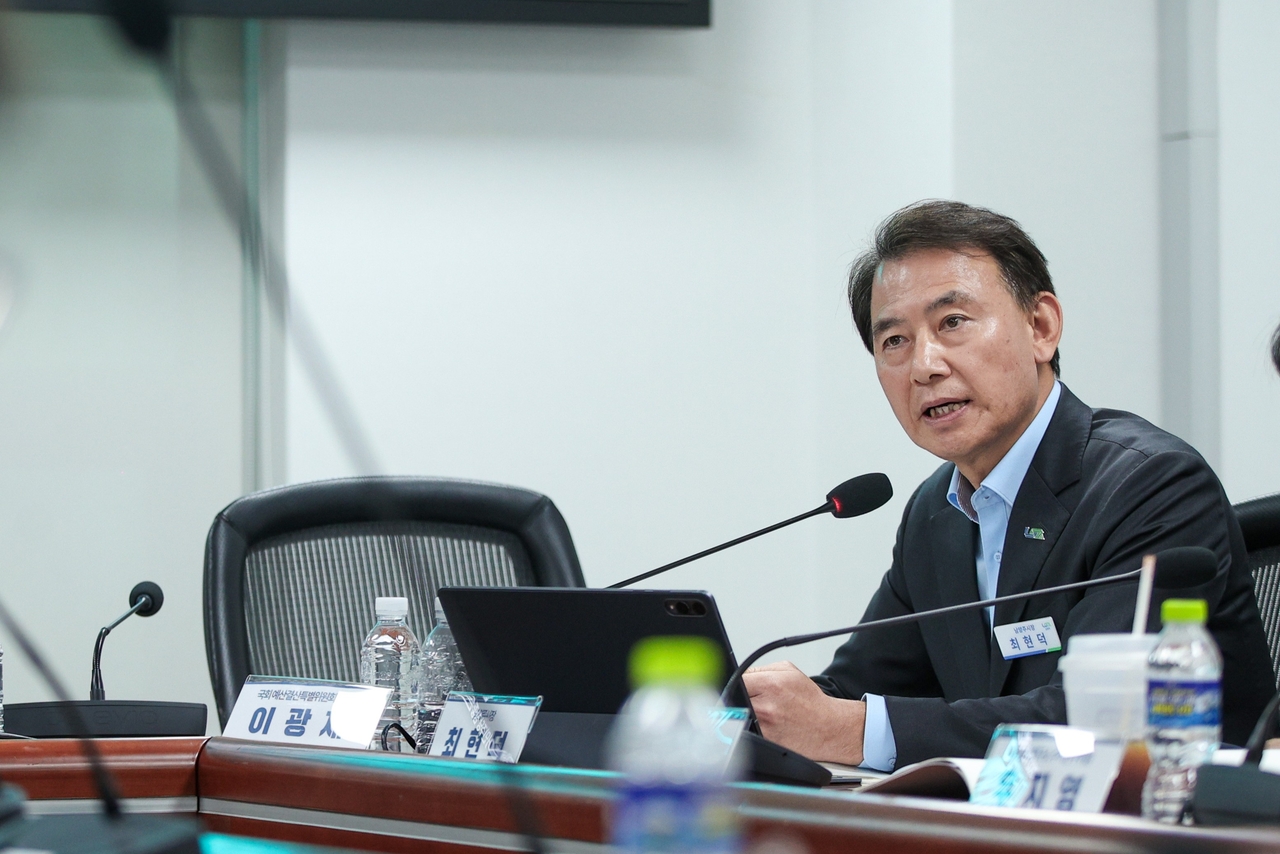
Namyangju Mayor Choi Hyun-deok has stepped forward to defend local fiscal autonomy amid growing concerns that the central government's plan to establish a new Future Response Fund could squeeze local government finances.
Choi attended an emergency seminar on the 2027 government budget held at the National Assembly on Thursday as a representative discussant for local governments, raising concerns about the fund's potential impact on local allocation tax revenues and proposing directions for institutional reform.
The seminar was jointly organized by the Democratic Party's Good Local Government Committee, chaired by lawmaker Yeom Tae-young, along with Fiscal Sovereignty Citizens' Action and the Narasallim Research Institute.
The discussion brought together Choi, representatives from the Democratic Party's Basic Local Government Council, and officials from the Ministry of Planning and Budget and the Ministry of Interior and Safety to examine how the new fund would affect local finances and to debate the direction of fiscal decentralization.
While acknowledging the need for the Future Response Fund, Choi said new national fiscal demands must not come at the expense of local government finances.
He said that if the fund's revenue source were excluded from domestic taxes before calculating local allocation tax — as the government has proposed — the actual funds flowing to local governments could effectively shrink, even if the statutory rate of 19.24 percent were maintained, because the calculation base itself would be reduced.
Choi said local allocation tax is a core source of local government revenue that helps narrow fiscal disparities between regions and ensures basic administrative services are available nationwide, and that a stable fiscal foundation commensurate with local governments' expanding roles and responsibilities is essential.
He added that while investment to prepare for the nation's future is necessary, reducing funding for areas local governments are responsible for — such as livelihoods, welfare and public safety — would also weaken their capacity to prepare for the future. He said the creation of the Future Response Fund must not lead to a contraction of local finances.
Choi also noted that Namyangju in particular faces continuously growing administrative demand in areas such as transportation, welfare, education and everyday infrastructure due to the development of a third-generation new town and a rising population. A reduction in local allocation tax, he said, could go beyond a simple drop in revenue and undermine the city's ability to carry out essential projects directly tied to residents' daily lives.
Choi went beyond raising concerns and put forward specific institutional reform proposals for securing a stable local fiscal base: guaranteeing local allocation tax revenue before any transfer into the Future Response Fund, separately compensating for any reduction in local allocation tax resulting from the fund's creation, and institutionalizing local government participation in the fund's formation and operation as well as a review of its impact on fiscal decentralization.
"Preparing for the nation's future and protecting local fiscal autonomy must go hand in hand," Choi said. "Guaranteeing a stable fiscal foundation so that local governments can fulfill their roles is ultimately about protecting the lives of the people and the future of South Korea."
He added that he would continue to actively call on the National Assembly and the central government to incorporate local governments' voices into national fiscal policy and to advocate for genuine fiscal decentralization.
pjh@heraldcorp.com