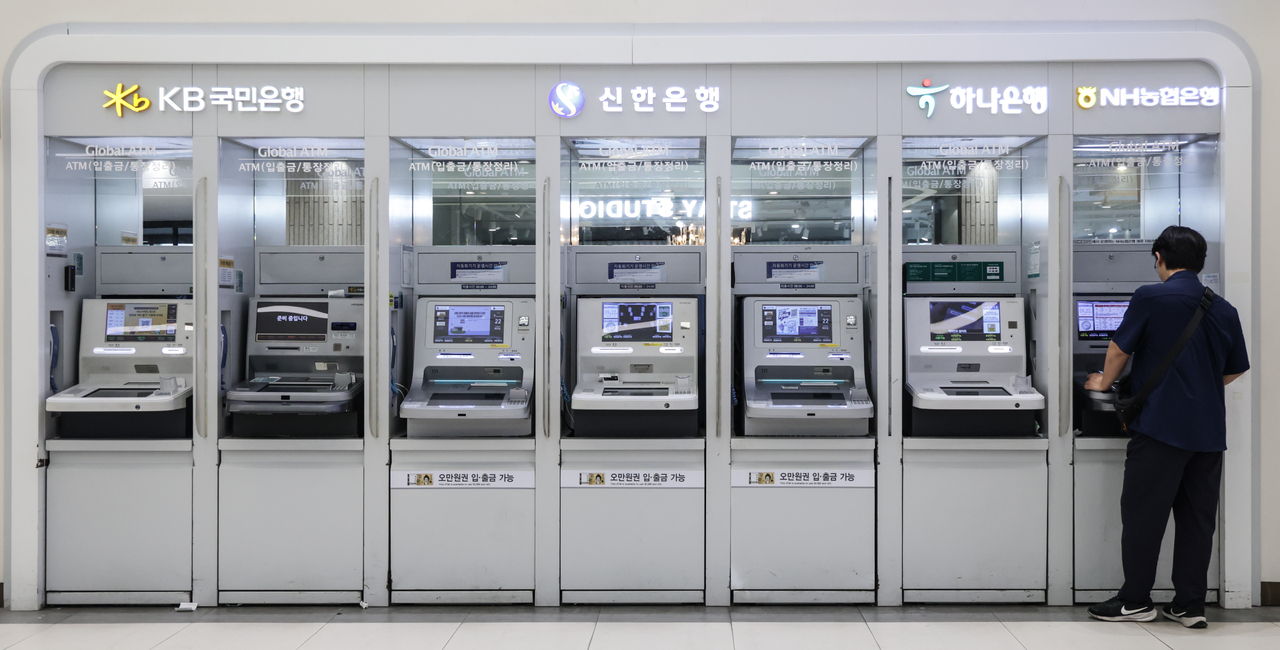
Shinhan Bank to manage Incheon's city treasury for four more years through 2030
Long track record in local tax electronic payment systems proved decisive
Hana Bank pledged 350 billion won and relocated headquarters to Cheongna, but still lost
Some in financial circles speculate Hana could be next in line for the account
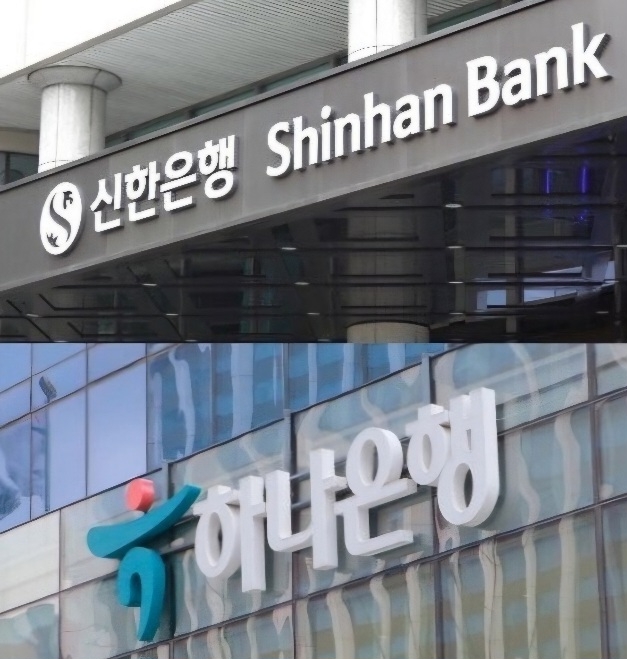
The competition among financial institutions for Incheon's city treasury account — worth around 16 trillion won ($11.7 billion) annually — has come to a close.
Shinhan Bank emerged victorious, retaining the primary treasury account for the sixth time. Hana Bank, which had staked everything on winning the contract, failed to wrest it away.
With the selection confirmed, Shinhan Bank will again manage the primary treasury — covering general accounts, public enterprise special accounts and funds totaling 14.45 trillion won — from 2027 through 2030.
NH NongHyup Bank, selected as the secondary treasury, will oversee other special accounts worth 2.02 trillion won.
The contest pitted Shinhan Bank, which has operated Incheon's primary treasury for 20 years, against Hana Bank, which mounted a renewed challenge anchored by its presence in Incheon's Cheongna International City.
Shinhan Bank's greatest advantage in the primary treasury competition was the operational experience it accumulated over two decades in local tax electronic payment and tax revenue collection systems — built up through actual day-to-day work.
Incheon's local tax electronic billing and payment infrastructure, including the city's E-TAX system, is structured so that the systems of residents, the city government and financial institutions are organically interconnected.
The local tax network directly serving Incheon residents was the decisive battleground.
In this setup, the bank plays a role far beyond simple fund custody — it serves as core financial infrastructure for tax revenue administration, handling virtual account operations, transmission of collection results and electronic payment processing.
Shinhan Bank continuously upgraded its systems each time local tax regulations and electronic payment methods changed during its long tenure managing the treasury, and adapted to new administrative bodies and shifts in the revenue framework as Incheon reorganized its administrative structure in recent years.
The treasury designation review committee ultimately chose not to set aside the two decades of IT system operations Shinhan Bank had built up.
Shinhan Bank's sixth consecutive retention of the city treasury is, in the end, a story that cannot be told without acknowledging the weight of long-accumulated operational experience.
Having now secured the city treasury for the sixth time, Shinhan Bank should look beyond celebration and prepare for the relentless competition from rival financial institutions that lies ahead, while working to deliver an even higher quality of service than it provides today.
Hana Bank, by contrast, pursued what amounted to an all-in strategy on Incheon to reclaim the primary treasury, but ultimately could not break through Shinhan Bank's hold.
In this competition, Hana Bank went well beyond simply bidding for the treasury account, putting forward group-level investment in Incheon, regional co-prosperity initiatives and the relocation of its headquarters to Cheongna International City as centerpieces of its campaign — a clear demonstration of its resolve. Yet it must now wait another four years.
The outcome is notable in that Hana Financial Group's bold bet on Incheon did not translate into winning the treasury designation.
Hana Financial Group significantly expanded its footprint in Incheon this year. The most prominent move was a financial support and investment agreement with the city worth 350 billion won.
Earlier, Hana Financial Group had agreed with Incheon to pursue a large-scale financial support and co-growth initiative that included establishing a 200 billion won Incheon Unicorn Fund.
The timing of the agreement, however — which coincided with the treasury selection process — drew fairness concerns from the local community.
Hana Financial Group's push into Incheon did not stop there. Starting this month, the group began a phased deployment of approximately 2,200 employees from Hana Financial Group, Hana Bank and affiliated companies to its Cheongna group headquarters.
Combined with staff already working in Cheongna, the total number of finance and IT personnel based in Incheon was expected to reach around 4,000.
Hana Financial Group estimated that the direct and indirect economic impact of the Cheongna headquarters relocation over the next decade would reach around 3.4 trillion won, and projected that the resulting expansion in tax revenue — including local income tax and property tax — would exceed 23 billion won per year.
In short, Hana Financial Group's strategy was to turn Incheon into a new financial hub.
Despite this large-scale regional investment and hub relocation strategy, the bid to reclaim the primary treasury came to nothing.
Is Hana's Incheon gamble over?
The question is whether Hana Bank's failure to reclaim the treasury can be viewed as simply losing a competition for a bank account.
Hana Financial Group has already embarked on the long-term project of relocating its headquarters to Cheongna. Regardless of whether it holds the treasury account, Incheon is likely to become one of the group's core bases going forward.
It is therefore difficult to conclude that the outcome of this treasury selection signals a retreat from Hana Financial Group's broader Incheon strategy.
What matters more is what comes next. With the treasury account out of reach, the new question is whether Hana Financial Group will proceed as planned with its 350 billion won regional co-prosperity and financial support initiative, and whether it will continue to expand its Cheongna headquarters relocation and regional investment strategy.
Whether the large-scale support program that drew scrutiny during the treasury selection process will continue regardless of the outcome is also worth watching.
Speculation about the 'next treasury' — a rumor born of Hana's aggressive Incheon push.
There is another story circulating in some corners of the financial industry.
It is the so-called prediction that "this time it's Shinhan Bank, next time it's Hana Bank."
The suggestion, raised cautiously, is that while incumbent Shinhan Bank has held the primary treasury this time around, Hana Bank could be the one to take it in the next competition.
There is, however, no official basis or confirmed information among Incheon, Shinhan Bank and Hana Bank to support such a scenario.
The speculation likely stems from the fact that Hana Bank's aggressive push into Incheon — which intensified after the June 3 local elections and ahead of the treasury selection — was so pronounced that many assumed the account would go to Hana this time.
That momentum, in all likelihood, is what has led some in the financial industry to predict that Hana Bank will be next in line for the treasury.
Whether the "next time it's Hana" narrative is simply a market forecast within the financial industry, or is grounded in actual discussions or commitments, remains unverified and requires separate confirmation.
What matters more than Hana's treasury loss is what follows.
The treasury competition has been settled in Shinhan Bank's favor for now, but it is hard to say that Hana Financial Group's contest for Incheon is over.
Hana Financial Group is already moving forward with a substantial regional hub strategy centered on the Cheongna headquarters relocation, and has put forward a large-scale financial support initiative aimed at growing alongside Incheon.
The real question going forward is therefore clear: will Hana Financial Group, having failed to secure the treasury, continue to expand its investment in Incheon?
And can Incheon separate Hana Financial Group's large-scale regional investment from the treasury selection and turn it into a sustainable model for regional co-prosperity?
What significance this competition's outcome will carry when the treasury door opens again in four years remains to be seen.
gilbert@heraldcorp.com