Pan-government consultative body under the prime minister draws 30 members from labor, management and academia
New committee to review employment, wages and working conditions for public-sector irregular workers
Multi-tiered structure includes development councils and sector-specific subcommittees
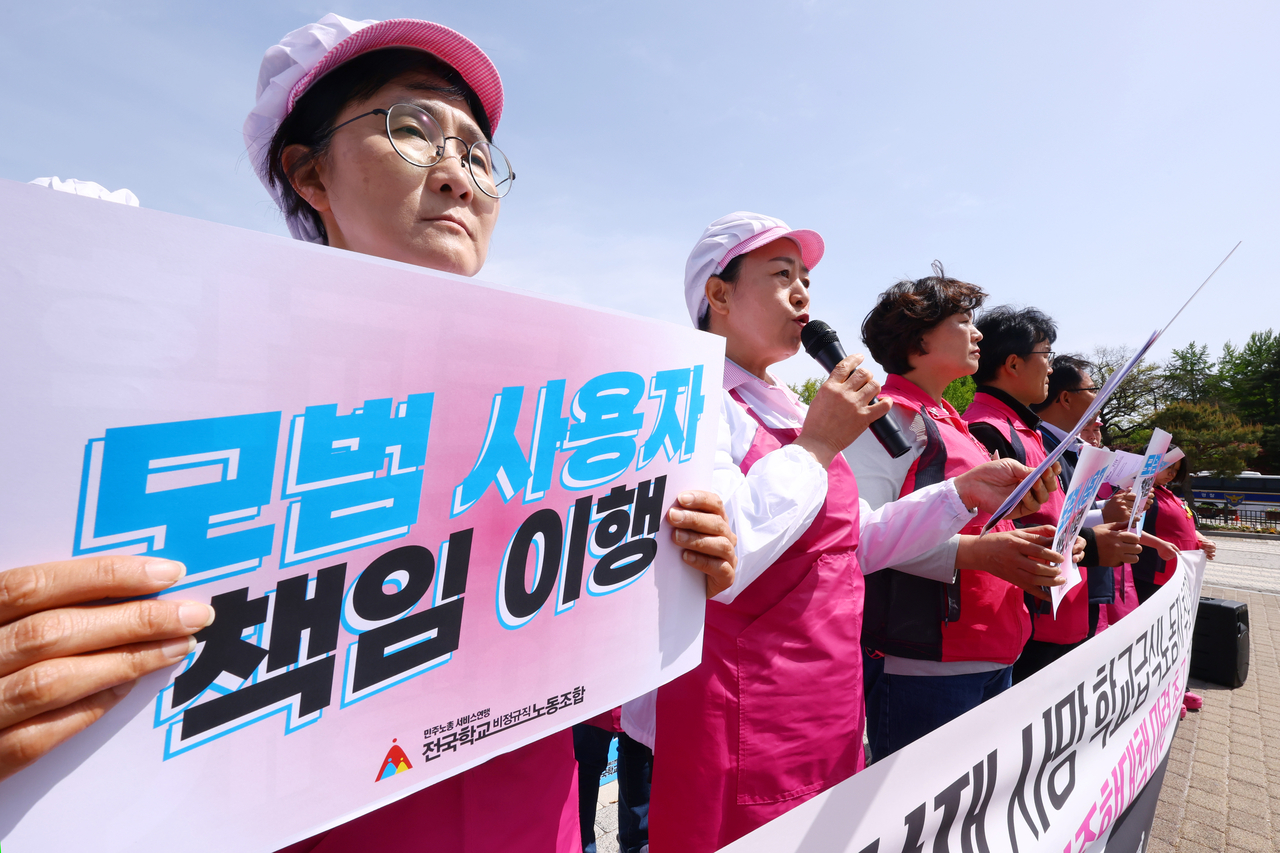
A committee tasked with improving employment stability and working conditions for public-sector irregular workers has been officially launched as a statutory body under the prime minister. Its policy scope covers not only public-service workers and fixed-term employees but also dispatched, subcontracted and outsourced workers.
The Ministry of Employment and Labor said it held the inaugural ceremony and first meeting of the Public Service Workers Committee at Government Complex Seoul on Friday — the day the Act on the Establishment and Operation of the Public Service Workers Committee, enacted last February, took effect.
The committee reviews and coordinates employment, wages and other working conditions for public-sector irregular workers, along with related personnel, labor and education policies and systems. Its aim is to reduce workplace discrimination and raise both the quality of employment and the standard of public services.
The new body carries greater legal standing and a broader membership than its predecessor, which operated from March 2020 to March 2023. The first committee was an advisory body established under a prime ministerial directive; the new one is a statutory committee formally attached to the prime minister's office under an act of law.
Im Gi-geun, director general of the Office for Government Policy Coordination, chairs the committee. Deputy Minister of Employment and Labor Kwon Chang-jun leads the ministry's side on the committee, and the body draws a total of 30 members from related ministries — including the Ministry of Economy and Finance, the Ministry of Education, the Ministry of Interior and Safety, the Ministry of Planning and Budget and the Ministry of Personnel Management — as well as representatives from labor, management and academia.
The policy scope has also been expanded. In addition to public-service workers and fixed-term employees covered under the previous committee, dispatched and subcontracted workers are now included. Unlike the first committee, which was dominated by government officials, the new body directly incorporates labor, management and expert representatives as full members.
The committee operates through a multi-tiered structure linking the main Public Service Workers Committee, a working-level subcommittee, a development council and sector-specific councils. The main committee makes final decisions on policy plans and discussion outcomes, while the working-level subcommittee monitors and adjusts those plans.
The development council researches institutional improvements on common agenda items that cut across job categories and sectors, and oversees discussions in the sector-specific councils. Those councils address agenda items that reflect the particular characteristics of each sector, drawing on input from the field.
At its first meeting Friday, the committee approved its operating plan, internal rules and the composition of the working-level subcommittee. It plans to finalize the membership of the sector-specific councils and select specific discussion topics going forward.
"A stable dialogue framework has been established for ongoing discussion of employment and working-condition issues facing public-sector workers," committee chair Im said. "We will ensure the government fulfills its responsibilities as a model employer and create a landmark example of social consensus-building among labor, government and experts."
fact0514@heraldcorp.com