Vote held Tuesday–Wednesday; all 6 unions within agency exceed 90% approval
Wage gap, staffing shortfalls cited after 18 rounds of talks fail
Union chief vows to 'fight to the end' for fair pay and better conditions
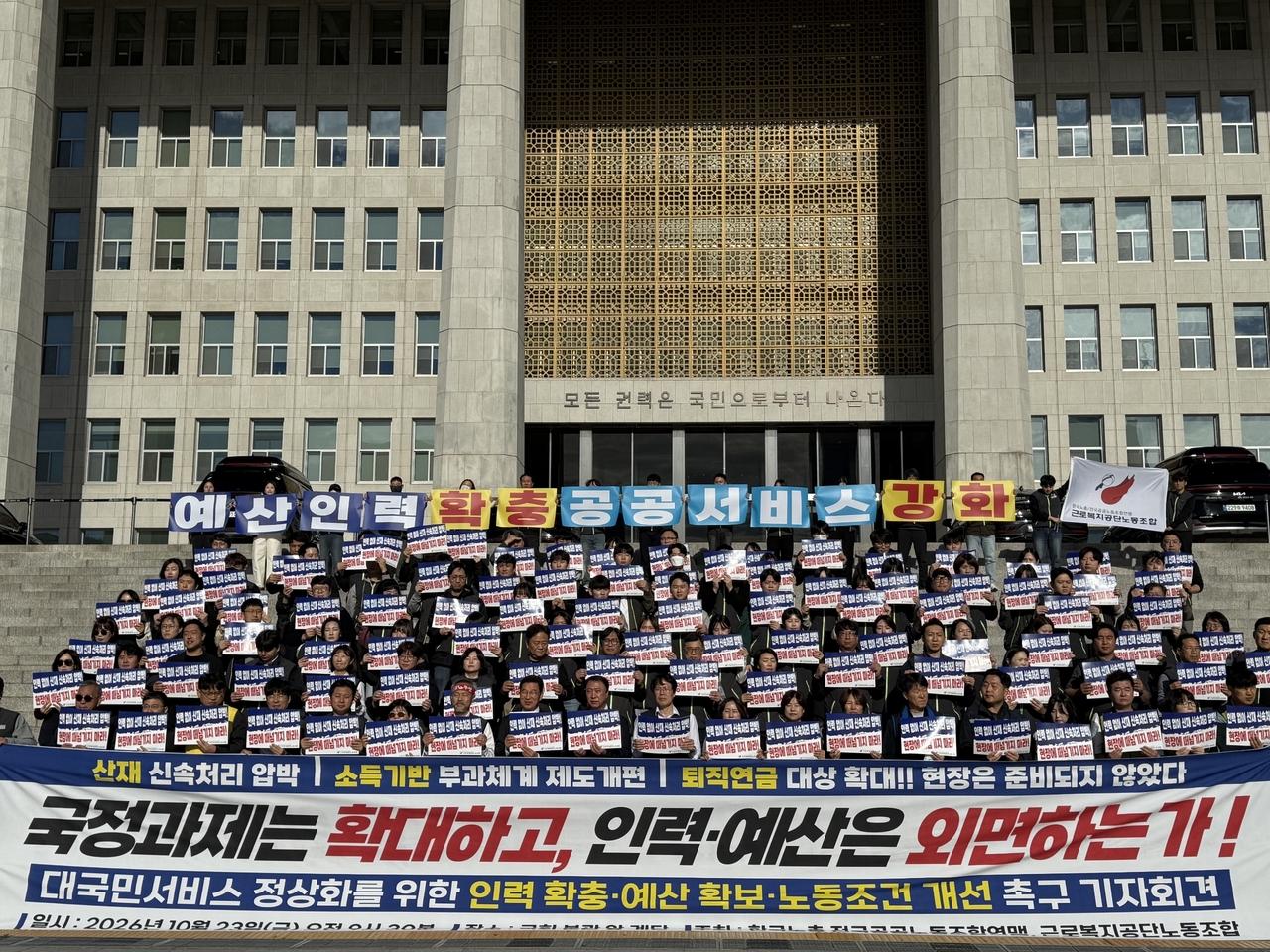
A strike authorization vote by the Korea Workers' Compensation and Welfare Service labor union passed with 95.86% approval, the union announced Wednesday. The vote — the first in a decade, triggered by the collapse of wage negotiations — is expected to mark the start of a coordinated campaign by unions at the agency demanding that pay gaps with other social insurance institutions be closed and that staffing and budgets be expanded.
The union said 95.86% of those who cast ballots in the vote, held Tuesday through Wednesday, approved industrial action. All six unions within the agency that held votes recorded approval rates above 90%, with the combined total across all unions reaching 94.93%.
The union said the result reflected members' accumulated frustration over wages lower than those at peer social insurance institutions, inadequate staffing and budgets despite an expanded national policy mandate, and excessive workloads.
The union held 18 rounds of working-level talks and three rounds of full negotiations over this year's wage agreement but failed to reach a deal. The National Labor Relations Commission subsequently issued a mediation suspension ruling, paving the way for the authorization vote. The union has not yet announced a specific strike date.
The wage gap between the agency and its peers is reflected in public disclosures on the Alio government management information system. Based on 2025 fiscal-year figures, starting salaries for new hires at the Korea Workers' Compensation and Welfare Service stood at 36.64 million won ($27,700) — 6.57 million won less than the 43.21 million won paid by the National Health Insurance Service and 4.41 million won less than the 41.05 million won paid by the National Pension Service. The Alio figures are calculated on the basis of the lowest entry-level grade for college graduates in administrative roles with no military service and no prior work experience.
The union said the wage gap between social insurance institutions, high turnover rates, and shortfalls in the staffing and project budgets needed to carry out national policy tasks were also raised during the agency's national audit on Friday and the Ministry of Employment and Labor's comprehensive audit on Tuesday. The minister acknowledged the structural constraints behind the wage gap and said the ministry would seek reasonable remedies, the union said.
The union is demanding that personnel costs be secured through revisions to the fund management plan and that the staffing and project budgets required to fulfill national policy mandates be reflected in agency plans. It also urged reforms to the total personnel cost system and the establishment of a public institution compensation committee to overhaul the pay structure.
The unions within the agency are set to formally launch a joint struggle committee on Thursday. They plan to escalate their campaign in stages through coordinated action, pressing for tangible improvements in working conditions and a government response.
Shin Hyeon-u, chair of the Korea Workers' Compensation and Welfare Service union, said the 95.86% result was "an expression of the anger that has built up among members and the desperation of people who can no longer endure this," adding that the union would "fight to the end, responsibly, for fair wage increases, better treatment, and the staffing and budgets we need."
fact0514@heraldcorp.com