Record deals emerge in Gangnam even as distressed listings mount
Lee says 'prime single home' above 10b won is leading prices higher
Ultra-luxury segment reorganizes around cash buyers
Even as President Lee Jae Myung has identified ultra-luxury Seoul homes — those priced above 10 billion won ($7.24 million) — as a key driver of rising property prices, record-breaking transactions continue to close in the city's top-end market, bypassing high interest rates and tightened lending rules. Transaction volumes have contracted under stricter taxes, loan regulations and rising rates, but the segment is being reshaped around cash-rich buyers who are pushing prices to new highs.
Data from the Ministry of Land, Infrastructure and Transport's actual transaction price disclosure system show that 118 apartments priced at 5 billion won or more changed hands in Seoul over the three months from June through August — a 41.9 percent plunge from 203 deals recorded in the same period a year earlier.
Analysts attribute the slowdown to a combination of tightened lending rules, a sustained high-rate environment and a wait-and-see mood that has spread across the high-end market since the government unveiled its Aug. 3 tax reform package, which raised both property holding taxes and capital gains taxes simultaneously. With the government continuing to signal tougher measures targeting ultra-luxury homes, both buyers and sellers are treading carefully.
Even so, record prices are still being set across Seoul. A 208-square-meter unit at Hanyang 4-cha in Apgujeong-dong, Gangnam-gu, sold for 9 billion won on Aug. 29, setting a new high — 300 million won above the 8.7 billion won paid for the same floor area in May.
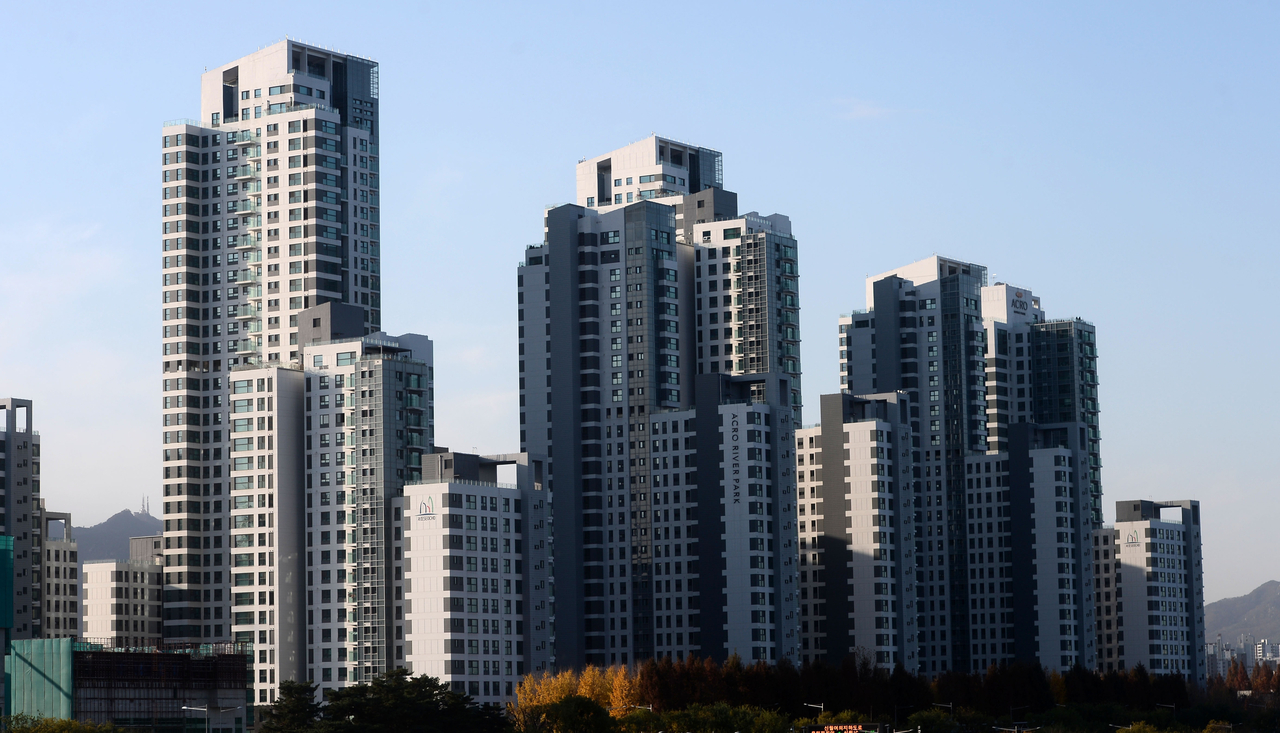
A 129-square-meter unit at Acro River Park in Banpo-dong, Seocho-gu, also changed hands at a record 8.5 billion won on Aug. 3, while a 243-square-meter unit at Tower Palace 2 in Dogok-dong, Gangnam-gu, set a new high of 7.45 billion won on Aug. 11. In Yongsan-gu, a 273-square-meter unit at Nine One Hannam in Hannam-dong — one of the district's most prestigious addresses — sold for a record 25.5 billion won on Aug. 27.
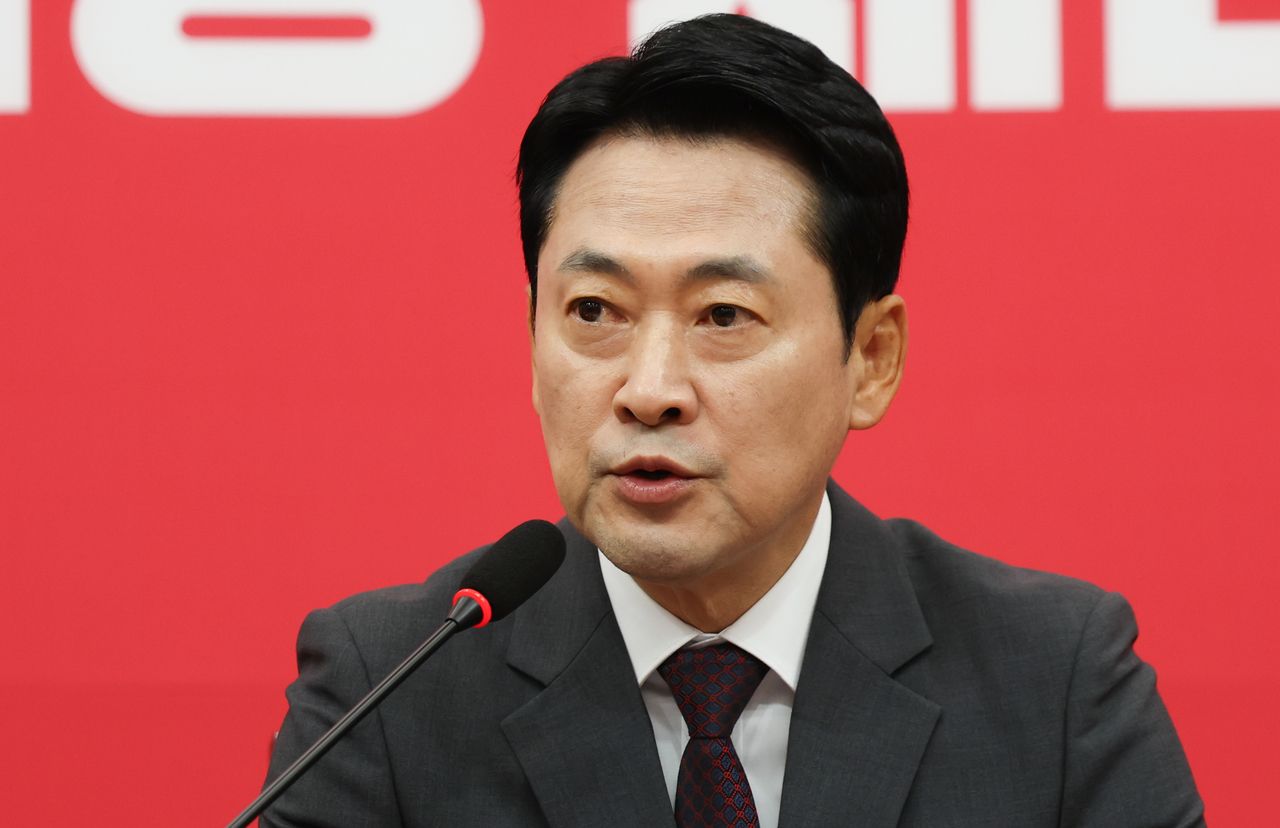
Against this backdrop, Lee reiterated his concern on Friday that ultra-luxury homes are driving broader price increases and pledged to stabilize the market. Speaking at a press conference at Cheong Wa Dae's banquet hall, he said, "Isn't it the case that a so-called prime single home now costs more than 10 billion won? I can't even imagine it. I used to think only the biggest chaebol lived in places like that, but now they go for 8 billion, 9 billion, 10 billion won." He added, "These ultra-luxury homes lead prices higher and the rest follow. Combined with a shortage of supply, expanded lending and other factors, they have become a cause of rising housing prices."
Lee also acknowledged the difficult interest rate environment, saying the government would deploy every available policy tool — including sustained loan restrictions, expanded supply and tax measures — to stabilize the real estate market. "The United States is raising its benchmark interest rate and Korea is narrowing that gap, so the rate situation is not easy," he said. "Taking all of this into account, we will take every possible measure through regulation, supply and taxation, and the real estate market will gradually stabilize."
The deeper problem, however, is that the ultra-luxury segment has already formed a league of its own, largely insulated from rate hikes and regulatory pressure. With mortgage lending capped at just 200 million won for such properties, the market is effectively limited to buyers with substantial cash reserves, and a string of record purchases of scarce, high-prestige units is widening the gap with the broader housing market.
One such buyer is a person born in the 1980s who purchased a 178-square-meter unit at Acro River Park for a record 9.8 billion won in late June and completed the final payment this month, transferring ownership. No collateral mortgage has been registered on the title, suggesting the purchase was made entirely in cash. A nearby 191-square-meter unit at Raemian One Pentas also sold for 9.4 billion won in June; the buyer, also born in the 1980s, completed the final payment with no mortgage registered and has since transferred the title.
At the same time, record deals in the Gangnam area are occurring alongside a steady flow of distressed listings driven by pressure from the tax reform package. Properties held by multi-home owners or elderly sellers struggling with the tax burden are coming to market at reduced asking prices, nudging overall apartment prices slightly lower.
Nam Hyeok-woo, a real estate researcher at Woori Bank, said the core provisions of the capital gains tax increase — including a reduction in the long-term holding deduction rate and a new cap on the long-term residency income deduction — "are still acting as a strong incentive to sell." He added that "policy uncertainty remains, as the market must wait to see whether the tax reform package is further softened during the legislative process," and that with investor sentiment also dampened by rising rates, "there is a reasonable likelihood that the slowdown in transactions and the trend of price weakness in the Gangnam area will persist for now."
hwshin@heraldcorp.com