Grade-7 delinquency rate climbs from 1.68% to 6.58% in under 5 years
Grade-9 rate surges more than fivefold, from 4.56% to 23.58%
1-year bank bond yield tops 4%, raising fears of tighter lending

Even as the economy grows on the back of a semiconductor boom, persistently high interest rates are cutting deepest among the most vulnerable. Delinquency rates among self-employed borrowers with solid credit have actually fallen below their COVID-19-era levels, but those among low-credit borrowers have quadrupled or quintupled in less than five years — fueling fears that rising defaults could prompt banks to tighten lending standards and set off a vicious cycle.
An analysis of personal business loan delinquency rates at the five major banks — KB Kookmin Bank, Shinhan, Hana, Woori and NH NongHyup — broken down by credit rating, showed that the gap in loan quality between borrowers widened sharply from end-2021 through August of this year.
The analysis averaged each bank's self-employed delinquency rates by credit grade, calculated using the Financial Supervisory Service's standard 10-tier rating system.
For grade-3 borrowers — those with relatively strong credit — the delinquency rate actually edged down, from 0.07 percent at end-2021 to 0.05 percent at the end of August. It rose slightly from 0.02 percent at end-2025, but remains low.
The rate for grade-5 borrowers, in the middle of the credit spectrum, climbed from 0.06 percent to 0.46 percent over the same period — roughly 2.4 times the end-2025 level of 0.19 percent — though it still remains below 1 percent.
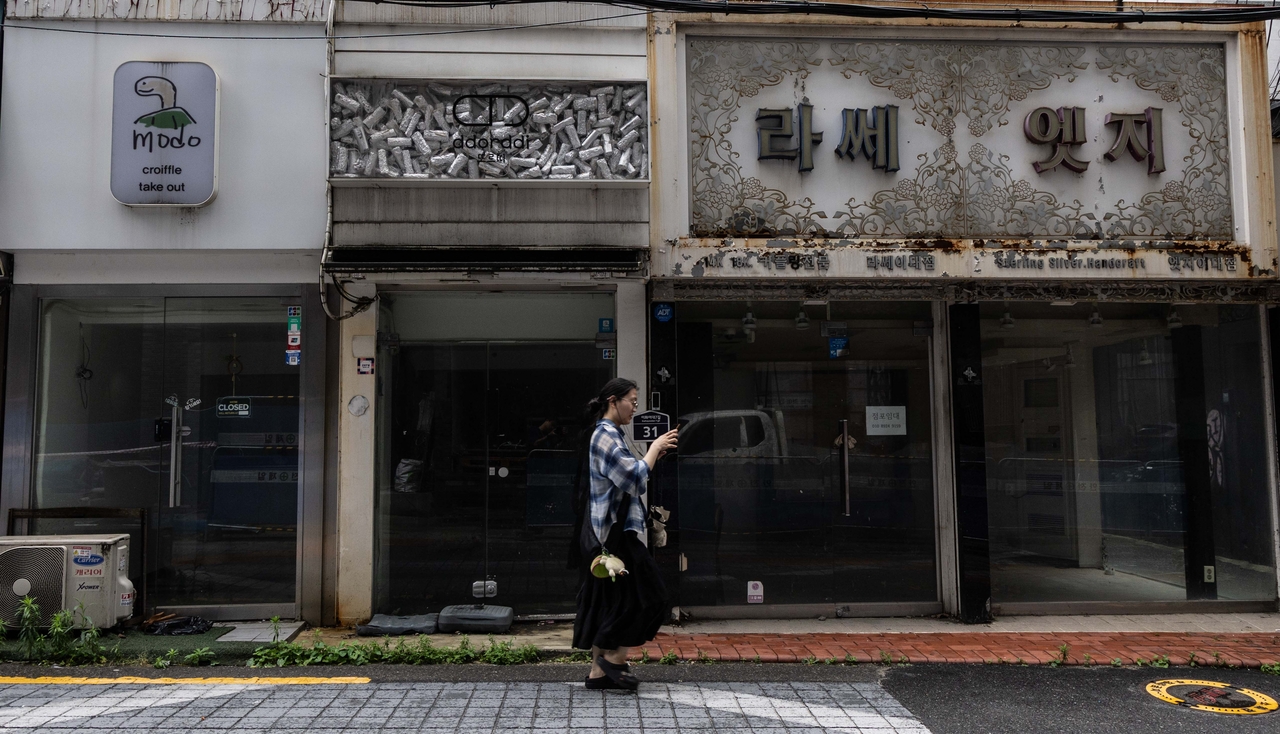
The real problem lies with grade-7 and below. The grade-7 delinquency rate jumped from 1.68 percent at end-2021 to 6.58 percent at the end of August, while the grade-9 rate soared from 4.56 percent to 23.58 percent over the same span — increases of 3.9 times and 5.2 times, respectively, in four years and eight months.
The grade-7 rate rose every year without exception: 1.68 percent at end-2021, 2.52 percent at end-2022, 3.51 percent at end-2023, 5.05 percent at end-2024 and 5.53 percent at end-2025. Grade-9 followed a similar trajectory. The sustained, multi-year deterioration signals that the worsening financial health of vulnerable self-employed borrowers is not a temporary blip.
By contrast, grades 1 and 2 showed either no self-employed loan exposure or delinquency rates that were in effect zero at most banks. In standard banking practice, borrowers around grade 3 are generally considered creditworthy, while those up to roughly grade 5 are still deemed eligible for loans.
Delinquency rates among low-credit self-employed borrowers have been climbing steeply again of late, a trend that coincides with the Bank of Korea's consecutive benchmark interest rate hikes.
The grade-7 rate rose from 5.25 percent at end-June to 5.99 percent at end-July and 6.58 percent at end-August — a gain of 1.33 percentage points in just two months.
The grade-9 rate surged 4.89 percentage points in a single month, from 18.69 percent at end-July to 23.58 percent at end-August. It remains below the end-2025 level of 33.52 percent and the end-February figure of 42.03 percent, however. With delinquency rates already elevated, the monthly figures have been swinging sharply in both directions.
For grade-10 borrowers — the lowest-rated tier — the delinquency rate reached 44.64 percent at end-August, up 6.44 percentage points from 38.20 percent at end-2025. At one bank, the grade-10 self-employed delinquency rate stood at 71.03 percent, far above the five-bank average.
Banks note, however, that grades 9 and 10 account for a small share of total loan volume and see limited new lending, meaning that delinquencies by just a handful of borrowers — or shifts in their credit ratings — can move the rate significantly.
"Even if a self-employed borrower took out a loan when their credit was relatively sound, repeated delinquencies will keep dragging their rating down until they fall into the grade-7 to grade-10 range," an official at a commercial bank said.
The vulnerability of self-employed borrowers stands out even more sharply against the broader corporate loan picture. At end-last month, the grade-7 delinquency rate across all corporate loans — including personal business loans — was 3.20 percent, less than half the 6.58 percent recorded for self-employed borrowers in the same grade.
The bigger concern is what lies ahead. If lending rates rise further in response to benchmark rate hikes, vulnerable self-employed borrowers could face a simultaneous increase in financing costs and default risk.
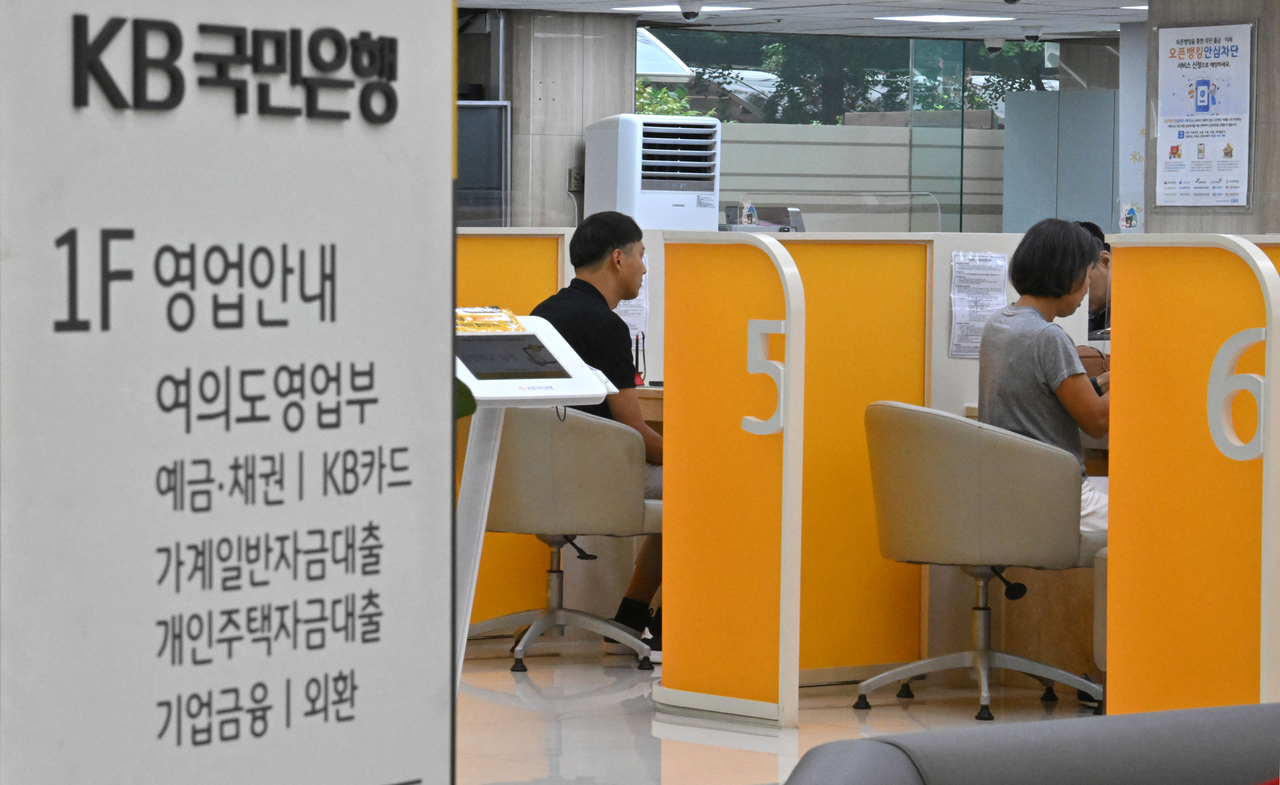
The yield on one-year bank bonds — a key benchmark for pricing personal credit and corporate loans — hit 4.008 percent per annum on Thursday, crossing the 4 percent threshold for the first time since Nov. 28, 2023, when it stood at 4.028 percent, a gap of two years and ten months. It climbed further to 4.033 percent on Friday.
The difficulties facing vulnerable borrowers have also emerged as a key issue in the Bank of Korea's Monetary Policy Board deliberations on the benchmark interest rate.
According to the minutes of the Aug. 27 Monetary Policy Board meeting, released Tuesday, board member Hwang Geon-il — the sole dissenter who voted to hold the benchmark rate steady — said that market rates had already risen to elevated levels in anticipation of further hikes, and that loan delinquency rates, particularly among small and medium-sized enterprises, continued to climb.
Hwang said that alongside shifts in expectations about the future rate path, the rate-setting process needed to account for "the deepening polarization and the situation facing vulnerable sectors."
On the ground, there are concerns that rising defaults among low-credit self-employed borrowers could prompt banks to tighten loan management across the board. Higher delinquency rates among vulnerable borrowers weigh on the health assessments of banks and individual branches, which could ultimately raise the bar for other borrowers as well.
"If defaults among low-credit borrowers get too high, it affects the overall delinquency rate of the entire bank," a bank official said. "A rising delinquency rate can also count against the performance evaluations of the bank and the branch concerned."
"That pressure leads banks to manage default risk more strictly across other loans as well," the official added. "It could end up tightening conditions not just on unsecured personal credit loans but on collateral-backed loans too."
attom@heraldcorp.com