
41 times the return of bank deposits, even after a sharp summer selloff
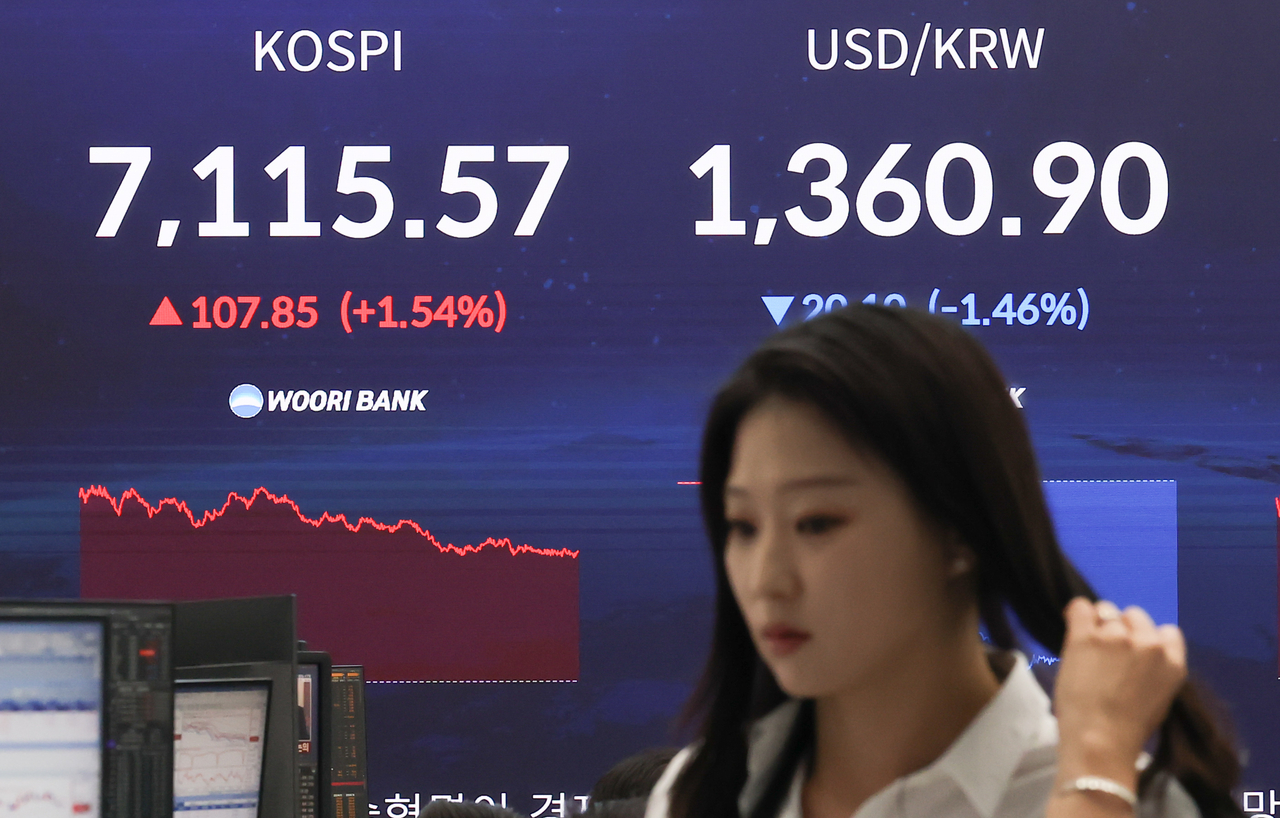
The KOSPI 200 ETF delivered the highest return among major investment vehicles so far this year, according to data compiled by Daishin Securities.
Crude oil prices surged more than 67 percent over the same period but still fell short of the gains posted by ETFs tracking the KOSPI 200. Gold, bitcoin and bonds all declined from their year-opening levels.
According to Daishin Securities' asset-class return data released Sunday, KODEX200 rose from 60,460 won ($44) on Jan. 2 to 109,285 won on Sept. 20, posting a return of 80.76 percent. The fund held its top spot despite the KOSPI 200 index falling more than 20 percent from its peak following a period of extreme volatility in July.
KODEX200 is an ETF designed to track the KOSPI 200 index, which comprises 200 large-cap stocks representative of the domestic market.
The ETF's return was roughly 40.6 times the 1.99 percent earned on one-year fixed deposits at the five major banks over the same period. That deposit figure was calculated by prorating the average base rate of 2.77 percent per year — the mean of the standard rates at NH NongHyup, KB Kookmin, Shinhan, Hana and Woori Bank — across 262 days from Jan. 1 through Sept. 20.
All returns are calculated before management fees and taxes.
West Texas Intermediate crude oil's front-month New York contract ranked second, rising 67.36 percent from $57.41 per barrel to $96.08 per barrel over the period.
The average return of 272 domestic actively managed equity funds came in at 58.07 percent, based on funds with assets under management of more than 10 billion won ($7.35 million).
Overseas equities significantly underperformed their domestic counterparts. The SPY ETF, which tracks the US S&P 500 index, gained 11.08 percent over the same period.
Gold and bitcoin both lagged. The domestic retail price of gold fell 2.60 percent, dropping from 883,000 won to 860,000 won per 3.75 grams (one don). Bitcoin declined 10.18 percent, from around $89,953 to $80,793.
Bonds also posted negative returns. The Korea Investors Service bond composite index fell 3.77 percent, from 279.70 to 269.15. The index measures total investment returns, incorporating both interest income and gains or losses from price movements.
On the currency front, the won strengthened against major currencies. The won-dollar exchange rate fell 4.59 percent, from 1,466.70 won per dollar to 1,380.30 won, while the won-yen rate dropped 4.16 percent, from 922.70 won per 100 yen to 884.33 won. A lower exchange rate means fewer won are needed to buy one dollar or 100 yen.
Lee Kyung-min, a researcher at Daishin Securities, projected the Kospi's range for the fourth quarter at 6,000 to 9,300. He said uncertainty over global monetary policy had passed its peak, and that a warming in relations between the United States and Iran ahead of the US midterm elections in early November was expected to push oil prices and bond yields lower. He added that solid export momentum, still-elevated exchange rates, and improving earnings in AI-related sectors — including semiconductors, IT hardware, automobiles, power equipment and secondary batteries — could support the market's upward trajectory.
However, he noted that the timing of the Kospi's peak could be pushed back to the first quarter of next year, depending on how markets react to the outcome of the November midterm elections.
hss@heraldcorp.com





