Foreign medical tourism market tops 12 trillion won
Greater Seoul's share rises to 91%
South Jeolla Province ranks last for fifth consecutive year
Regional imbalance in medical tourism deepens
![A traditional Korean medicine practitioner takes a patient's pulse at an oriental medicine hospital. [Korea Tourism Organization]](https://wimg.heraldcorp.com/news/cms/2026/09/28/news-p.v1.20260928.fdcaa4c39fcb4d57bd40cd21e1b2215c_P1.jpg)
South Korea's foreign medical tourism market has grown to the 12 trillion won ($8.88 billion) range, generating significant economic returns — but more than 90 percent of the benefits are concentrated in the greater Seoul area, according to a new analysis. South Jeolla Province in particular ranks last nationwide in both the share of foreign visitors to medical facilities and per-visit spending, prompting calls for urgent policy action.
Data submitted to the National Assembly by the Korea Tourism Organization shows that the number of foreign patients attracted through the agency's business center network has grown rapidly: 253,309 in 2023, 404,871 in 2024 and 493,128 in 2025. The figures are based on registered members of the organization's business centers, which it tracks as a promotional and marketing performance indicator, and differ in scope from foreign patient tallies compiled by the Korea Health Industry Development Institute.
Even as the overall medical tourism market expands, the regional divide has widened to a serious degree. Looking at the share of foreign visitors to medical facilities by city and province — based on the location of medical institutions across 16 metropolitan and provincial units, with Sejong Special Autonomous City counted within that grouping rather than as a separate category — the concentration in the greater Seoul area climbed from 72.9 percent in 2021 to 91.2 percent in 2025. In effect, more than nine out of 10 foreign patients are heading to the capital region.
South Jeolla Province, by contrast, has ranked last in visitor share for five consecutive years and has hovered at 0.0 percent for the past two years.
The gap is equally stark in spending. Per-visit spending in Seoul doubled from 250,000 won in 2021 to 503,000 won in 2025, while South Jeolla Province saw its figure fall from 133,000 won to 81,000 won over the same period — the lowest in the country and well below the non-greater-Seoul average of 216,000 won.
A separate analysis by the Korea Research Institute for Industrial Economics and Trade found that total medical tourism expenditure by foreign patients and their companions reached 12.5 trillion won in 2025, including 3.3 trillion won in direct medical spending. That activity generated an estimated 10.5 trillion won in value-added output and 22.8 trillion won in production-inducing effects. Despite the strong national economic impact, the ripple effects have yet to reach the regions.
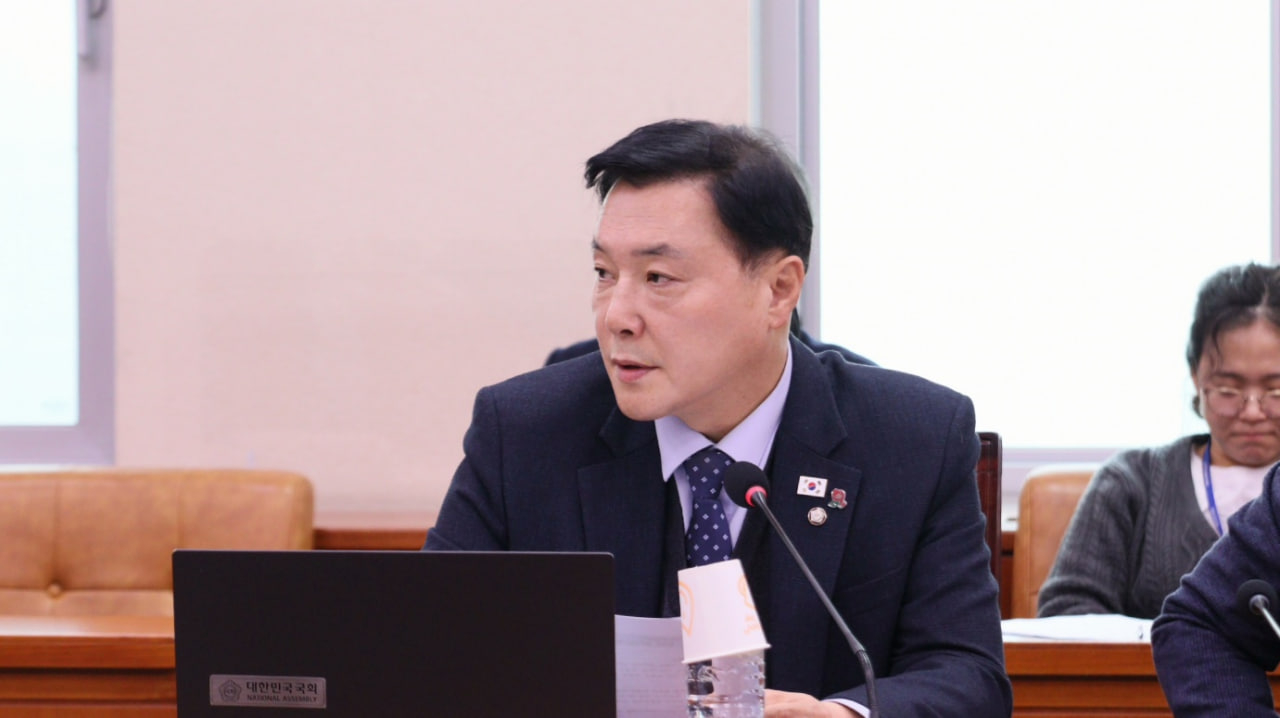
Democratic Party of Korea Rep. Jo Gye-won, a member of the National Assembly's Culture, Sports and Tourism Committee, said the country must actively consider how to spread the benefits and trickle-down effects of medical tourism beyond the greater Seoul area. "We need to move quickly to develop effective support measures for balanced regional development — including a long-stay model that draws on South Jeolla Province's rich leisure and tourism resources," Jo said.
terry@heraldcorp.com