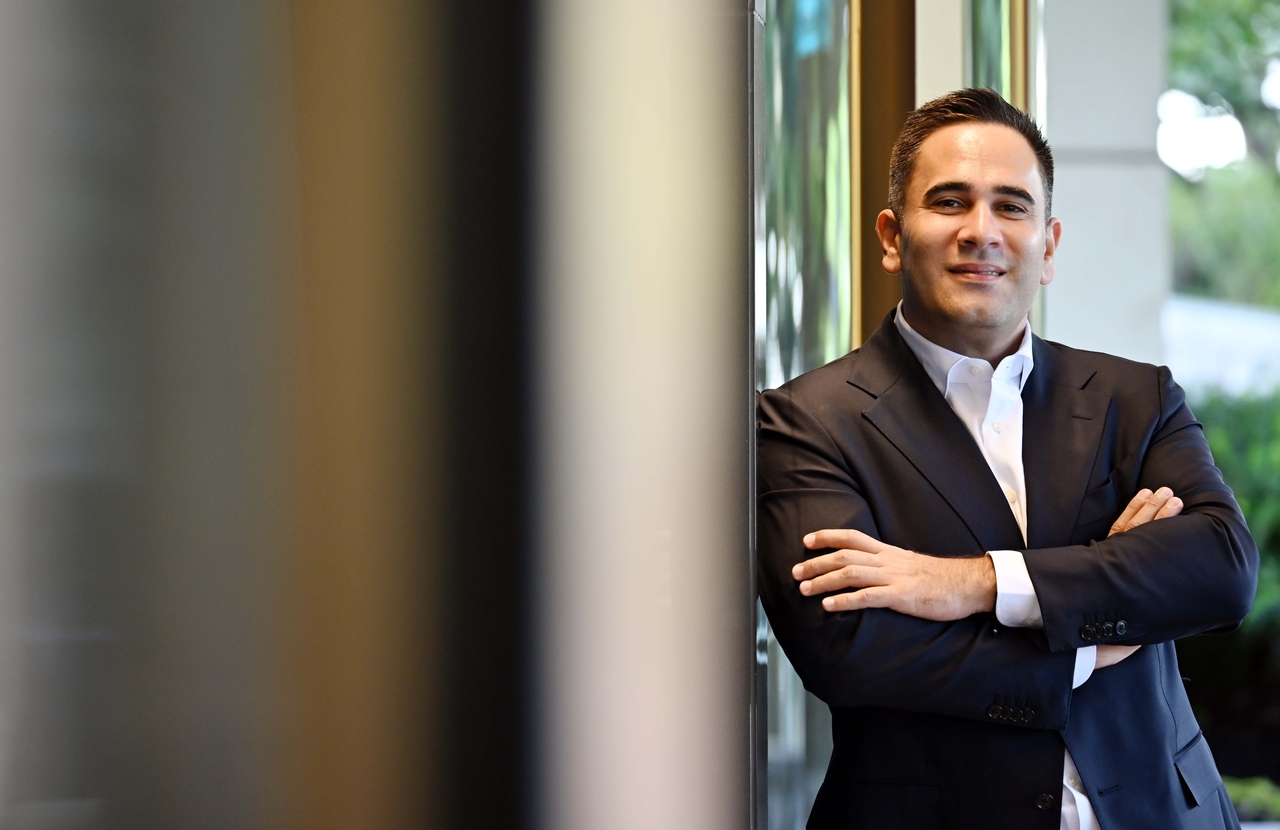
![Minister of SMEs and Startups Lee So-young participates in a national ceremony at her inauguration at the ministry's Oulim Hall in Sejong on Monday. [Ministry of SMEs and Startups]](https://wimg.heraldcorp.com/news/cms/2026/09/29/news-p.v1.20260929.9d5d4234f4e3432997a2db3807f99e0b_P1.jpg)
Inauguration Monday, national audit Oct. 7 — little time to prepare
From committee member to agency head: expertise put to the test
'I'll lead the charge on clashes' — finance, labor and platforms all in scope
Lee So-young will face lawmakers at the National Assembly's national audit just 10 days after officially taking office as minister of SMEs and Startups. Since her nomination, Lee has made a series of pointed remarks — pledging to "persuade even the president," proposing a public debate with the Financial Services Commission chairman, calling inter-agency disagreements "a sign of healthy government," and vowing to push through clashes with other ministries — cementing her image as a combative, take-no-prisoners minister. Expectations inside the ministry are running high. The question is time: the national audit, her first major test as minister, is less than 10 days away, and the opposition has signaled it will treat the hearing as a second confirmation hearing, targeting her expertise and conduct.
According to the National Assembly, the Assembly's Trade, Industry, Energy, SMEs and Startups Committee will conduct its national audit from Oct. 6 to Oct. 23. The ministry's audit is scheduled for Oct. 7 — just 10 days after Lee held her official inauguration ceremony at Government Complex Sejong on Monday. She will appear as the agency head subject to scrutiny. The committee has also summoned MBK Partners Chairman Kim Byung-ju and Korea Land and Housing Corporation private-sector cooperation director Jeong Woo-shin as general witnesses for the Oct. 7 session.
Lee's position in the hearing room will itself mark a reversal. At the time of her nomination, she was a sitting member of the same committee and also led her party's side on the National Assembly's Budget and Accounts Committee. She will now sit on the opposite side of the table, fielding questions from lawmakers on the very SME, venture and small-business policies she once scrutinized.
Inside the ministry, the prevailing mood toward Lee is one of anticipation. She was nominated on Aug. 30 and has since made her views known on multiple occasions. At her confirmation hearing, when People Power Party lawmaker Seo Ji-young raised her abstention vote on a criminal procedure bill amendment and asked whether she would hold to her convictions as minister, Lee said she would try to persuade fellow cabinet members — and the president — if she disagreed with a policy direction. She also said she wanted to hold a public debate with the FSC chairman on Kosdaq policy and to argue her case with ministers from regulatory agencies at cabinet meetings.
Lee also drew a clear line between herself and what she called a "managerial minister." Asked what the public expects from a minister in her 40s, she said she believed people want to see someone who works dynamically — willing to push back and take on friction rather than simply following institutional inertia, even if that looks rough around the edges at times. On inter-agency disagreements spilling into public view, she said such moments would reflect "the diversity and vitality of the Korean government, not discord or conflict."
The tone Lee set at her confirmation hearing carried through to her inauguration address. "I will be the first to push through clashes with other ministries, issues tangled with competing interests, and problems no one else wants to touch," she said. She also said that the moment a ministry draws a line and declares an issue outside its jurisdiction, the problem on the ground becomes nobody's problem. A ministry official said expectations for Lee are high, adding that her remarks since the nomination have led people inside the ministry to believe she will be "a minister with real clout."
![Minister of SMEs and Startups Lee So-young delivers remarks at her inauguration at the ministry's Oulim Hall in Sejong on Monday. [Ministry of SMEs and Startups]](https://wimg.heraldcorp.com/news/cms/2026/09/29/news-p.v1.20260929.6182cdcee9f54cf19c1ced1cb044c345_P1.jpg)
The central challenge is time. Lee must make her national audit debut exactly 10 days after taking office. She needs to absorb ministry briefings and get up to speed on current policy issues — and given the breadth of her stated ambitions, that means getting a handle not just on her own ministry's portfolio but on the work of the Korea Fair Trade Commission, the Ministry of Employment and Labor and the FSC as well, if she is to give credible answers in the hearing room.
The Homeplus situation is one of the most pressing issues she must master. The committee summoned MBK Partners Chairman Kim Byung-ju as a witness for the Oct. 7 audit to question him about Homeplus's rehabilitation and the harm suffered by vendors and tenants. Homeplus received court approval for its rehabilitation plan from Seoul Bankruptcy Court on Sept. 2, but unresolved issues remain — including repayment to suppliers, compensation for in-store merchants and the sale of store locations.
The ministry's own support measures will also come under scrutiny. The Small Enterprise and Market Service set aside 50 billion won ($36.8 million) in emergency business stabilization loans for Homeplus suppliers and tenants, but disbursements through June reached only about 6.2 billion won — an execution rate of 12.4 percent. Of the 2,386 tenant businesses eligible, only 173 actually received funds.
The role Lee described for a ministry that does not defer to jurisdictional boundaries is also drawing attention. The ministry has overlapping interests with the Ministry of Employment and Labor on the 52-hour workweek and comprehensive wage system regulation; with the FSC and Korea Exchange on Kosdaq delisting standards and venture capital fundraising and exit markets; and with the Fair Trade Commission on online food delivery fees, advertising costs, and platform self-preferencing and trading-condition practices. Even if the ministry pushes to reduce cost burdens on small businesses, regulatory authority over anti-competitive platform conduct rests with the Fair Trade Commission — making it an open question how far Lee can actually press her case.
The ministry has already shown a divergence of views with the Ministry of Health and Welfare over the prescription drug delivery issue recently raised by pharmacists, and coordination with the Ministry of Food and Drug Safety will be needed on K-beauty and K-food export promotion. Navigating overseas regulations for cosmetics — the top export category for small and medium-sized enterprises — is a key challenge, as are food labeling and hygiene standards, which fall under the food safety ministry's authority, raising questions about how much influence Lee can actually wield.
Lee pledged in her inauguration address that the ministry would step in whenever small businesses are affected — "whether it's finance, labor, retail or platforms." Lawmakers are likely to press her at the national audit for specific answers: which issues, which ministries, and what exactly she intends to change.
hong@heraldcorp.com