Fiscal reform task force wraps up 80-day review, issues four key recommendations
Welfare budget cap set, cash support programs to undergo major overhaul
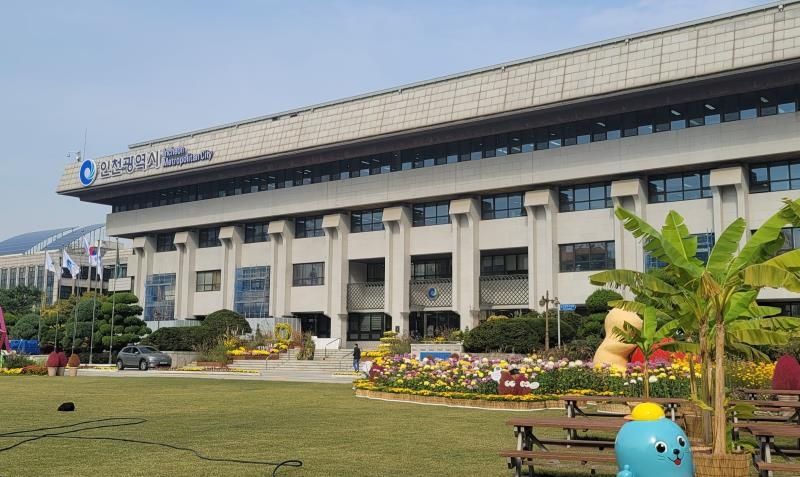
Incheon Metropolitan City is launching a sweeping fiscal overhaul to confront a severe budget crisis, including the recent suspension of its Incheon e-eum local currency program.
The city's Fiscal and Budget Reform Task Force, established in July, concluded its 80-day review and released a comprehensive set of recommendations Tuesday.
Song Hyeon-seok, head of the task force, said Incheon must sustain investment in its future as a growing city with an expanding population and urban footprint. "Through this reform, welfare benefits will be concentrated on residents who truly need them, and the savings will be channeled into future growth engines," he said.
The core of the task force's recommendations centers on systematizing decision-making and enforcing stricter budget allocation. To manage rapidly rising fiscal demands, the city will institutionalize a regular "fiscal strategy council" chaired by the mayor.
Under the new framework, the city will first set overall fiscal targets and sector-by-sector allocation guidelines before departments draw up their budgets within assigned ceilings — a system the city piloted this year, holding its first meeting Sept. 21.
Three new guiding principles for budget allocation were also established.
First, the share of social welfare spending — currently approaching 40 percent of the total budget — will be capped at no more than 45 percent over the medium to long term.
Second, the city's own cash-transfer programs will be strictly limited to within 5 percent of its own-source revenue — local taxes and non-tax revenue averaging about 7.2 trillion won ($5.29 billion) over the past five years — equivalent to roughly 360 billion won.
Third, budgets for future infrastructure such as transportation and industry will be maintained at a minimum of 10 percent over the medium to long term to build the foundation of a growing city.
The most prominent element of the plan is a major restructuring of cash support programs whose spending automatically expands each year.
The task force called for redesigning the existing universal support structure into a more targeted model that concentrates benefits on lower-income residents, applying six reform criteria including overlap with national programs, efficiency and fiscal sustainability.
Particularly given the significant expansion of national cash support for births and child-rearing set to take effect next year, the city will aggressively eliminate duplication between its own programs and national policy.
Through these measures, the city expects to reduce its fiscal burden by a total of 374.9 billion won over the next four years.
New projects will also require mandatory pre-planning before budget requests are submitted, and national subsidy projects will undergo advance screening of the city's cost share before applications are filed — rules set to take effect from the 2027 main budget.
Alongside internal spending restructuring, the city will also push to address structural external fiscal pressures, planning to formally petition the central government for systemic reforms through the National Governors Association and other channels.
The key requests include raising the statutory local allocation tax rate from 19.24 percent to 22 percent, establishing a principle that the central government bears primary costs when expanding national care programs, and prohibiting unilateral reductions in the national subsidy rate — seven reform tasks in total.
Incheon city said it intends to use the task force's recommendations as a springboard to root out lax fiscal practices and achieve resident-centered welfare and future growth investment at the same time.
gilbert@heraldcorp.com