State accountability strengthened on digital sex crimes, child support
Won Min-kyung says results must be felt in people's daily lives
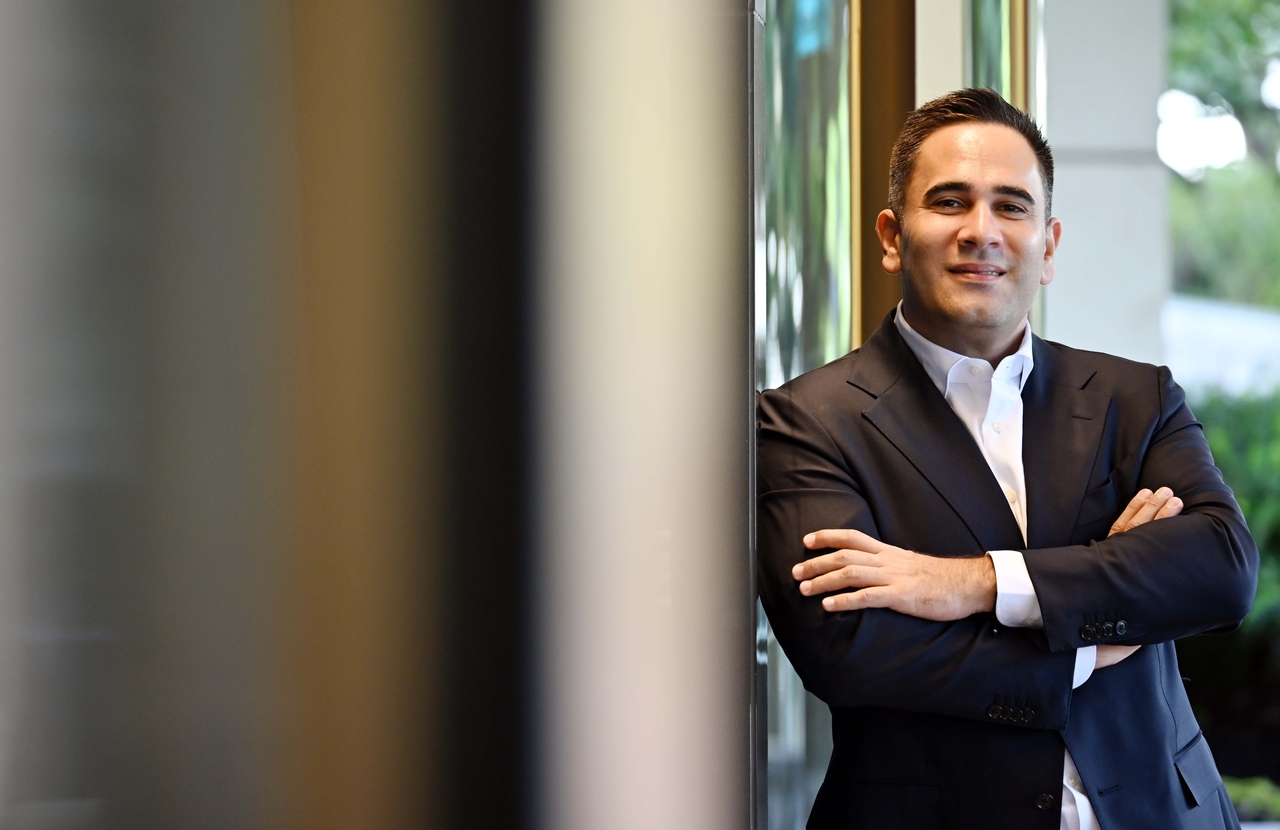
![Minister of Gender Equality and Family Won Min-kyung [Yonhap]](https://wimg.heraldcorp.com/news/cms/2026/10/01/rcv.YNA.20260916.PYH2026091610430001300_P1.jpg)
The Ministry of Gender Equality and Family, which now serves as the control tower for pan-government gender equality policy, marked its first anniversary Thursday.
At a first-anniversary performance review held at Government Complex Seoul in Jongno-gu, the ministry highlighted its strengthened state accountability over the past year in areas including digital sex crimes and child support. It said it would focus its efforts in its second year on delivering policy changes that people can feel in their everyday lives.
"The past year was a time to rebuild the foundations of gender equality policy and to bring the state closer to the difficulties people face," Minister Won Min-kyung said. "In our second year, we will answer with results that people can feel have made a real difference in their lives."
The ministry's second year will be a test of whether the groundwork laid over the past 12 months can translate into tangible outcomes — among them integrating abortion medication into the national healthcare system, introducing a gender pay gap disclosure regime for employers, and shutting down websites that host illegally filmed content.
"The past year was one in which we kept our promise, step by step, to treat gender equality not as the work of a single ministry or a specific policy area, but as a national task woven through employment, care, safety, health, and the lives of young people and families," Won said.
Among the ministry's first-year achievements, it convened the National Gender Equality Committee in person for the first time in five years, chaired by the prime minister, and established expert subcommittees covering areas such as employment equality. It also plans to expand dedicated gender equality units from nine government ministries to 24 next year, ensuring that gender impact is considered when formulating policy across sectors including industry, science and technology, diplomacy and land development — not just employment and welfare.
On women's health, the ministry drew up a plan to introduce and regulate abortion medication within the national healthcare system, seven years after the Constitutional Court ruled the country's abortion ban unconstitutional in 2019. A pilot program called "Pads for All," which provides free sanitary products at public facilities to anyone who needs them, also launched in 12 regions across the country.
The ministry also overhauled its approach to gender-based violence. Rather than removing illegally filmed content piece by piece after harm has already occurred, it broadened its response to block and disable the illicit websites that serve as distribution hubs. In April, it launched an integrated digital sex crime victim support task force — bringing together the Korean National Police Agency, the Korea Communications Commission and other agencies — to coordinate efforts from tracking and blocking illegal sites through to investigation.
In family and care policy, the ministry introduced for the first time a child support advance payment system, under which the state pays child support upfront to single-parent families who have not received it and then recovers the money from the non-paying parent. The program previously required recipients to meet an income threshold, but starting this month that requirement has been removed, allowing any single-parent family that meets the other eligibility criteria to receive 200,000 won ($147) per child per month regardless of income.
In its second year, the ministry's task is to embed the policies developed over the past year and turn them into outcomes people can feel. It will push to formally introduce abortion medication while using the gender pay gap disclosure regime to make companies publicly report their male-to-female employment ratios, wage gaps and uptake of work-life balance programs — nudging businesses to close those gaps on their own.
The ministry also plans to broaden the reach of family policy. It will pursue a "Family for All" project to ensure that people can access the services they need regardless of family type — whether single-parent, single-person, or families with immigrant backgrounds. Young people and newlyweds who choose to marry will be eligible for a marriage support grant of up to 1 million won per couple, with no income or age restrictions.
"The shape of families and what they need vary enormously," Won said. "Whether a family is a single-parent household, a one-person household, a multicultural or immigrant-background family, or a dual-income family, they should be able to get the support they need when they need it."
"Through the 'Family for All' project, we will strengthen universal family services and provide tailored case management and emergency support to households in crisis," she added.
kido@heraldcorp.com