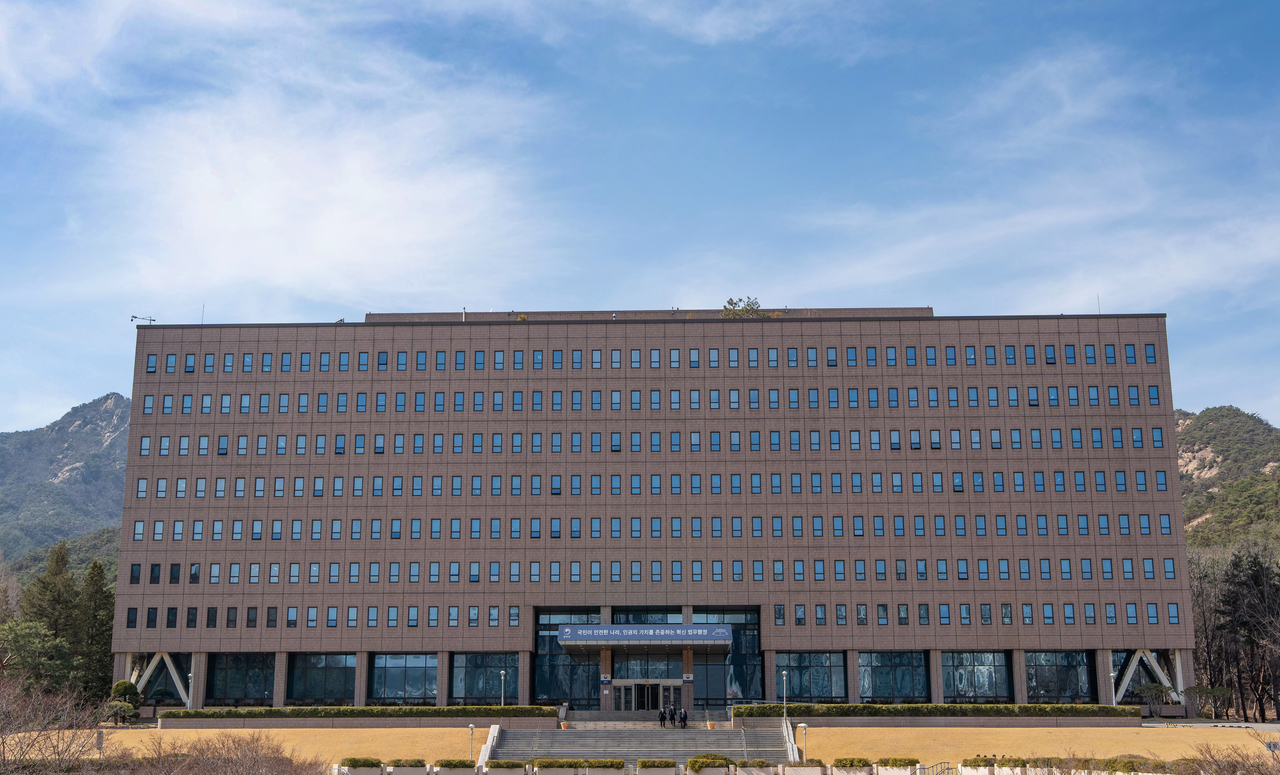
![The exterior of the K-Startup Center in Seattle. [Korea Startup Center]](https://wimg.heraldcorp.com/news/cms/2026/10/01/news-p.v1.20261001.d3aab775becf4c99925163227b5ffabe_P1.jpg)
Firm in Seattle KSC also selected for Singapore KSC
Another company used Seattle KSC and Riyadh GBC simultaneously
Cases of consecutive support after program ends — some firms kept using office space after eligibility lapsed
Company A, a medical and optical equipment firm, began receiving support from the K-Startup Center in Seattle in September 2023. KSC residents receive access to meeting rooms and other workspace, along with administrative assistance covering corporate registration, visa applications and bank account setup. The company was also selected for the Singapore KSC in February last year, meaning it drew on two KSC programs simultaneously for six months. The Ministry of SMEs and Startups described the case as "an instance of overlapping support between KSC programs."
Company B, a pulp manufacturer, moved into the Seattle KSC in January last year and then into the Global Business Center in Riyadh, Saudi Arabia, in March of the same year. Through the KSC it received workspace and support for local settlement and investment attraction; through the GBC it received subsidies covering 80 percent of office rent and assistance with overseas market development. Officials also found cases in which companies continued to lease and use the same office space on their own after their program support period ended.
According to data on the operation and support status of the GBC and KSC programs submitted by the Ministry of SMEs and Startups to the office of Democratic Party of Korea lawmaker Jang Cheol-min of the National Assembly's Industry, Trade, Resources, SMEs and Startups Committee on Thursday, 11 companies received overlapping support from the ministry's overseas hub programs — including the GBC and KSC — last year. Seven firms used a GBC and a KSC simultaneously, while four used two different KSC locations at the same time.
Cases of companies receiving support again immediately after a previous support period ended were also confirmed. The ministry said one company received consecutive KSC support following the end of an earlier term. Usage records also included instances of companies continuing to lease their overseas office space as a local business base even after government support had lapsed. While such cases reflect companies successfully establishing a local foothold with government backing, questions remain over whether it is appropriate for a limited pool of overseas expansion opportunities to be used repeatedly by the same firms.
The GBC and KSC are programs run by the Korea SMEs and Startups Agency, an affiliate of the Ministry of SMEs and Startups, which maintains overseas hubs to help domestic small and medium-sized enterprises and venture companies enter foreign markets. The GBC provides overseas office space, legal, tax and labor consulting, and local market development support. The KSC targets startups and offers office space, corporate registration, visa processing, investment attraction and buyer matching.
KSC residents receive local workspace. Based on this year's recruitment criteria, the monthly fee for a designated desk is $75 per seat at Silicon Valley, 75 Singapore dollars ($56) per month in Singapore, and 75 euros ($85) per month in Paris — all well below local market rates. Undesignated seats carry no usage fee, and a shared office for short-term business travelers is also available free of charge. The concern is that these government-funded programs could come to be seen as a perk enjoyed repeatedly by a select circle of well-connected companies.
The scale of the overseas hub support programs has been expanding. The number of companies supported through the GBC grew from 914 in 2022 to 2,058 in 2025, while the number of resident firms rose from 313 to 431 over the same period. GBC-supported companies recorded exports of $1.29 billion last year, and 53 local subsidiaries were established. The KSC supported 149 companies last year, of which 119 were resident firms, and 22 local subsidiaries were set up. The ministry said the KSC provides "not only office space but also local accelerating, investment attraction and buyer discovery support."
The combined budget allocated to the GBC and KSC programs this year is around 31.5 billion won ($23.2 million) — approximately 17.6 billion won for the GBC and 13.8 billion won for the KSC.
In some cities, the GBC and KSC each maintain separate office spaces. The Tokyo GBC spans 614 square meters, with rent and maintenance costs budgeted at 790 million won and operating costs at 200 million won this year. The Tokyo KSC covers 89 square meters, with rent and maintenance costs of 280 million won and operating costs of 125 million won. The combined cost for both Tokyo locations comes to 1.395 billion won. In Hanoi, Vietnam, the GBC and KSC also operate independently of each other.
The issue of overlapping support for overseas exporters has been raised before. In its overseas export support plan for small and medium-sized enterprises and venture companies announced in February last year, the ministry said it would build an integrated overseas expansion support hub in Silicon Valley — consolidating the GBC's SME management support, the KSC's startup incubation and Korea Venture Investment's fundraising functions under one roof. The move signaled a policy shift toward consolidation after fragmented programs led to management lapses including duplicate support.
"Now that the direction of integrating overseas expansion support functions has already been set, there is a need to check whether limited support opportunities are cycling back repeatedly to the same companies," said Jang Cheol-min. "The ministry must overhaul its operating framework so that support histories across overseas hub programs are managed in an integrated way, ensuring opportunities reach a broader range of companies."
hong@heraldcorp.com