Developed jointly with Ministry of Climate, Environment and Energy and Korea Environment Corporation
System demonstrates technical readiness and interoperability
Pilot program to run on public chargers through December
Official service launch targeted for February 2027
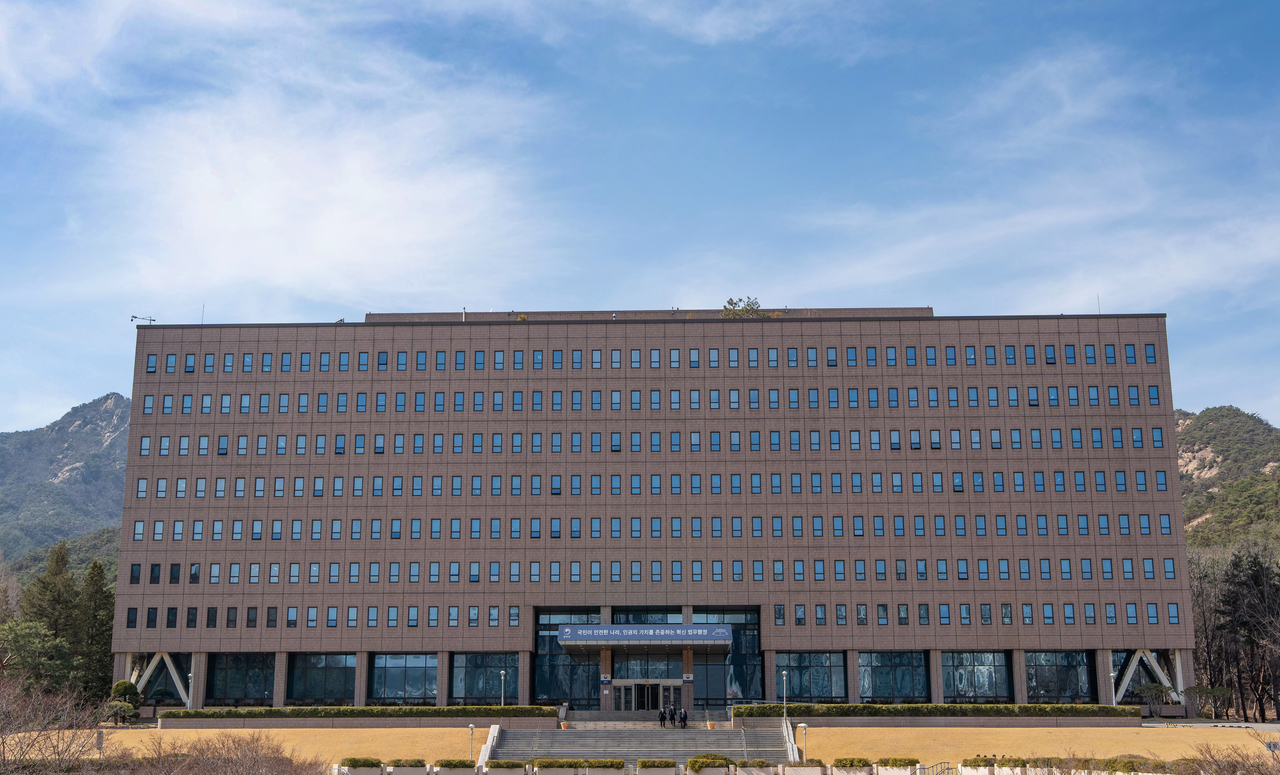
![The headquarters of Hyundai Motor and Kia in Yangjae, Seoul [Hyundai Motor Group]](https://wimg.heraldcorp.com/news/cms/2026/10/01/news-p.v1.20261001.e1b8206602984fa181bd2e5d6ed9c5c6_P1.jpg)
A national standard plug-and-charge, or PnC, service that automatically handles vehicle authentication, charging and payment the moment a cable is plugged into an electric vehicle could be commercially available as early as next year.
Hyundai Motor Group announced Thursday that it had successfully unveiled and demonstrated a national PnC authentication system — developed jointly with the Ministry of Climate, Environment and Energy and the Korea Environment Corporation — at a live showcase held at the Ansan branch of the Korea Electrotechnology Research Institute in Ansan, Gyeonggi Province.
The event was organized to verify the interoperability and safety of the national PnC authentication system and to lay the groundwork for expanding the service across the country's broader electric vehicle charging infrastructure.
PnC is an international-standard-based technology that automates the entire charging process — from vehicle authentication to charging initiation and payment — simply by connecting a charging cable to an electric vehicle. It is regarded as a next-generation EV charging service that delivers a safe and convenient experience without requiring separate membership registration or manual payment steps.
The national PnC authentication system unveiled Thursday was built on the PnC certification infrastructure that Hyundai Motor Group had been operating commercially as the first such system in South Korea. In July, the group signed an MOU with the Ministry of Climate, Environment and Energy and the Korea Environment Corporation to establish a domestic EV PnC authentication framework, under which it agreed to provide its PnC certificates and certificate-issuance authority to the government.
At the showcase, the system demonstrated its technical completeness and interoperability. Attendees witnessed the full process — authentication, charging initiation and payment — proceed automatically and stably across a range of vehicles connected to public chargers operated directly under the ministry.
The participating organizations also unveiled a pilot service plan for the national PnC authentication system. They intend to run a pilot program on public chargers through December to verify stability and interoperability.
The partners also plan to expand the reach of PnC by strengthening links between public chargers and private charging operators, while advancing the overall quality of the service. Based on the pilot results, they will refine security management and operational standards before launching the official service in February 2027.
"The establishment of the national PnC authentication system has created a foundation for EV drivers to enjoy a more convenient charging experience without having to sign up separately with each charging operator or go through additional authentication steps," a Hyundai Motor Group official said. "We expect charging convenience to improve significantly for EV customers in South Korea, including those driving PnC-enabled Hyundai Motor, Kia and Genesis electric vehicles."
Meanwhile, Hyundai Motor Group is also accelerating development in autonomous driving. The group recently held an autonomous driving media day at the headquarters of 42dot, its autonomous driving unit, in Pangyo, Seongnam, Gyeonggi Province, where it outlined its development progress and commercialization plans.
likehyo85@heraldcorp.com