Policy symposium co-hosted by Ministry of Food and Drug Safety, Democratic Party lawmaker
Discussion expands beyond illegal drugs to prescription and OTC misuse
Experts call for identifying at-risk individuals before crisis hits
![Participants pose for a group photo at a policy symposium titled "Drug Gray Zones: How to Identify and Intervene," held Tuesday at the National Assembly Library auditorium. The event was co-hosted by the Ministry of Food and Drug Safety and Democratic Party of Korea lawmaker Jeon Jin-suk (fourth from left). [Provided by Gangwon National University Addiction and Trauma Recovery Research Institute]](https://wimg.heraldcorp.com/news/cms/2026/10/01/news-p.v1.20261001.6b5dc8593eaa4bc8aa12486a55f8233b_P1.jpg)
Experts are calling for drug policy to shift its focus from detection and punishment to intervention before risks escalate — reaching people who fall through the cracks of existing treatment and legal systems, including out-of-school youth, military personnel and those misusing prescription or over-the-counter medications.
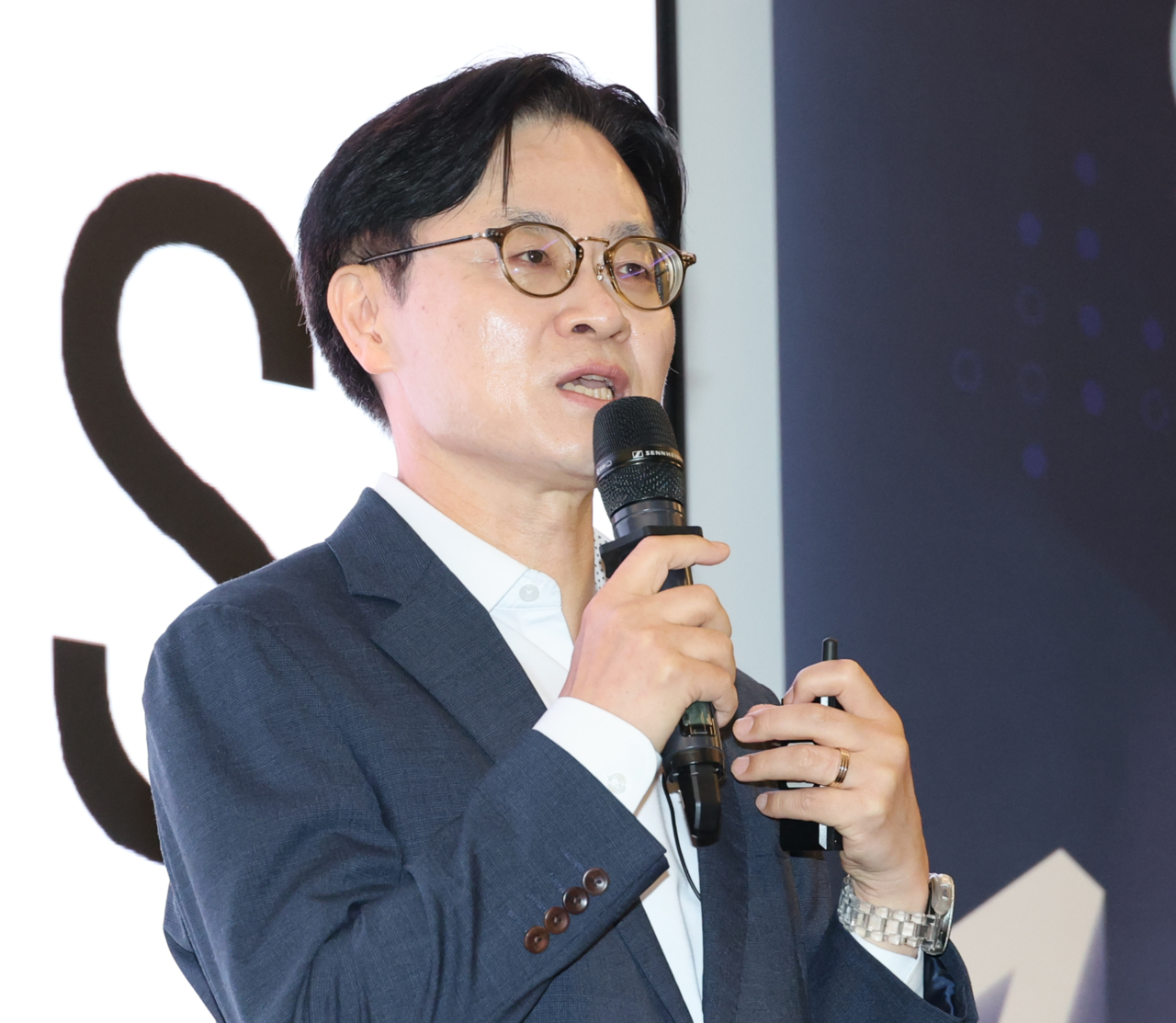
The Ministry of Food and Drug Safety and Democratic Party of Korea lawmaker Jeon Jin-suk co-hosted a policy symposium Tuesday at the National Assembly Library auditorium, under the theme "Drug Gray Zones: How to Identify and Intervene." Gangwon National University, the Korea Society for Crisis Management and the university's Addiction and Trauma Recovery Research Institute jointly organized the event.
The symposium focused on people who have already begun using drugs but whose problems have not yet surfaced clearly as criminal or addiction crises, leaving them disconnected from institutional support. Discussions centered on moving beyond waiting for the judicial or medical system to step in after problems worsen, and on who should be looking for warning signs and where.
Kim Hye-seon, a professor at Gangwon National University who delivered the keynote, drew attention to the gap between when drug-related risk begins and when a person first encounters any support system. She described this as an "invisible period" and said narrowing that gap early is essential. Kim said drug problems should not be viewed solely through the lens of illegal substances, noting that even legally prescribed psychotropic medications carry misuse potential and that mechanisms are needed to detect warning signs from the outset and connect people to treatment and rehabilitation.
Practitioners at the event also highlighted blind spots specific to different populations. Kim Jeong-hui, director of the Samcheok Youth Counseling and Welfare Center, said that for out-of-school youth, simply asking about the type of drug or whether it has been used is not enough to gauge risk — it is also necessary to examine how and why drugs are being used in their daily lives.
Oh In-mok, chief of psychiatry at the Armed Forces Guri Hospital, cited the military's characteristic insularity, its punishment-focused approach and the stigma surrounding drug issues as factors that make early detection difficult. He also pointed to shortages of specialist personnel and relevant data as obstacles to connecting service members with treatment.
Participants also raised the point that when assessing misuse of OTC or prescription drugs, the focus should be on changes in patterns of use rather than the drug type itself. Han Bu-sik, director of Ribbon House in Gimhae, said it is necessary to look comprehensively at whether dosage and frequency are increasing, whether a person is switching to other substances, whether multiple drugs are being taken together, and whether the purpose and context of use are shifting.
![Participants discuss drug policy at the symposium titled "Drug Gray Zones: How to Identify and Intervene," held Tuesday at the National Assembly Library auditorium. The event was co-hosted by the Ministry of Food and Drug Safety and Democratic Party of Korea lawmaker Jeon Jin-suk (fourth from left). [Provided by Gangwon National University Addiction and Trauma Recovery Research Institute]](https://wimg.heraldcorp.com/news/cms/2026/10/01/news-p.v1.20261001.dfd2289024b0429aa191068ecb35661d_P1.jpg)
Kim Hyeon-jeong, a team leader at the Korea Anti-Drug Movement, introduced existing social rehabilitation infrastructure, including support walk-in centers and the 1342 Courage Step Center. She said the priority should be creating pathways for individuals to make real contact with support organizations from the earliest stage, rather than treating legal processing, treatment and rehabilitation as separate tracks.
A policy round table that followed focused on what happens after at-risk individuals are identified. Kwon Geum-ju, a professor at Seoul Cyber University, moderated the session, which included Kim Seon-chun, chief executive of InterTox, Kim Ho-jung, a professor of emergency medicine at Soonchunhyang University Bucheon Hospital, and field practitioners who had presented earlier.
Kim Seon-chun proposed a screening system capable of identifying at-risk individuals early by examining not only illegal drug use but also a range of exposure pathways — including legal prescriptions — alongside behavioral patterns and personal histories. Kim Ho-jung outlined minimum safety standards for determining when emergency services or hospital transfer is warranted, drawing on patient condition assessments and Korea's emergency triage tools.
Participants also discussed how to designate who is responsible for first detecting warning signs, and how to assess the true level of risk in patients whose symptoms appear mild on the surface. They identified as a key challenge the need to build referral systems that go beyond simply directing people to counseling services and ensure they actually reach treatment and rehabilitation.
"Responding only after someone has been caught is not enough," lawmaker Jeon said. "We need to be able to identify people earlier — those on the margins of existing systems who cannot ask for help, including out-of-school youth, military personnel and those misusing legal drugs — and connect them with the support they need." She added that she would continue examining policy and institutional measures to close the gaps in early intervention, treatment and rehabilitation, based on the issues and proposals raised at the symposium.
Oh Yu-kyung, commissioner of the Ministry of Food and Drug Safety, said the government has long worked to block the distribution of illegal drugs and related crimes, and to provide treatment and rehabilitation opportunities to those caught under the law. "Now is the time to go a step further — toward preventive, proactive policies that detect risk early and connect people with appropriate help," she said, adding that the symposium would serve as a meaningful opportunity to chart the direction South Korea should take.
Kim Hye-seon said the most important question she had wanted to raise at the symposium was: "When do we first encounter someone whose risk has already begun?" She said the gray zone does not refer to a particular type of person, but rather to a state — one in which drug use has started and risk is progressing, but the person has not yet been connected to a recovery support system. "Just as a good response after a crisis matters, we need a system that can connect people to recovery before the crisis arrives," she said.
pooh@heraldcorp.com