Production spans Korea, US, Czech Republic
'Could have sold more if we had more hybrids'
Software updates to sustain vehicle value
Supply normalization to drive Korea rebound
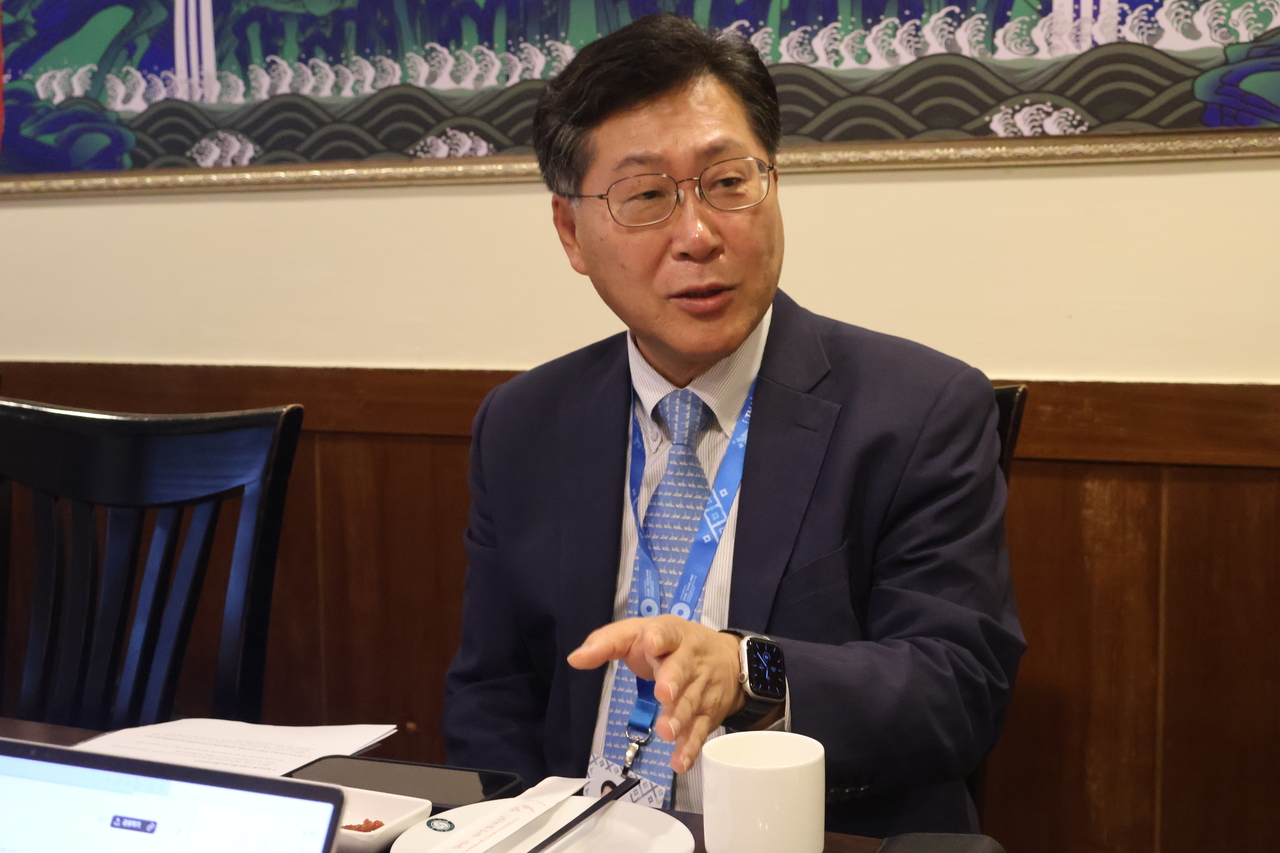
Hyundai Motor President and CEO Jose Munoz expressed confidence that the all-new Tucson would rewrite every sales record, and said the automaker expects a rebound in the South Korean domestic market through a normalization of production.
Speaking at a media briefing Thursday (local time) in Long Island City, New York, following the world premiere of the all-new Tucson, Munoz said the Tucson is Hyundai Motor's best-selling vehicle, with about 10 million units sold worldwide to date and sales continuing to grow.
"Looking at September figures, the current-generation Tucson already set an all-time sales record, with sales up about 32 percent," he said. "For the new Tucson, the sky is literally the limit."
The new Tucson will be produced at factories in South Korea, the United States and the Czech Republic. Hyundai Motor plans to invest an additional $500 million at its Alabama plant — Hyundai Motor Manufacturing Alabama — which had previously produced only gasoline models, to add hybrid production. The move is designed to reduce the tariff burden and offer customers a wider range of options.
Munoz said he expects sales to grow significantly as hybrid supply expands. "Hyundai Motor's hybrid sales grew 67 percent in the first half of this year, and in some months the growth rate exceeded 70 percent," he said, adding that hybrids now account for more than 28 percent of total sales. "If we had more hybrid vehicles, we could have sold even more," he added.
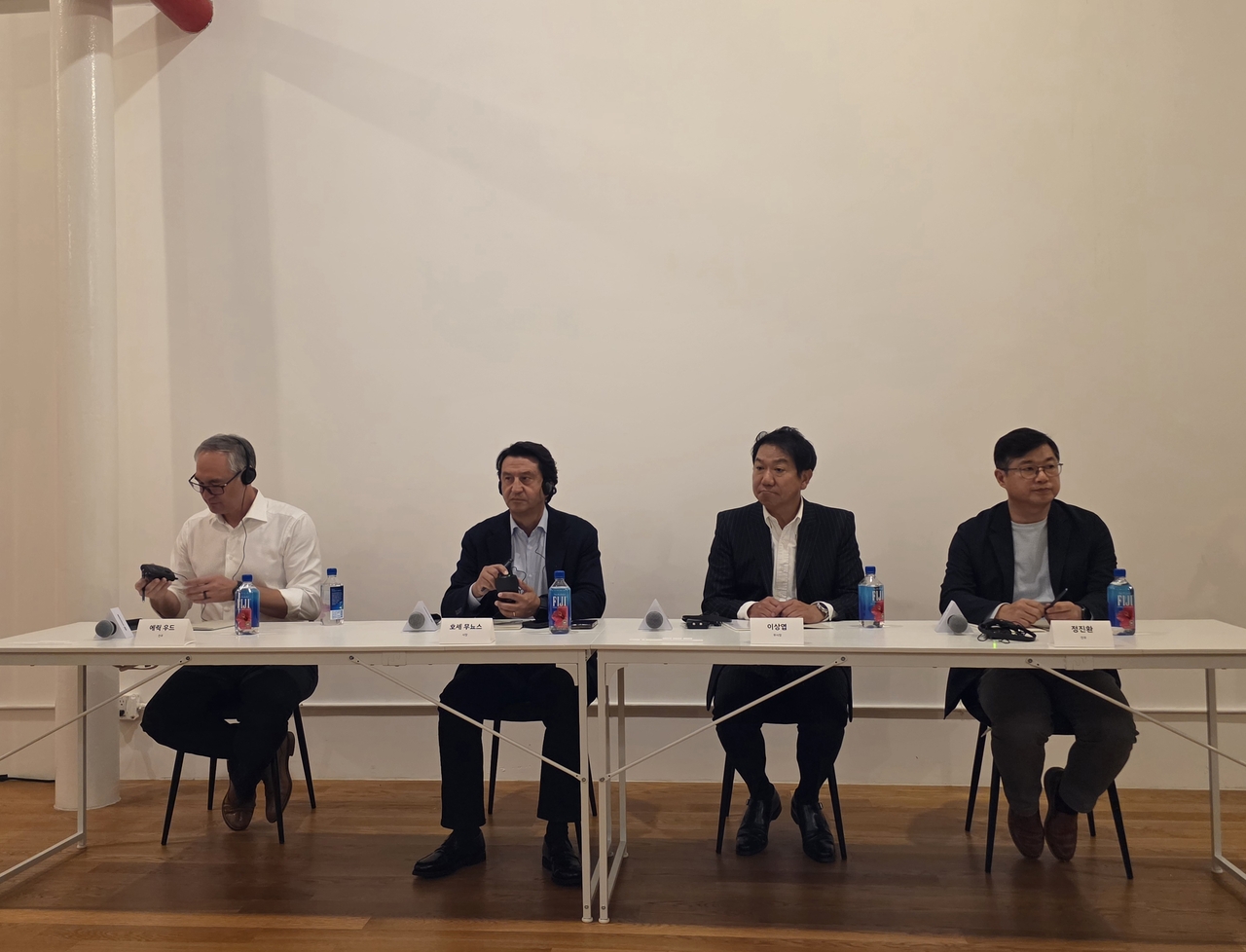
Hyundai Motor unveiled a next-generation hybrid system for the new Tucson based on what it calls "Intelligent Efficiency," designed to deliver both performance and fuel economy. Jung Jin-hwan, executive vice president of vehicle development at Hyundai Motor, said the system was developed with a focus on reducing the jolt or sense of disconnect that can occur when the engine kicks in. "We focused on ensuring a smooth transition from motor drive to engine drive while still allowing immediate acceleration when needed," he said.
Eric Wood, executive vice president of product experience at 42dot, highlighted the Tucson's adoption of Pleos Connect — a first for a Hyundai SUV — saying software updates play an important role in sustaining a vehicle's value. "Vehicles that receive continuous updates keep gaining new features and capabilities, and we are seeing in the market that their actual value holds up better as a result," he said.
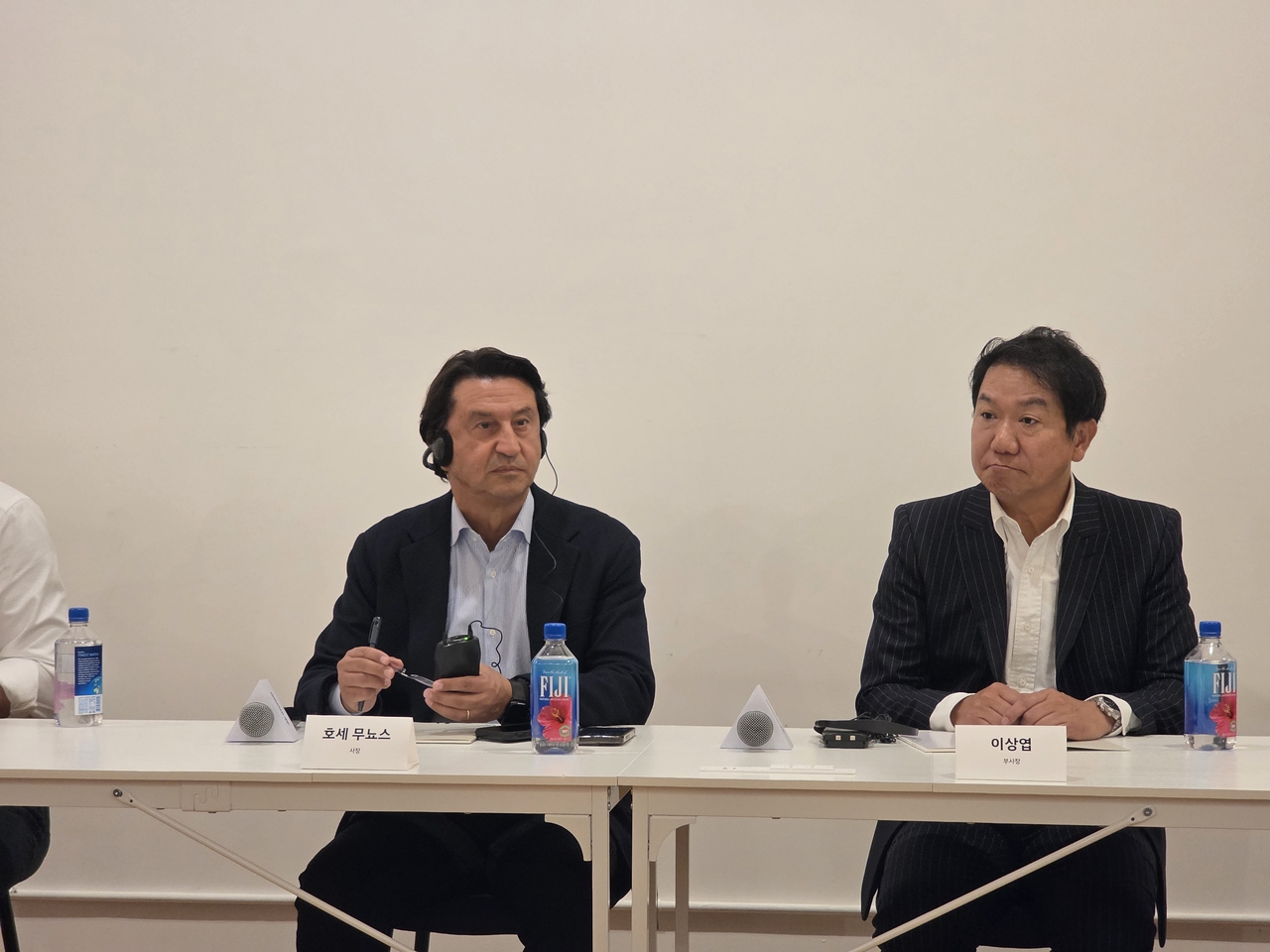
On the design direction for the new Tucson, the team said it drew on the global outdoor trend. Lee Sang-yeup, executive vice president of Hyundai Genesis Global Design, said practical considerations such as interior space utilization were also central to the design. "We aimed for a more authentic SUV character — stronger and bolder," he said.
On the expansion of off-road trims in the South Korean market, Lee said the XRT had previously been focused on the US market, but that the outdoor trend has now taken hold in Korea, Europe and India as well, explaining the decision to expand the XRT trim offering domestically.
Meanwhile, Munoz identified securing production supply as the top priority for addressing this year's weak performance in the South Korean domestic market. "One of the reasons our performance in the Korean domestic market deteriorated this year was strikes," he said. "There were various external factors — tariffs, changes to the Inflation Reduction Act, the war in Ukraine, geopolitical issues in the Middle East, competition from Chinese automakers — but the most direct problem for us was that we were not able to produce as many vehicles as we wanted to sell."
"We believe a final agreement between labor and management has been reached, and production is normalizing again," he said, adding that once supply recovers, vehicle availability will increase not only for the Korean domestic market but for other markets as well.
On China, Munoz acknowledged that Hyundai Motor was late to both the hybrid and electric vehicle trends there, but signaled a rebound with the launch of the Ioniq V. "In the Chinese market, we clearly missed the wave of hybrids," he said. "More importantly, we also missed the wave of electric vehicles."
"We launched a new electric vehicle in China this year, and that will not be the last," he said. "We will compete in earnest in China's electric vehicle market going forward, and we will compete in the hybrid market as well."
eyre@heraldcorp.com