The three cities plan to build an integrated tourism framework and jointly push for RE100 national industrial complex designation and a regional cluster.
The three eastern South Jeolla Province cities of Yeosu, Suncheon and Gwangyang have agreed to build an integrated tourism framework through their joint administrative council.
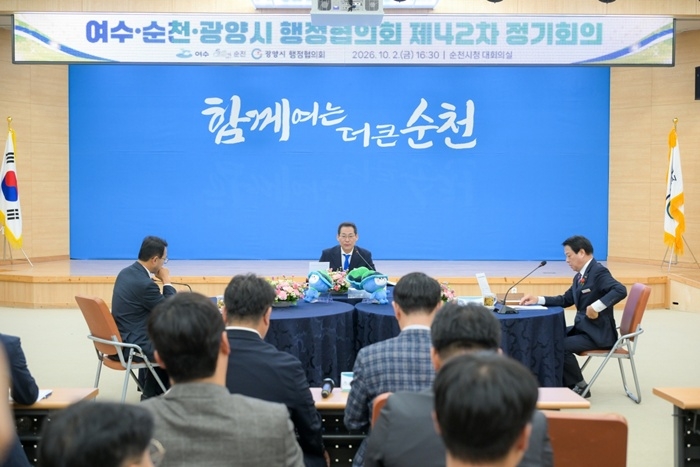
The 42nd regular session of the Yeosu-Suncheon-Gwangyang Administrative Council, held Friday at Suncheon City Hall, took up major issues including tourism promotion across the Gwangyang Bay area, the development of future industries and regional cooperation.
Suncheon Mayor Son Hun-mo, Yeosu Mayor Seo Yeong-hak and Gwangyang Mayor Park Seong-hyeon attended the session, sharing updates on council operations and joint cooperation projects before deliberating and voting on the agenda items submitted by each city.
The three cities share the inner waters of Gwangyang Bay and sit adjacent to one another — much like Cheonan and Asan — with a combined population of around 700,000.
The main agenda items were a joint study on building an integrated tourism framework for the three cities, a proposal to have South Korea host COP33 with the southern coast and south-central region designated as priority venues, a proposal for RE100 national industrial complex designation and a regional cluster in the Gwangyang Bay area, and a proposal for integrated subsidy distribution to strengthen fiscal self-reliance and regional cooperation among cities, districts and counties.
Among these, the integrated tourism framework — aimed at connecting the Gwangyang Bay area as a single tourism lifestyle zone — will be developed next year through a joint research project. The three cities plan to create integrated content such as a tourism rally linking the attractions of all three cities and a wide-area tour route, and will also review ways to expand tourism discounts for residents of the three cities.
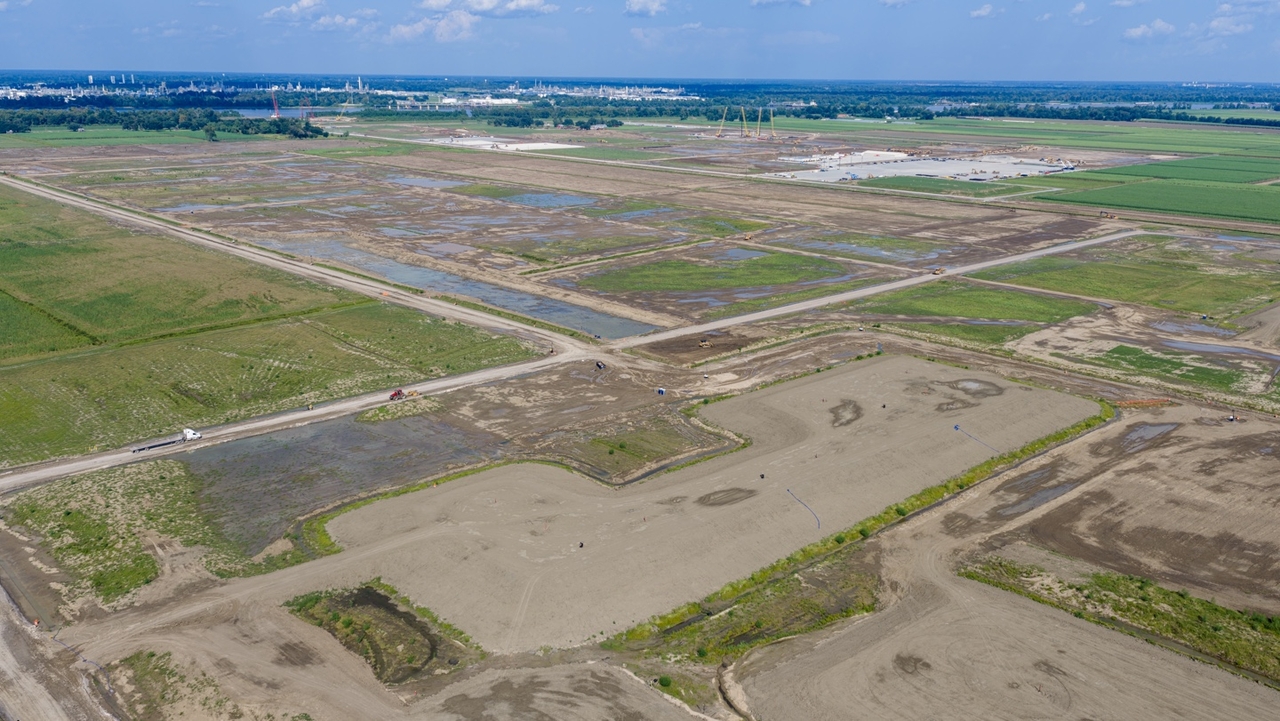
The cities will also work together to secure RE100 future advanced materials national industrial complex designation and establish a wide-area advanced industry cluster in the Gwangyang Bay area. They plan to build an industrial base for future advanced functional and eco-friendly materials, components and equipment — including semiconductors, secondary batteries and defense industries — and pursue a regional supply chain linking the existing petrochemical and steel industries with Gwangyang Port.
The three cities plan to deliver the joint proposal adopted Friday to relevant government ministries, the Gwangju-South Jeolla integrated special city and its education office, and other related agencies, and will continue follow-up consultations to translate each agenda item into concrete policies and projects.
parkds@heraldcorp.com