Architect delivers final session 'From ashes to rebirth' at Herald Design Lounge 2026
'Laozi foresaw the AI age 2,500 years ago — shed knowledge to reach it'
'AI cannot decide for whom you build — that remains a human task'
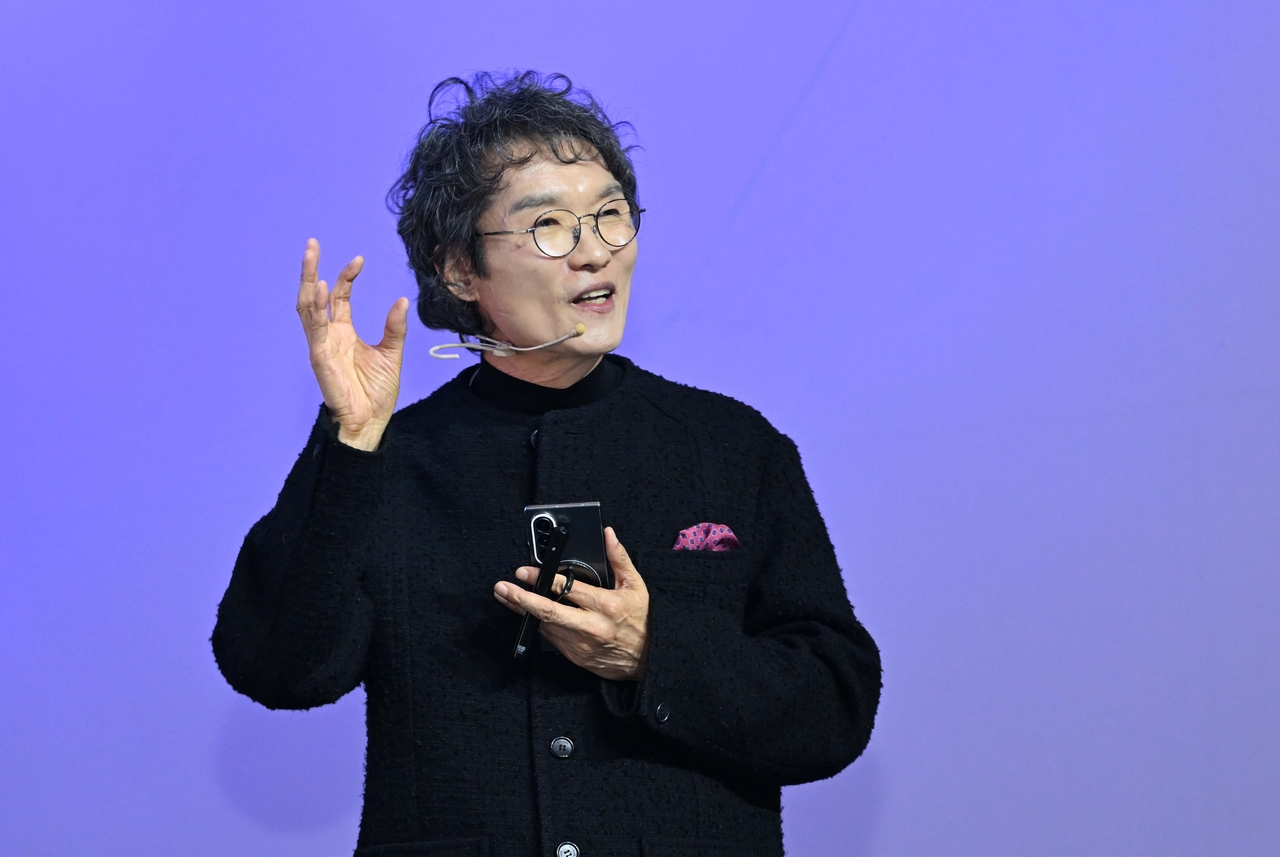
"I have a confession. For the past 20 years I haven't read a single architecture book. Not a design book either. And yet over those same 20 years I reached a world-class level."
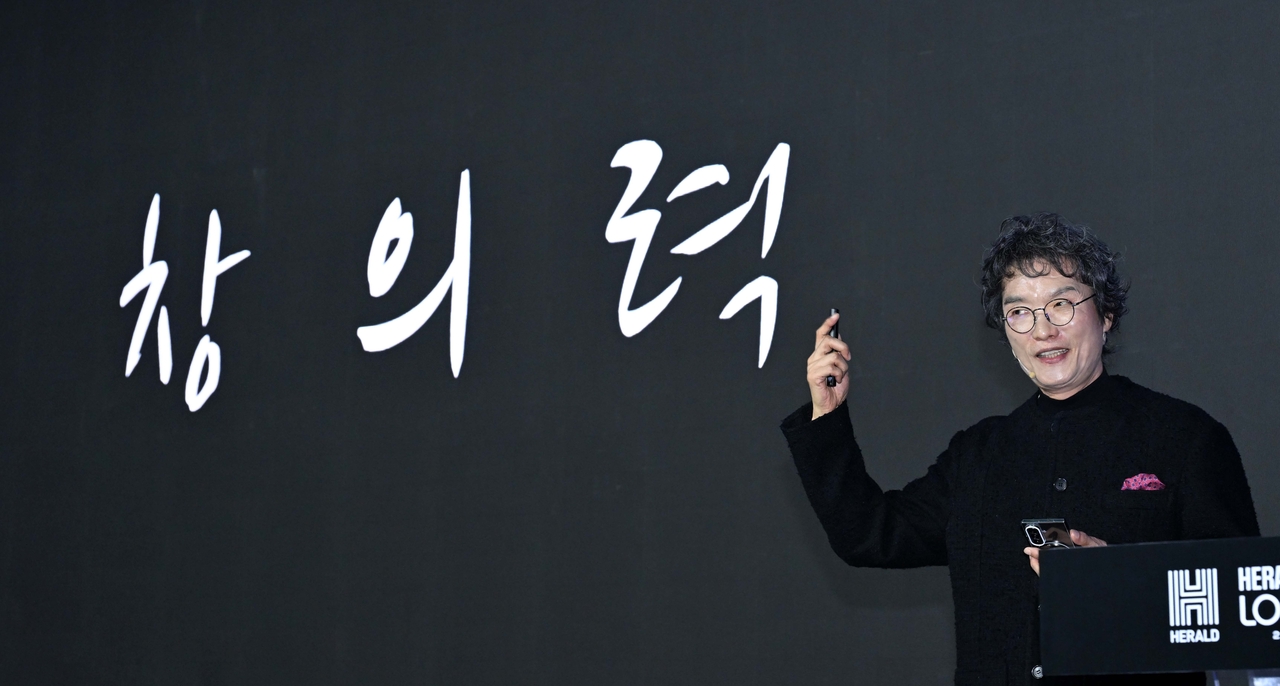
Yoon Kyung-sik, chairman of Hankuk Architecture, made the remark Friday at the closing session of Herald Design Lounge 2026, held at Dongdaemun Design Plaza in Seoul under the theme "Beyond Visuals." His presentation was titled "From Ashes to Rebirth."
"A work can be seen and touched, but the thoughts and movements of the person who made it cannot," Yoon said. "Finding that invisible realm is what creativity and the humanities are." He added that the humanities are the patterns humans draw, and that imagination is the act of dreaming what patterns to trace on a road no one has walked before. On the meaning of "beyond," he drew on the closing verse of the Heart Sutra — "Gate gate paragate," which he rendered as "Cross over, cross over to the other shore."
The idea he pressed hardest that day was "emptying." Yoon quoted Laozi's maxim: "In pursuit of learning, every day something is acquired; in pursuit of the Tao, every day something is dropped." He said, "Shedding knowledge, concepts and experience day by day leads to non-action — Laozi foresaw the AI age 2,500 years ago."
His point was that AI now accumulates knowledge on our behalf. "If you form an idea from knowledge and theory and ask ChatGPT, almost everything is already there. That makes me second place every time," he said. "Even when you read a book, underline it, forget it and move on. Only then does an empty space open up for you to enter." He added, however, that "AI data is a powerful weapon, but deciding for whom you build — that is something GPT cannot do," and said that judgment remains a human responsibility.
His philosophy of emptiness has been proven through his work. Describing the officers' meditation center at the Army Sangmudae base in Jangseong, South Jeolla Province, he said, "The entire design is just three horizontal lines," and recalled that the philosophers who came to evaluate it said they did not even need to go inside.
Yoon said 12 of the 25 international architecture awards he has won came from religious buildings such as churches and Buddhist temples. The secret, he said, was stripping away religious color. A church he built inside an apartment complex in Gunpo, Gyeonggi Province — called "Sarang Bineun Gyohoe" (Love-Brewing Church) — looked so unlike a church that residents did not realize what it was until construction was complete. A columbarium at Baegyangsa Temple in Jangseong, South Jeolla Province, named "Healing House of the Soul," expressed death not as something dark and frightening but as a bright celebration. Both buildings received the German iF Design Award.
"International architecture awards are given for the ideas contained within a building, not its outward appearance," Yoon said. "If you fixate only on visible form, you hit a wall very quickly." On the overseas trend of labeling Korean architecture "K-architecture," he said branding it with a "K" — as with K-pop and K-food — ends up confining Koreans within a framework of their own making.
"Advanced countries give awards not for the visual but for the beyond," he said. "Invest in the visual and the limits come fast."
Inwolsa Temple in Gangneung, which burned to the ground in a 2023 wildfire, followed the same path. All that remained was a monk's robe and a bank account holding less than 1 million won ($736), yet donations poured in from across the country.
"Build it in wood again and it will burn again," Yoon said, opting against a timber restoration. Instead, he translated the shape of the Buddha's eyebrow — likened to a crescent moon — into the form of the entire building. The front exterior wall, called the "Indra Wall," embodies the Hwaeom (Avatamsaka) concept that all beings are interwoven like a net, each reflecting the others.
"Countless people today live connected through SNS every day. We feel the Indra net in our bones," he said. Inwolsa won the top prize at this year's World Architecture Awards in the United Kingdom and has since become a landmark destination in Gangneung.
Near the end of his lecture, Yoon shared his personal method of ideation, drawing on the concept of "direct mind" found in an ancient character for virtue, and on Zhuangzi's notion of "losing oneself." "Catch the thought that just pops up. If you go looking for data and start analyzing, you're already too late," he said. "Holding a funeral for the self built from knowledge and experience — what remains after that is creativity."
"Creativity is not understanding and analysis — it is sensation, courage and 'Why not?'" he said, and went on to say, "Don't be moved by my work either. Thinking 'not bad' is where creativity begins." He closed by adding, "Only by loving and respecting yourself until the day you die do you become the master of your own life."
rimsclub@heraldcorp.com