Herald Design Lounge 2026 opens at DDP on Friday
Packed house of 400 greets inaugural event
Speakers stress territory beyond machine computation
'When AI adds endlessly, humans must subtract'
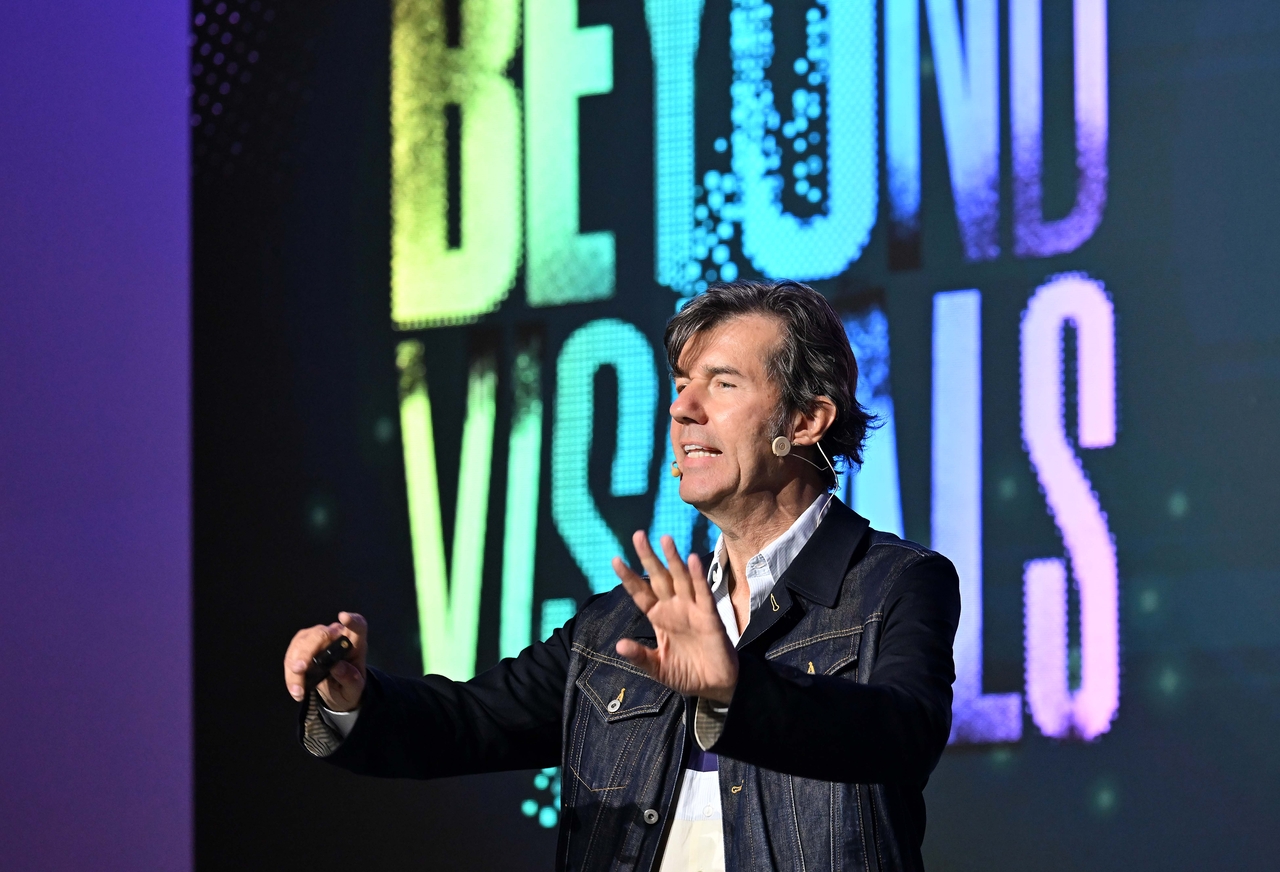
"When photography emerged in 1870, painters trembled at the thought of losing their livelihoods — yet without it, Jeff Koons's stainless-steel balloon dog and Suh Do-ho's vast fabric house would never have come into being. AI becomes truly interesting only when it opens up dimensions of creation that the human mind could not have imagined on its own."
World-renowned graphic designer Stefan Sagmeister invoked the "liberation of art" that photography triggered more than 150 years ago as a lens for the present. His message: in the age of AI, creators should resist the urge to simply replicate existing work "faster and cheaper" with machines, and instead push into territory that lies beyond what any algorithm can compute.
Herald Design Lounge 2026, the country's leading design knowledge platform, opened Friday at Dongdaemun Design Plaza in Jung-gu, Seoul. The Herald Business marked the occasion by transforming its Herald Design Forum — which over 15 years convened more than 100 global masters before audiences totaling some 10,000 — into a "lounge" format designed to encourage freer, more fluid exchange.
Themed "Beyond Visuals," the event drew a line of attendees snapping photos before the doors even opened, and all roughly 400 seats filled to capacity.
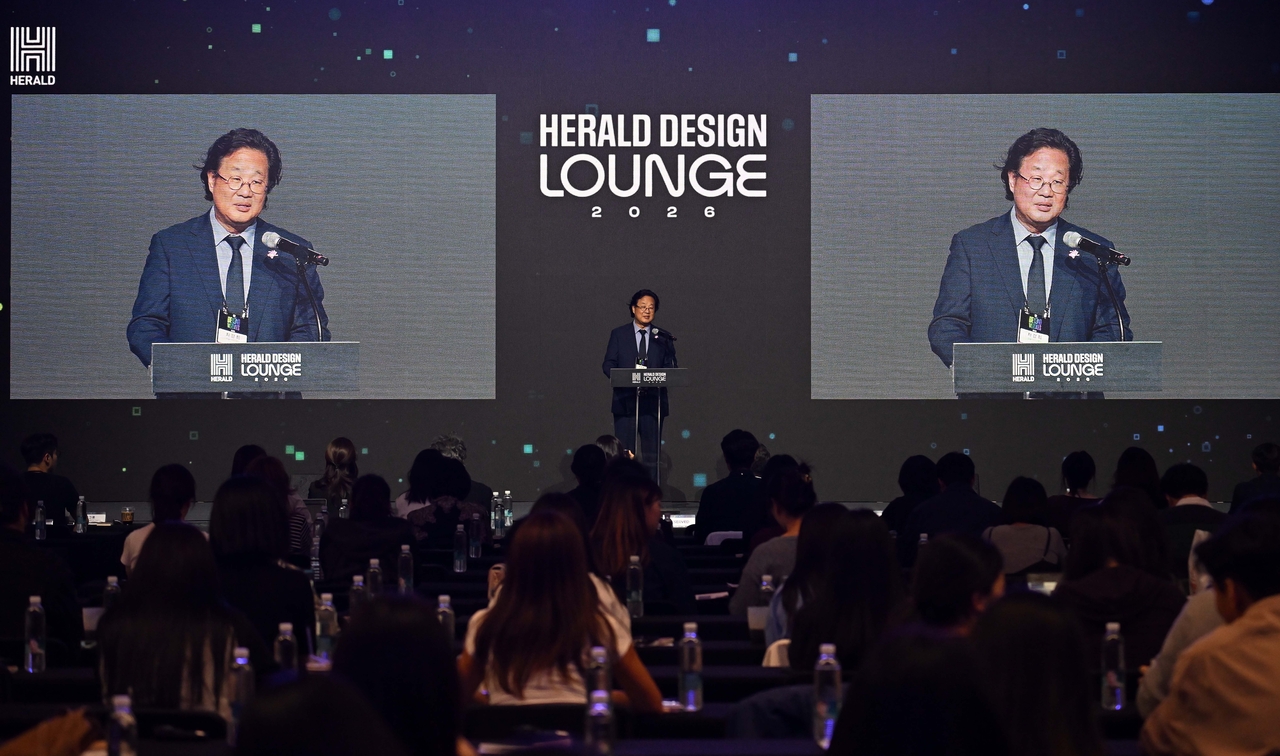
In his opening remarks, Herald Group President and CEO Choi Jin-young said "the true power of design lies not in visible form but in changing the way we experience the world," adding that "the more technology evolves, the more important the human question of what to make and why becomes." Cha Gang-hee, chief executive of the Seoul Design Foundation, echoed the sentiment in her congratulatory address. "In an era when AI generates images in seconds and shaping form is no longer rare, what becomes truly precious is the eye that sees beyond form," she said. "As technology takes charge of form, designers must become the people who design the lives in which that form will be placed."
Sagmeister opened his keynote by presenting a visualization of 200 years of accumulated human-progress data, urging creators gripped by AI anxiety and short-term media pessimism to shift their perspective. "Sensational short-term news makes it sound as though the world is about to collapse, but if you take the long view across 200 years, human life has improved dramatically in almost every domain," he said, arguing that designers should not sink into despair but instead show audiences a hopeful future. He put that conviction into practice during the war in Ukraine, staging an exhibition of hopeful data inside a shipping container in a park in Lviv — even as drone-strike alerts sounded — and bringing comfort to some 3,500 local residents.
Sagmeister argued that in an age when AI churns out images by the second, the "real value" of design lies in human labor. He described cutting up 200-year-old paintings he found stacked in his attic — slicing and sanding them by hand to create contemporary data sculptures. "The more results flood the market without limit, the rarest and most precious material becomes the evidence of effort itself — proof that another person spent their time and care for you," he said.
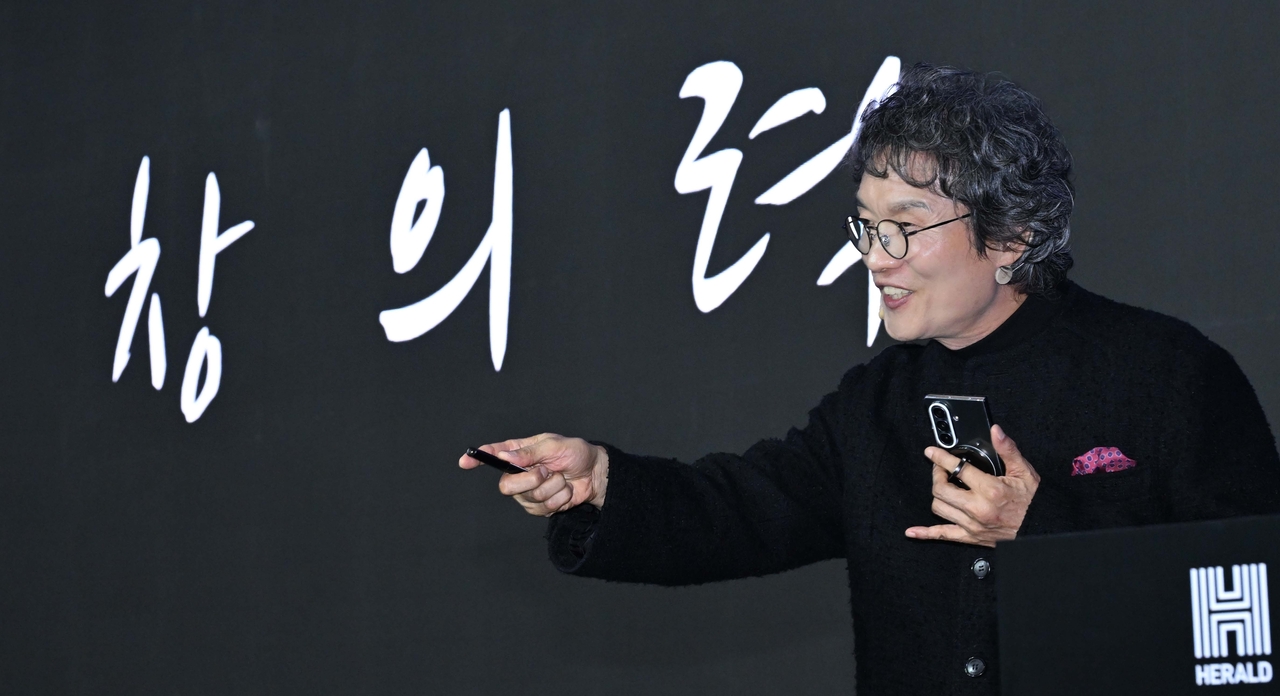
A panel talk that followed brought together moderator Lee Jin-jun, a media artist and KAIST professor, typographer Yu Ji-won, director of the Geulmunhwa Research Institute, and Sagmeister to map the terrain that machines cannot reach. Yu said that "even dementia patients hold on to the last is the desire to be happy" — arguing that designers must stand outside technology and attend to human life and its unmet needs. Lee added that "the time lived through the body and the willingness to take personal responsibility for one's judgments are things no machine can substitute," calling attention to the irreplaceable particularity of imperfect human experience.
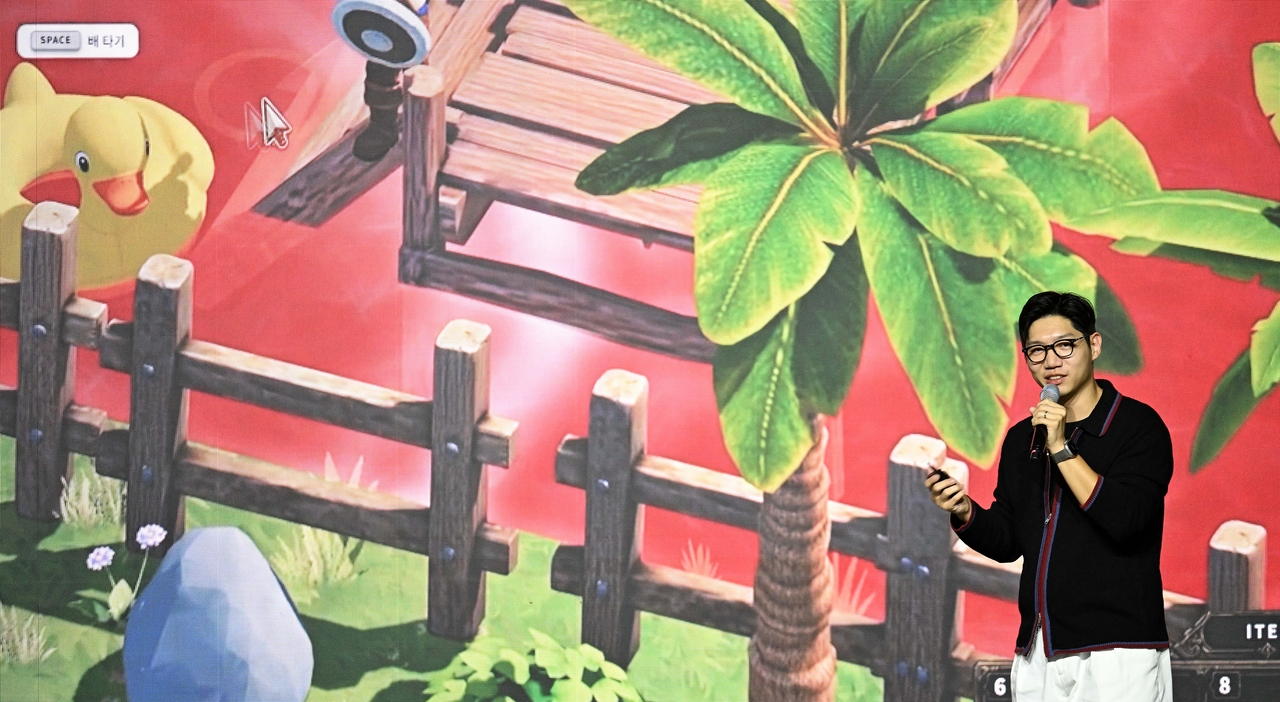
Hands-on experiments by next-generation creators also captivated the audience. Kim Geu-ryun, a creator on the Apple TV content team, broke out of the two-dimensional slide format entirely, turning the presentation itself into a three-dimensional game that audience members could explore — drawing an enthusiastic response. Kim also unveiled a prequel to the horror short film "Kkorijabjgi" reimagined as an interactive film whose ending changes according to viewer choices, and described an online-offline hybrid project in which audience members who entered a hidden URL received a physical board game and movie ticket delivered to their homes. "In an era flooded with similar AI-generated video, technical polish alone cannot set you apart," Kim said. "Designers need to use vibe coding to build the tools and production pipelines they need themselves."
Artist Yoon Seok-gwan, who works under the name KEEPKWAN, said he was shocked during an overseas business trip when he saw AI labeling hanbok — traditional Korean dress — as "Chinese kimono," and that the experience prompted him to begin creating AI-generated work centered on the subject. After producing physical garments from AI hanbok images and expanding his "Omnisense" content this year to incorporate scent and taste, he told the audience: "When AI adds endlessly, humans must subtract." He urged attendees to switch on what he called "human mode" — walking an hour a day, practicing pottery and bonsai, sharpening the sensitivity of their fingertips — as the only way to preserve a distinct self without being consumed by machines.
Architect Yoon Kyung-sik, chairman of Hanguk Architecture, closed the event with a special talk recounting how he rebuilt Gangneung's Inwolsa Temple — destroyed by a wildfire — in the form of a crescent moon evoking the Buddha's eyebrow, guided by the Buddhist philosophical concept of Indra's net. Yoon, who said he has not read an architecture book in 20 years, drew on Laozi's philosophy of emptiness and Sima Qian's concept of exploring the relationship between heaven and humanity. "Knowledge and data already overflow in the world, so imagination emerges only when you stand in the space emptied of concepts," he said. "The humanities are ultimately the patterns that humans draw, and the intuitive sensibility and courage to trace those patterns are the originality that survives even in an era of technological upheaval."
Audience members responded warmly. Lee Jae-hyun, 28, a mobile designer at Samsung Electronics who attended with colleagues, said the event gave him "a chance to reflect deeply on what kind of positive influence I should have as a working designer, alongside the message to see the world with optimism."
Hong Ji-eun, 67, a pharmacist, said she found it "valuable to learn concrete examples of how knowledge and society intersect in the design field, at a time when the tension between AI and humanity feels so acute." Jeong Yu-ri, 21, a university student majoring in MICE, said she "drew strong inspiration for future planning work from seeing how designers go beyond simply using AI to actively taking charge of the tools themselves."
shee@heraldcorp.com