Reports rose 44.2% since 2021; 1,633 cases already filed in first 8 months of this year
Gangnam district office topped regional tallies last year; accommodation and food service sector on pace to match 2025 full-year total
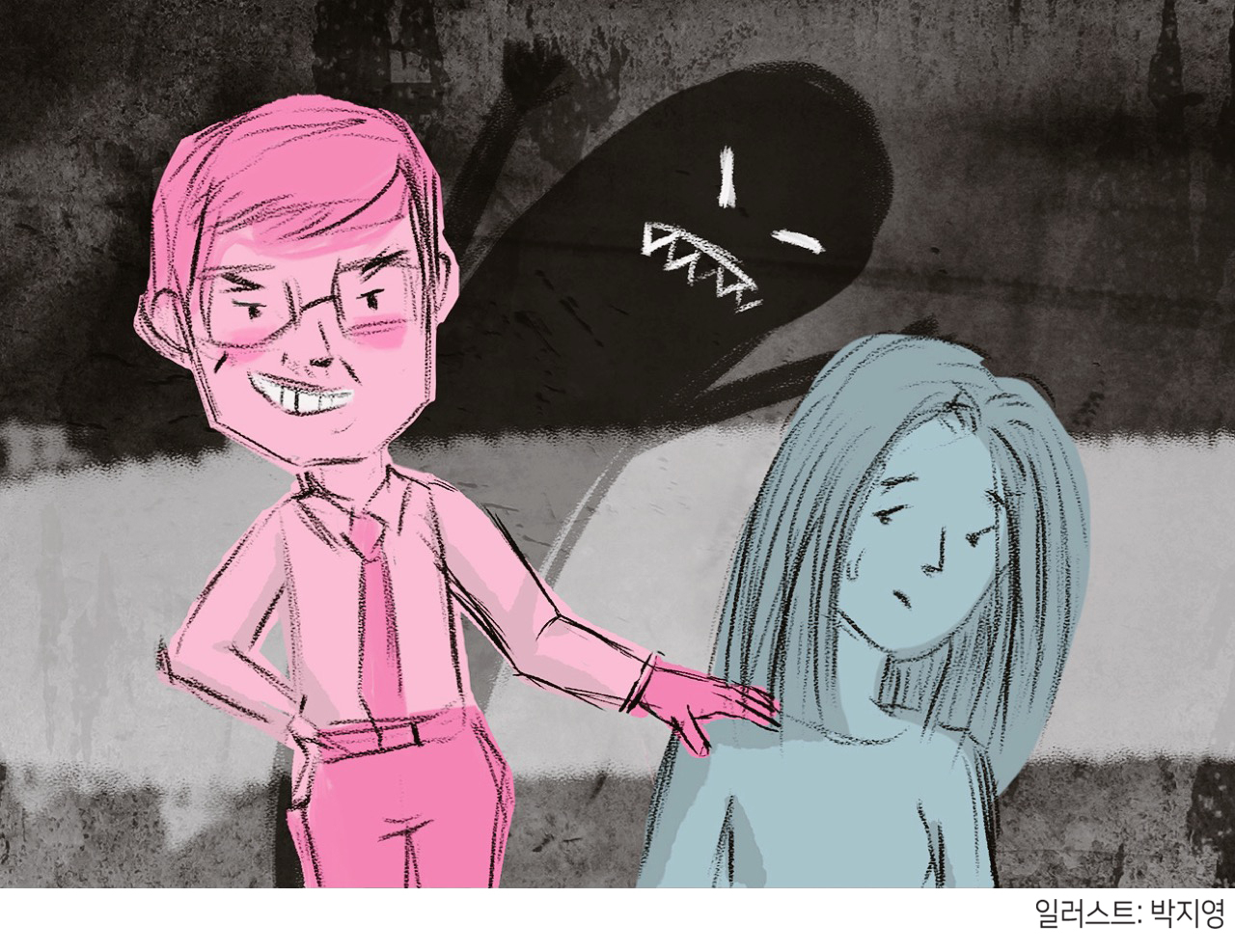
Workplace sexual harassment complaints filed with labor authorities have climbed every year, surpassing 2,200 cases last year.
That marks a 44% increase from 2021. Workplaces with fewer than 30 employees accounted for roughly six in 10 complaints received, and reports from the accommodation and food service sector have already reached nearly 90% of last year's full-year total in just eight months.
According to a report on workplace sexual harassment complaint processing submitted by the Ministry of Employment and Labor to the National Assembly on Friday, 2,273 complaints were filed last year — 697 more, or 44.2% higher, than the 1,576 recorded in 2021. The figure has risen for four consecutive years, from 1,588 in 2022 to 1,931 in 2023 and 1,997 in 2024, before reaching 2,273 last year. The year-on-year increase last year was 13.8%.
The trend has continued this year, with 1,633 complaints filed in just the first eight months — equivalent to 71.8% of last year's full-year total. Whether the rise in reports reflects an actual increase in incidents requires separate analysis, but the volume of cases being brought to the ministry for resolution has consistently grown.
Over half of reports from workplaces with fewer than 30 employees; food and accommodation sector logs 216 cases this year
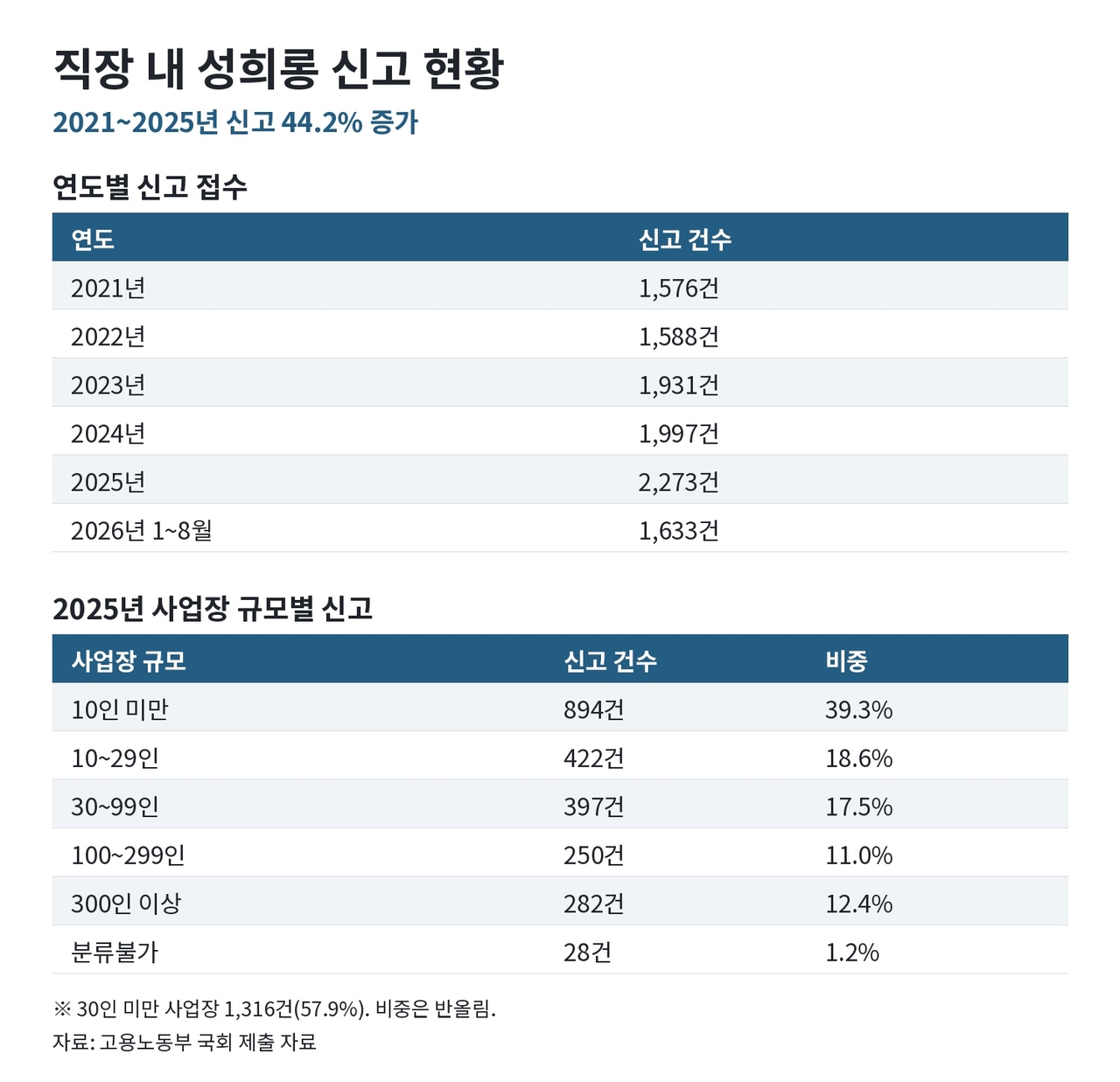
Last year, workplaces with fewer than 10 employees generated the highest number of complaints, at 894 cases, or 39.3% of the total. Adding the 422 cases from workplaces with 10 to 29 employees, complaints from businesses with fewer than 30 workers reached 1,316 — 57.9% of all cases.
The pattern held in the first eight months of this year: 634 cases came from workplaces with fewer than 10 employees and 309 from those with 10 to 29, putting the under-30 category at 943 cases, or 57.7% of the total. In both years, roughly six in 10 complaints originated from small workplaces. The figures do not reflect incidence rates adjusted for the number of businesses or workers.
By industry, manufacturing led all sectors last year with 358 complaints, followed by wholesale and retail trade with 333, accommodation and food service with 249, and health and social welfare services with 219. Together, these four sectors accounted for 1,159 cases — exactly half of all complaints filed.
The accommodation and food service sector stands out so far this year. Its 216 complaints in the first eight months already represent 86.7% of last year's full-year total of 249. The transportation and warehousing sector matched its entire 2025 figure of 77 cases in the same eight-month period. Over the same stretch this year, manufacturing recorded 250 cases, wholesale and retail trade 228, and health and social welfare services 168.
Among regional labor offices, the Seoul Gangnam branch received the most complaints last year with 140, followed by the Seoul Southern branch with 134, the Seongnam branch with 130, the Seoul Metropolitan office with 118 and the Gyeonggi Province office with 116. In the first eight months of this year, the Seoul Metropolitan office has already logged 144 cases, surpassing its full-year 2025 total. The Seoul Western branch, with 73 cases, is also close to matching its full-year figure of 74.
507 cases withdrawn last year — how complaints are resolved also warrants scrutiny
As the number of complaints grows, the way cases are ultimately resolved also deserves attention.
Of last year's complaints, 299 were classified as involving legal violations. Those cases resulted in six indictments, 98 administrative fines and 195 compliance completions.
A total of 1,952 cases were grouped under "no legal violation or other," but only 982 of those were categorized as having no violation. The remainder consisted of 507 withdrawals or similar outcomes, 387 administrative closures and other dispositions, 57 cases excluded from legal application and 19 non-indictments. This breakdown is why the entire "no legal violation or other" category should not be read as meaning no harassment occurred.
Particularly notable is that cases classified as "withdrawn or similar" accounted for 22.3% of all complaints filed last year. However, the data does not detail the specific circumstances behind those withdrawals, making it impossible to determine whether victims received redress or whether the parties reached a settlement. A full picture of how cases are actually handled requires examining not just the number of complaints filed but also how each case was closed.
Meanwhile, of the complaints filed in the first eight months of this year, 149 were classified as involving legal violations — resulting in two indictments, 63 fines and 84 compliance completions. Another 267 cases, or 16.4% of the total, remain under review.
fact0514@heraldcorp.com