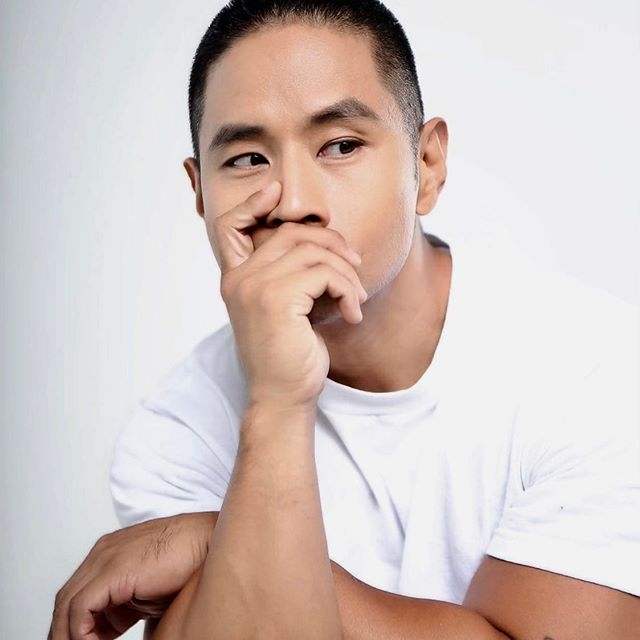
![Park Hong-jun, CEO of Pinorlike. Park expects the company's sales to exceed 14 billion won this year. [Pinorlike]](https://wimg.heraldcorp.com/news/cms/2026/10/08/news-p.v1.20261008.d6c0b37818a049fa907b417b689b9b13_P1.jpg)
First company shuttered in 2008, discharged from bankruptcy in 2015 — Park relaunches as security firm in 2021
Sales climb from 2.73 billion won in 2023 to 8.72 billion won last year; 60 corporate clients secured
Kibo's comeback guarantee program provides 1 billion won in total support, giving the restart a financial lifeline
Entrepreneurs who have failed once face steep odds when trying to re-enter the market. A damaged credit record from a previous business failure can shut them out of conventional financing even when they have the technology and experience to succeed. Korea Technology Finance Corporation's "restart support guarantee" program is designed to address exactly that gap — screening entrepreneurs whose past failures have limited their access to capital but who demonstrate genuine technical capability and business viability, then channeling fresh funding to those who qualify.
Security software firm Pinorlike is one company that used the program to find its footing after a second launch. Sales of 2.73 billion won ($2.04 million) in 2023 grew to 6.18 billion won in 2024 and reached 8.72 billion won last year — more than tripling in two years. Park Hong-jun, CEO of Pinorlike, expects sales to surpass 14 billion won this year.
For Park, this venture is his second attempt at building a company. He founded Athers Technology in 2001, supplying database systems, hardware equipment and software to mobile carriers. At its peak the company employed 18 people, posted annual sales of around 6 billion won and generated operating profit of between 300 million and 400 million won a year. Trouble began when the dot-com boom faded. Anticipating continued market expansion, Park had aggressively added staff and inventory — but demand fell faster than expected. With SK Telecom, the then-LG Telecom and KTF as its main clients, the company was left sitting on unsold stock.
"I had a computer science background, so I understood the technology well, but I had real gaps in management and operations," Park said of that period. "The problem was that I misjudged demand and over-invested in people and inventory." Athers Technology began struggling in earnest in 2006 and ultimately closed in 2008. Park was declared bankrupt in 2013 and received a discharge in 2015.
When the company shut down, he helped place employees with partner firms so they could continue working in the same industry. Some of those former staff members later rejoined him when he launched his new venture.
Park did not rush back into entrepreneurship after the closure. Concluding that hardware and infrastructure alone offered no viable path forward, he took a job at a security firm, spending more than a decade building expertise in the industry — adapting foreign security products to fit the environments of domestic clients and providing ongoing support.
Drawing on that experience, he founded Pinorlike in 2021. Rather than returning to the hardware-heavy, inventory-burdened model of his first company, he focused on software development. The firm now employs 25 people.
Pinorlike's core products include a security solution for managing corporate firewall policies and an automated vulnerability management system. "Some of Korea's most prominent large companies and financial institutions are our clients — about 60 organizations in total," Park said.
The company has also been investing in products that apply AI to security operations. Its PINO ARC platform uses multiple AI models in a multi-large language model (multi-LLM) architecture, aiming to automate the collection, analysis, assessment and response stages of security-related data handling.
Park said the wave of recent cyberattacks has prompted companies to rethink how they manage security. Rather than conducting a one-off vulnerability check, organizations now need a system that continuously monitors and responds to threats across their entire IT asset base, he said.
"Security is likely to move in the same direction as other IT operations — toward continuous management and automation," he said.
In the early days of the relaunch, funding was the biggest obstacle. Software companies typically need considerable time between developing a product, building a technical team and generating their first revenue. For an entrepreneur carrying a record of business failure and bankruptcy discharge, raising that capital from conventional lenders was far from straightforward. That is when Park turned to Kibo's restart support program.
Kibo's restart support guarantee targets entrepreneurs with a history of failure who can demonstrate current technical strength and business viability. It provides new guarantee support to those who still carry outstanding guarantee obligations from the past or have completed debt restructuring. A key feature of the program is that past failure alone does not determine eligibility — assessors re-evaluate each applicant's present technology, business prospects, revenue base and realistic chances of recovery.
Pinorlike received guarantees of 190 million won in November 2024, 310 million won in September last year and 500 million won ($373,000) in August this year, bringing total support to 1 billion won. Park said he was particularly struck by how much more rigorous the assessment of comeback companies has become. "It's not just a matter of checking your revenue figures the way it used to be — they actually review your business plan and technology roadmap to determine whether you're a company with real technical substance," he said. "I got the sense that they look quite closely at patents and products as well."
Pinorlike currently holds five registered patents in security technology and has seven more applications pending. Park said support for entrepreneurs with a history of failure must be distinguished from unconditional rescue.
"People who have failed know in their bones exactly why they failed," he said. "Because they work so hard not to repeat those mistakes, I hope more of them get the chance to try again." He added, however, that the program should not amount to lending money without conditions. "You still have to rigorously verify whether a company has the technology, the revenue and the staying power to keep going," he said.
hong@heraldcorp.com