Statutory retirement age frozen at 60 for 28 years; rehiring system adopted
Mandatory rehiring for all applicants phased in over 25 years
Labor, management and government share costs; pay restructured around performance
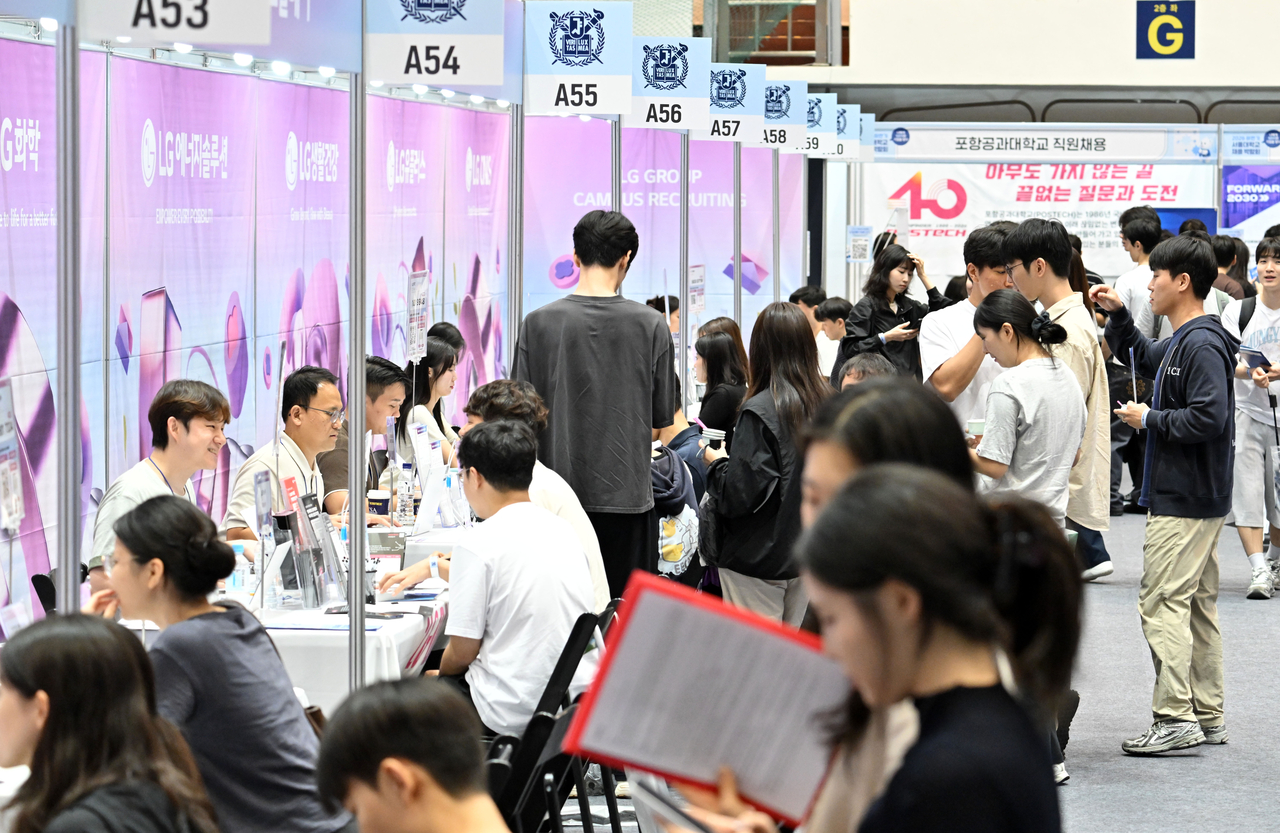
![Job seekers browse recruitment postings at the 2026 Seoul Senior Job Fair held at the aT Center in Yangjae-dong, Seoul, on Sept. 17. [Yonhap]](https://wimg.heraldcorp.com/news/cms/2026/10/08/rcv.YNA.20260917.PYH2026091715260001300_P1.jpg)
Japan's decision to expand employment for older workers through a rehiring-centered system rather than raising the statutory retirement age was driven in large part by a youth employment crisis — a dynamic that carries direct lessons for South Korea, where youth joblessness is deepening and the number of young people who have simply stopped looking for work continues to rise.
The Korea Enterprises Federation said in a report titled "Japan's Retirement Age Extension Case and Its Implications," released Sunday, that Japan introduced its rehiring-centered measures to secure employment up to age 65 "after comprehensively weighing the burden on businesses and the impact on the labor market" at a time when youth employment conditions had deteriorated so severely the period was dubbed a "youth employment ice age."
Seniority-based pay and youth unemployment: raising the age uniformly risks shifting the burden
According to the report, South Korea entered super-aged society status at the end of 2024. The working-age population peaked in 2019 and has been shrinking since, and the population aged 15 and older is projected to decline after 2032. The Bank of Korea forecast that the labor supply will fall 6.4 percent — about 1.41 million people — over the next decade, with GDP contracting 3.3 percent.
The structural problem lies in the labor market's pay system. The wage ratio of workers with 30 or more years of tenure to those with less than one year stands at 2.95 in South Korea — higher than Japan's 2.27, Germany's 1.80, France's 1.63 and the United Kingdom's 1.52. The Korea Enterprises Federation identified the seniority-based wage system, in which pay rises in proportion to years of service, as a primary factor inflating labor costs for companies and reducing their capacity to hire young workers.
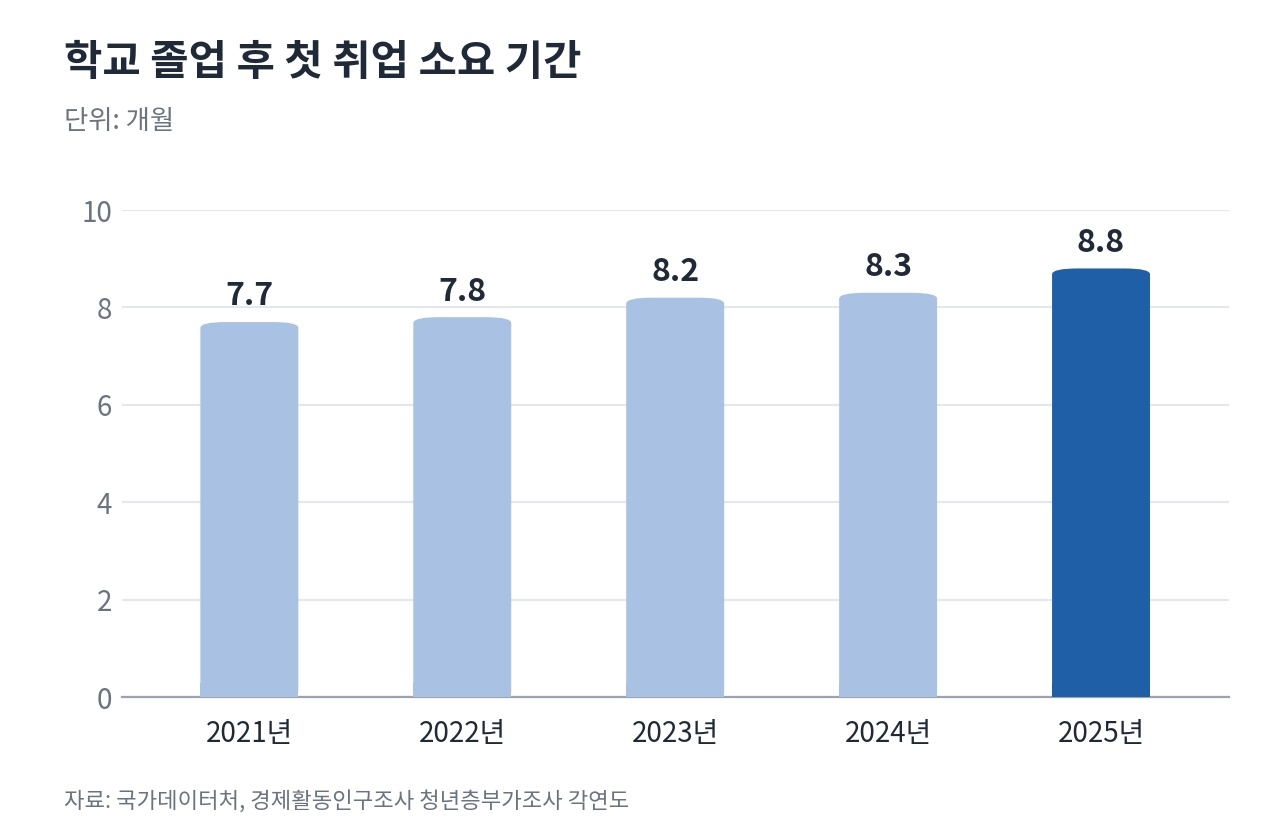
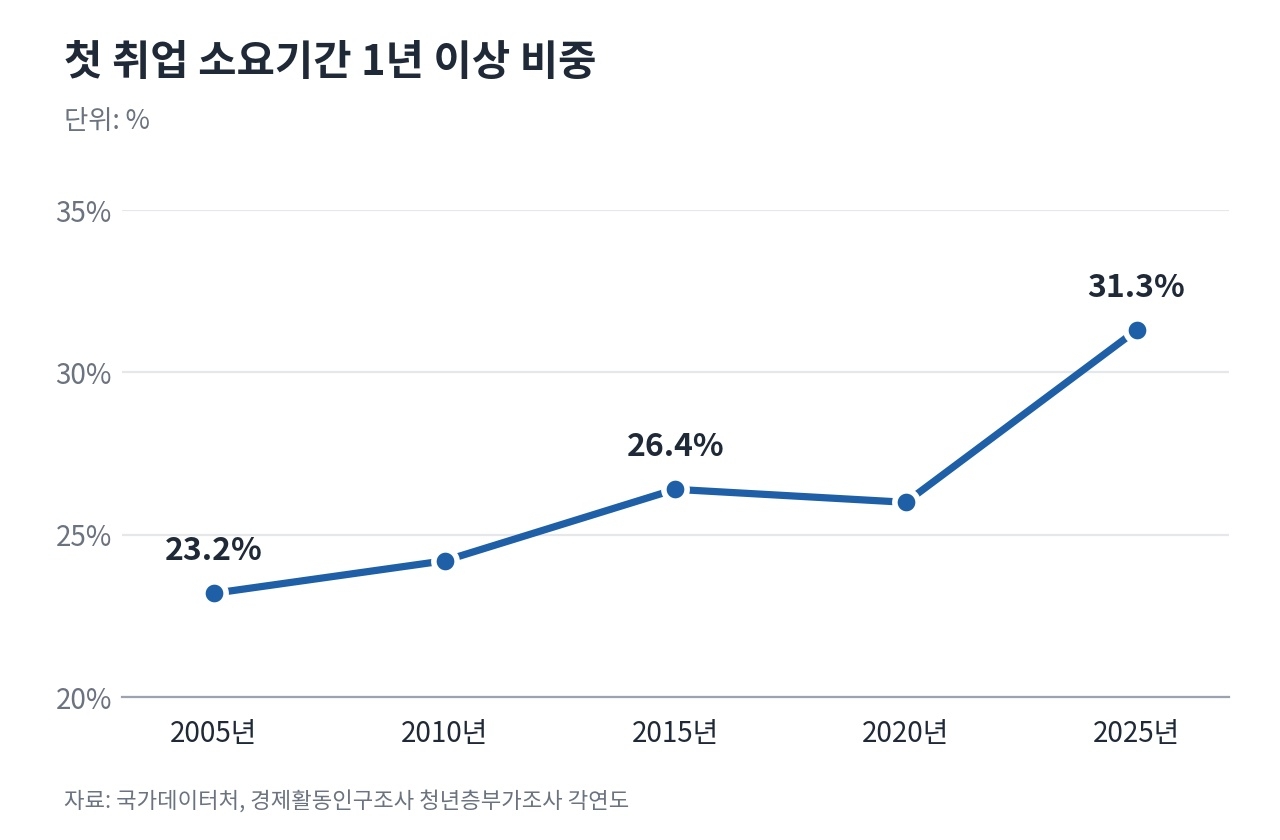
The difficulties facing young people are borne out in the numbers. Last year, the unemployment rate among youth aged 15 to 29 stood at 6.1 percent — more than double the overall rate of 2.8 percent — while the broader measure of youth joblessness reached 16.0 percent, nearly twice the overall figure of 8.7 percent. The number of people in their 20s and 30s classified as "resting" — neither working nor actively seeking employment — reached 717,000, the highest since the statistic was first compiled.
Raising the statutory retirement age without first reforming the seniority-based pay structure could worsen hiring capacity for new recruits, increase management costs including labor expenses, and deepen the dual structure between primary and secondary labor markets.
The Bank of Korea warned that the longer young people remain in a "resting" state, the less likely they are to want to work, which in turn lowers actual employment rates. "There is a risk that they may permanently exit the labor market or become 'NEETs' — young people not in employment, education or training," it said.
Japan's retirement age frozen at 60 for 28 years; rehiring-centered system expanded over 25 years
Japan, which entered super-aged society status before South Korea, has kept its statutory retirement age at 60 since 1998 — unchanged for 28 years. Instead, it amended the Act on Stabilization of Employment of Elderly Persons in 2004, introducing measures requiring companies to choose one of three options — rehiring, extending the retirement age, or abolishing it altogether — to secure employment up to age 65. The rehiring-centered measures took effect in 2006.
According to Bank of Korea data cited in the report, Japan's university graduate employment rate tumbled from 81.3 percent in 1991 to around 55 percent in 2003. The share of non-regular workers aged 15 to 24 more than doubled, rising from 20.5 percent in 1990 to 47.7 percent in 2005.
The Korea Enterprises Federation said Japan put several mechanisms in place to ease the burden on businesses as it expanded older-worker employment. These included guaranteeing companies a choice among the three measures, allowing employers to set eligibility criteria for rehiring through labor-management consultation or work rules, phasing in the applicable age gradually, and granting a two-year grace period before implementation. The applicable age was raised in stages — from 62 in 2006 to 63 in 2007, 64 in 2010 and 65 in 2013.
Mandatory compliance was also phased in gradually. Japan began in 2000 with a best-efforts obligation to secure employment to age 65, moved to staged mandatory compliance in 2006, introduced a requirement to rehire all applicants in 2013, and achieved full application only in 2025 when transitional measures expired. It took 25 years of incremental expansion to make rehiring mandatory for all who wished to continue working. A notable feature of the process was the participation of worker, employer and public-interest representatives together in the Labor Policy Council, which helped forge broad social consensus.
Adoption on the ground has been widespread. According to Japan's Ministry of Health, Labour and Welfare, as of 2024, 99.9 percent of companies with 21 or more employees had implemented measures to secure employment to age 65, and 67.4 percent had introduced rehiring schemes. Among companies with more than 300 employees, the rehiring adoption rate reached 79.4 percent.
![The Bank of Japan headquarters in Tokyo. [Reuters]](https://wimg.heraldcorp.com/news/cms/2026/10/08/news-p.v1.20260816.209013b3297d4c92ab32710d529f3877_P1.jpg)
Labor, management and government share the burden; companies shift to performance-based pay
Japan distributed the social costs of extending older-worker employment across labor, management and government. Workers accepted lower wages upon rehiring — a 2010 survey found that rehired workers earned an average of 68.4 percent of their pre-retirement peak pay. Companies were required to gradually extend employment to age 65 for all applicants while restructuring their pay systems and introducing lifelong career development programs.
The government ran a program called the "continued employment benefit for older workers" under employment insurance, which subsidized part of the wage reduction for rehired employees. Under the scheme, workers whose pay fell below 75 percent of their pre-retirement level at age 60 received a monthly supplement equal to 10 percent of their wages until age 65 — a support rate that has stood at 10 percent since 2025. In 2007, the Labor Contract Act was also amended to allow reasonable changes to work rules without requiring labor-management agreement, removing a key obstacle to pay restructuring.
Companies also restructured their pay systems around job function and performance. One firm, responding to the 2013 mandatory compliance deadline, lowered the base pay curve for active workers while widening the gap in merit-based raises tied to performance reviews. The resources freed up were redirected to improving wages for older workers, with no additional funding required to accommodate the expanded employment of older staff. In 2023, the company introduced a "Senior Meister" program to allow workers with core technical skills and expertise to continue contributing after the age of 60.
Lee Sang-cheol, head of the Korea Enterprises Federation's employment and social policy division, said that raising the retirement age across the board while the structural problems of high wage seniority and rigid employment remain unresolved "will pass the burden directly onto young workers through reduced hiring and a deepening dual labor market structure."
He added that it was urgent to move away from debating a uniform statutory retirement age extension and instead design a flexible, rehiring-centered system — one that, as Japan's policy experience shows, prevents conflict with youth employment and guarantees companies the freedom to choose their own approach.

eyre@heraldcorp.com