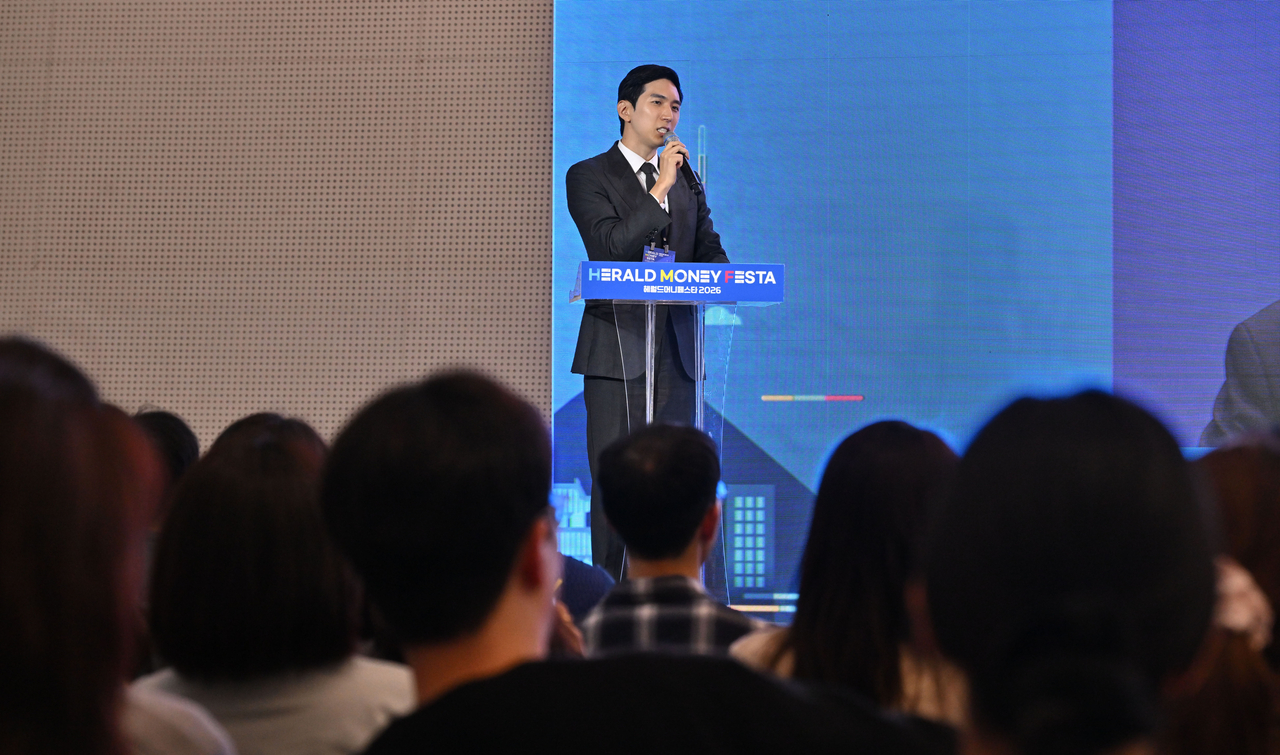
Kim Je-kyung of Toomi Real Estate Consulting speaks at Herald Money Festa 2026
'Effective supply of quality apartments is what end-users need'
'Floor area ratio hikes are not free — land share matters'
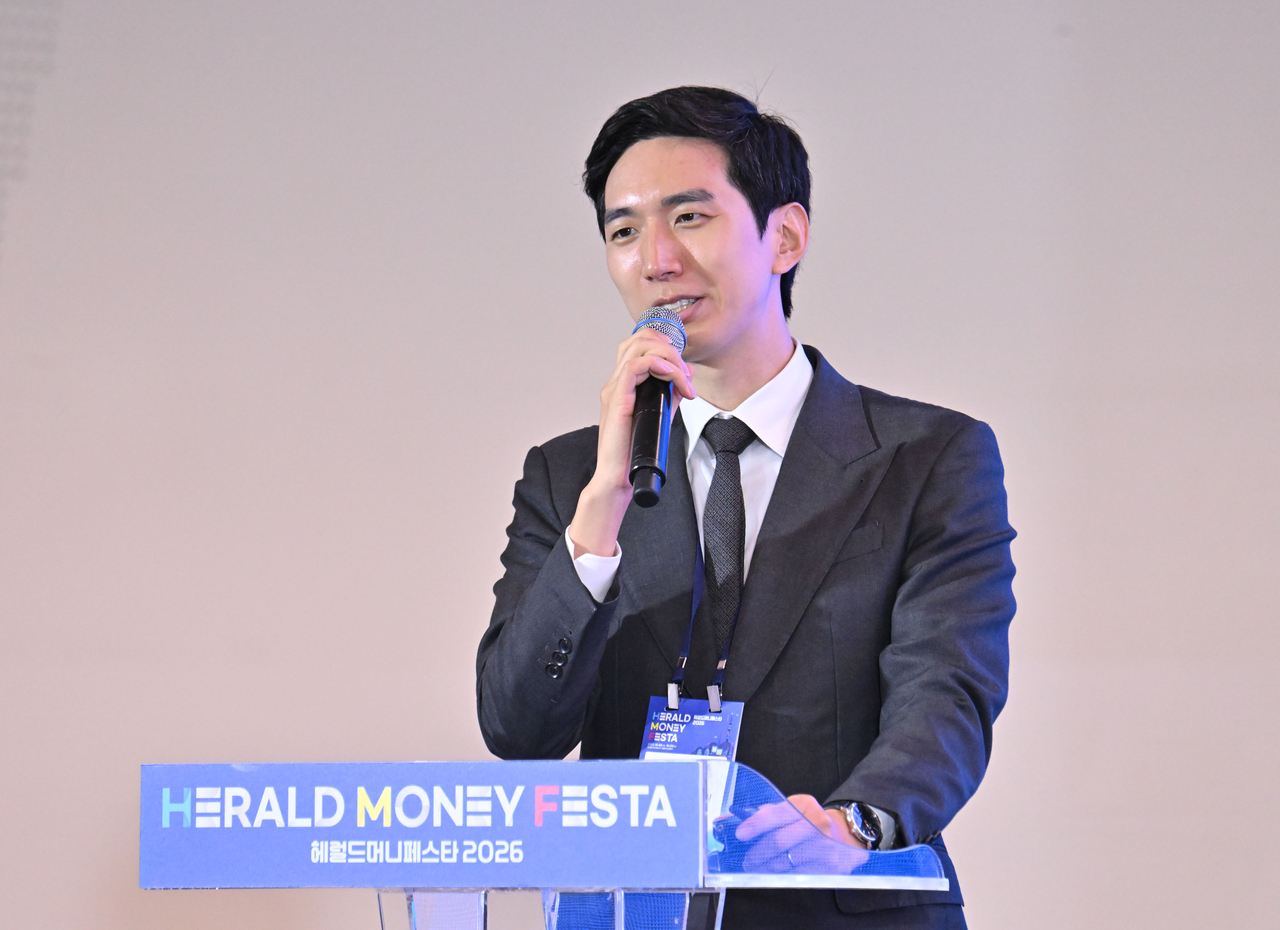
"An era of average reconstruction levies hitting 1 billion won is coming. At the first Herald Money Festa lecture, I predicted an era of average levies of 500 million won — but now, 500 million won ($368,000) is a level people should be grateful for."
Kim Je-kyung, director of Toomi Real Estate Consulting, made the remarks Saturday at Herald Money Festa 2026, held at Dongdaemun Design Plaza in Jung-gu, Seoul. "Levies have risen to as low as 600 million won and typically around 800 million won, and associations demanding more than 1 billion won are now emerging," he said.
Kim, a leading expert in urban renewal projects and a doctoral candidate in urban and regional planning at Konkuk University's graduate school, delivered a lecture at the event titled "What you need to know to own a home in Seoul."
He said soaring construction costs, rising interest rates and tightening regulations have made it increasingly difficult to separate viable redevelopment and reconstruction projects from weak ones. "Breaking the 10 million won per square meter mark in construction costs is no longer news," Kim said. "Not just high-rise complexes along the Han River, but most sites that have received project implementation approval and are on the verge of breaking ground are already exceeding that threshold. With inflation and expanding budgets, passing on construction costs is an unavoidable reality."
He said government financial regulations have become a particular obstacle to advancing renewal projects. "After the June 27 measures, the cap on basic relocation loans was cut, forcing associations to scramble for funds through indirect loans backed by contractor credit lines," Kim said. "Those loans carry interest rates 2 to 3 percentage points higher than standard relocation loans. Over the five to six years it takes from relocation through demolition to construction, the additional financing costs per association member alone can run from tens of millions to hundreds of millions of won."
"Regulations on redevelopment and reconstruction have only been tightening," he added. "There is talk of squeezing out more supply, but what Seoul needs is not simply non-apartment units that fill a numerical quota — it is effective supply of quality apartments that end-users actually want. The housing problem in the greater metropolitan area cannot be solved while excluding renewal projects."
Kim outlined three key criteria for assessing whether a renewal project zone can realistically move forward amid surging construction costs and tighter regulations: project viability, location and the ability to pay levies.
On floor area ratio — the central factor in determining project viability — he said investors must guard against the illusion created by incentives and zoning upgrades. "Floor area ratio is not free," Kim said. "When a zoning upgrade is granted under urban planning rules, 20 percent of the land must be donated to the public, so the actual increase in total floor area is smaller than people expect."
Kim said examining the land share per unit is critical. "The average land share for an exclusive use area of 84 square meters is about 41 square meters. If the current land share is below about 40 square meters, there is virtually no surplus land, meaning the reconstruction must effectively be done on a one-to-one basis," he said. "In older complexes in the Gangbuk area or on the outskirts of the greater metropolitan area with floor area ratios exceeding 250 percent, where the land share is only 26 to 33 square meters, future levies alone could reach 1 billion or even 1.2 billion won," he warned.
"There are fewer reconstruction sites in Seoul with viable project economics than people think," he added. "Total revenue from general pre-sales and association member pre-sales must be enough to offset total construction costs. If revenue falls short of construction costs, association members have to make up the difference."
Finally, Kim advised buyers to take a hard look at the market price likely to form after completion and whether they can actually afford to pay the levies. "If a levy of 1 billion won is assessed and the buyer cannot afford to pay it, or if the apartment's market price after completion cannot justify the levy, the project will simply grind to a halt," he said. "Rather than approaching it with a vague hope that it will eventually become a new building, a selective approach that rigorously verifies land share, location and the association's capacity to push the project forward is essential."
About 100 people ranging from young adults to the elderly packed Kim's lecture hall. With seats running short, some 10 attendees stood at the back of the seminar room to listen. Throughout the lecture, audience members jotted down key figures in notebooks or photographed the presentation slides. Even after the lecture ended, a line formed for the question-and-answer session.
Now in its third edition, Herald Money Festa ran for two days, Friday and Saturday, under the theme "Money Rebalancing: Recalibrating the Weight of Your Assets." Lectures covered the full spectrum of personal finance — from shares, ETFs, real estate, gold and virtual assets to wealth management, tax planning and inheritance — offering attendees a chance to reassess their investment strategies and portfolio allocation in a rapidly shifting market environment.

hwshin@heraldcorp.com