South Korea's regenerative medicine market is undergoing notable changes. Following revisions to the Advanced Regenerative Medicine and Biotechnology Act, certain regenerative medicine procedures now meet the legal requirements to be performed domestically, drawing growing attention to related medical institutions and stem cell treatments.
However, as the market expands, concerns are mounting over safety management and oversight in cell storage and treatment procedures. Experts and consumer advocates are calling for greater caution regarding potential problems that can arise from contracts and operations between hospitals and cell storage companies. Stem cells require careful management at every stage — from collection and storage to administration — making it essential to verify that medical institutions and related companies have clearly defined roles and responsibilities.
Don't assume 'your own cells' are automatically safe — the management process matters
Experts say that when evaluating stem cell procedures, patients should look beyond the fact that autologous cells are used and also examine what happens to those cells after they are collected. Even autologous cells go through multiple stages — separation, processing, storage and application — each of which requires proper management.
Collecting fat tissue is only the beginning when it comes to adipose stem cells. The process also involves separating and processing cells from the fat, storing them, and eventually reintroducing them into the body. Facilities and management systems capable of preventing contamination and infection during cell handling are particularly critical. Patients considering a procedure should therefore look beyond a clinic's size or reputation and verify how the entire process — from cell collection and storage to the actual procedure — is managed.
Why it matters whether a clinic is a designated 'advanced regenerative medicine institution'
When considering a stem cell procedure, one of the first things to check is whether the medical institution has been designated by the government as an "advanced regenerative medicine institution."
Such institutions are designated under relevant laws after meeting set standards for facilities, equipment, personnel and safety management systems. Because the designation process verifies that a clinic meets the requirements to perform regenerative medicine, it serves as one institutional benchmark patients can use when choosing a provider. Patients should also confirm in advance which regenerative medicine procedures are available at the institution and whether those procedures are carried out in accordance with the relevant protocols and standards.
Kim Jong-un, chief director of the 365mc Adipose Stem Cell Center, said patients should look beyond whether a clinic holds the advanced regenerative medicine designation and also assess the medical team's expertise and clinical experience with the specific procedure. "It is also important that the provider can clearly explain — with concrete supporting evidence — the treatment goals and scope, the expected benefits and limitations, and what the treatment process involves," she said.
Stem cell banking: what matters more than storage is how cells are managed
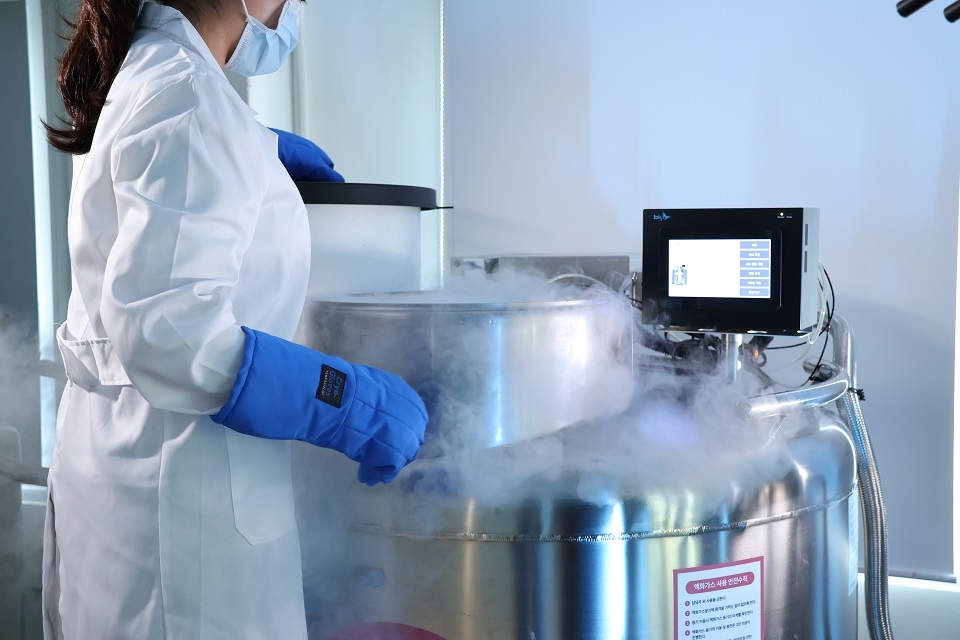
For those considering long-term stem cell "banking," the key question is not simply whether storage is available, but whether cells will be properly managed so they can actually be used when needed. Patients should also check whether the facility has the necessary equipment and conditions — including centrifuges for cell separation, cell counters to assess cell count and viability, and ultra-low-temperature freezers for long-term cryogenic storage.
When a hospital works with a separate storage provider, patients should confirm that each party's roles and responsibilities are clearly defined and verify exactly where their collected cells will be kept. It is also advisable to check in advance the storage duration and management conditions, the freezing and thawing process, and whether a sufficient number of viable cells will be available after thawing when the time comes to use them.
Kim said patients should also clarify before signing any contract how cells will be handled in the event of a storage extension, early termination or transfer to another institution, and what costs and procedures are involved. "It is particularly important to find out in advance whether there are any separate conditions or restrictions on using the stored cells for an actual procedure," she said.
kty@heraldcorp.com