
'No subway station in Dobong — Ui-Sinseol Line extension must move forward without delay'
Two decades in social welfare inform lawmaker's community-first politics
Yu focuses on transit access, bus route reform and long-term public transport finances
'Deficits must not be passed on to future generations'
Accountability in council staffing and AI-assisted legislative work also on his agenda
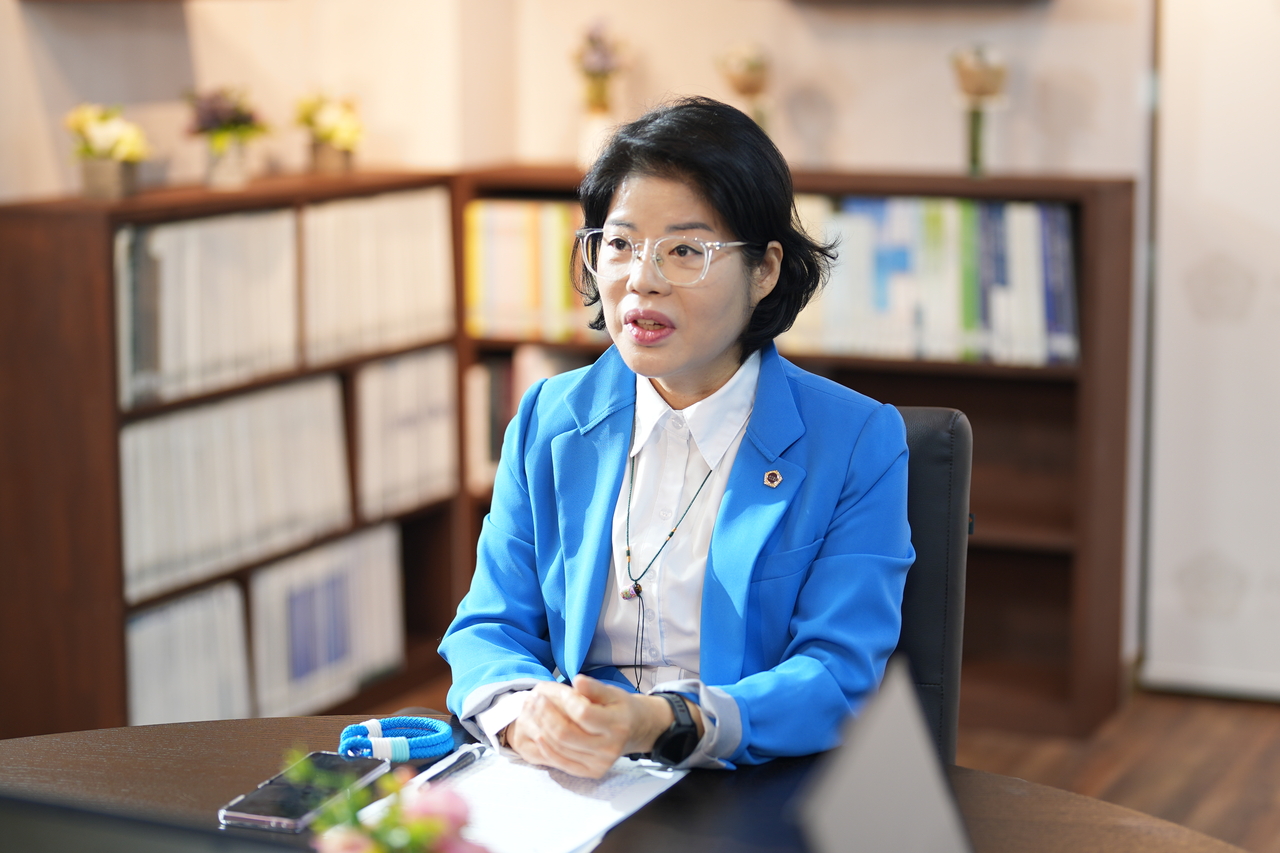
Yu Ki-hun, a Seoul Metropolitan Council member representing the Democratic Party of Korea in Dobong District 3, spent 20 years working alongside residents in social welfare before entering politics — and he is now bringing that community-first approach to the council floor. Having previously served two terms on the Dobong-gu District Council, Yu now sits on the Transportation Committee and the Management Committee, where he focuses on expanding transit infrastructure in Dobong-gu, ensuring the long-term sustainability of Seoul's public transport system and improving how the council manages its own organization.
In an interview Friday, Yu said his path into politics began in the social welfare field.
"Working on the front lines of social welfare, I often ran into the limits of existing systems and policies," he said. "I came to believe that social welfare and politics ultimately meet at the same point — improving the quality of life for residents and citizens."
Yu majored in social welfare and spent roughly 20 years as a social worker at community welfare centers before entering the Dobong-gu District Council as a proportional representative and later as a constituency member, also serving as chair of the Administrative Planning Committee. He said that experience taught him that change comes not just from resolving individual complaints but from reshaping the systems and budgets that govern residents' daily lives.
District with no subway station — Ui-Sinseol Line extension the top priority
Since joining the Seoul Metropolitan Council, Yu has devoted much of his energy to transportation. His constituency has no subway station of its own, leaving residents with comparatively limited access to the rail network.
Yu described the extension of the Ui-Sinseol Line as the single most important project for transforming his district's transit environment. Given the long history of delays, he said he intends to push for swift progress while keeping a close eye on construction safety and the inconvenience the work may cause nearby residents.
"The Ui-Sinseol Line extension has been a long-cherished goal for this community for about 20 years," he said. "Now the priority is making sure the project moves forward without a hitch, and paying careful attention to safety and resident inconvenience along construction stretches that run close to residential areas."
Adjusting bus and community bus routes is another key task. Because the area lacks a subway station, Yu said the bus network connecting rail hubs and major community destinations needs to be designed with greater density and precision.
Yu is also watching the introduction of future mobility options, including autonomous driving. He said he is exploring ways to deploy small autonomous buses and similar new transport modes in Dobong-gu to improve mobility in transit-underserved areas.
He added that preparing a comprehensive transportation plan ahead of the large-scale cultural and performance infrastructure being developed around Changdong is equally important. He said transit, accommodation and local content need to be integrated so that visitors are encouraged to stay and spend in the area.
Seoul public transport finances: 'A problem that can no longer be deferred'
Zooming out to the city as a whole, Yu said the structural financial problems facing Seoul's buses and subway are his deepest concern.
He argued that free rides for senior citizens, the replacement of aging rolling stock and the accumulated deficits of Seoul Metro should not be treated as separate issues but addressed together through a sustainable solution worked out jointly by the central government and the Seoul Metropolitan Government.
On free rides in particular, Yu said the issue goes beyond cost — it is bound up with the mobility rights, welfare and social participation of older residents, and deserves thorough public debate before any changes are made.
He also called for a review of the semi-public bus operating system, saying the current subsidy and settlement structure needs to be examined and bus companies held to greater managerial accountability.
"Allowing deficits in buses and the subway to keep piling up is essentially spending future generations' money in advance," Yu said. "The central government, the Seoul Metropolitan Government, transport operators and citizens all need to work together to build a sustainable public transport system."
Stronger staffing accountability and AI-assisted lawmaking also in focus
Through his seat on the Management Committee, Yu is also scrutinizing personnel and organizational management at the Seoul Metropolitan Council.
Citing past litigation over the dismissal of fixed-term civil servants, Yu said poor personnel decisions by the council can lead to legal costs, unnecessary payroll expenditure and wasted administrative capacity. He argued that regardless of political considerations, the rights of employees hired through proper contractual procedures must be respected, and that the exercise of personnel authority must come with corresponding accountability.
Yu is also actively working to integrate AI into his legislative activities. He said council members need to build their capacity to use AI tools to analyze large volumes of administrative data and identify key issues more effectively during administrative audits and policy reviews.
Through his own research, Yu is exploring ways to apply AI to data analysis, policy review and audit preparation. As the executive branch rapidly digitizes its administration, he said the council must also embrace new technology to sharpen its oversight and check-and-balance functions.
Having expanded his sphere of activity from social welfare work to the district council and now the Seoul Metropolitan Council, Yu said he plans to keep the weight of his legislative work on solving transit problems that residents can feel directly and on strengthening the long-term sustainability of Seoul's public transport system.
7toy7@heraldcorp.com





