Chuncheon Makguksu Dakgalbi Festival
510,000 visitors over five days; economic impact estimated at 21 billion won
Among the highest attendance for a small-city regional festival in South Korea
'Gye' gathering trains emerge as a new festival trend
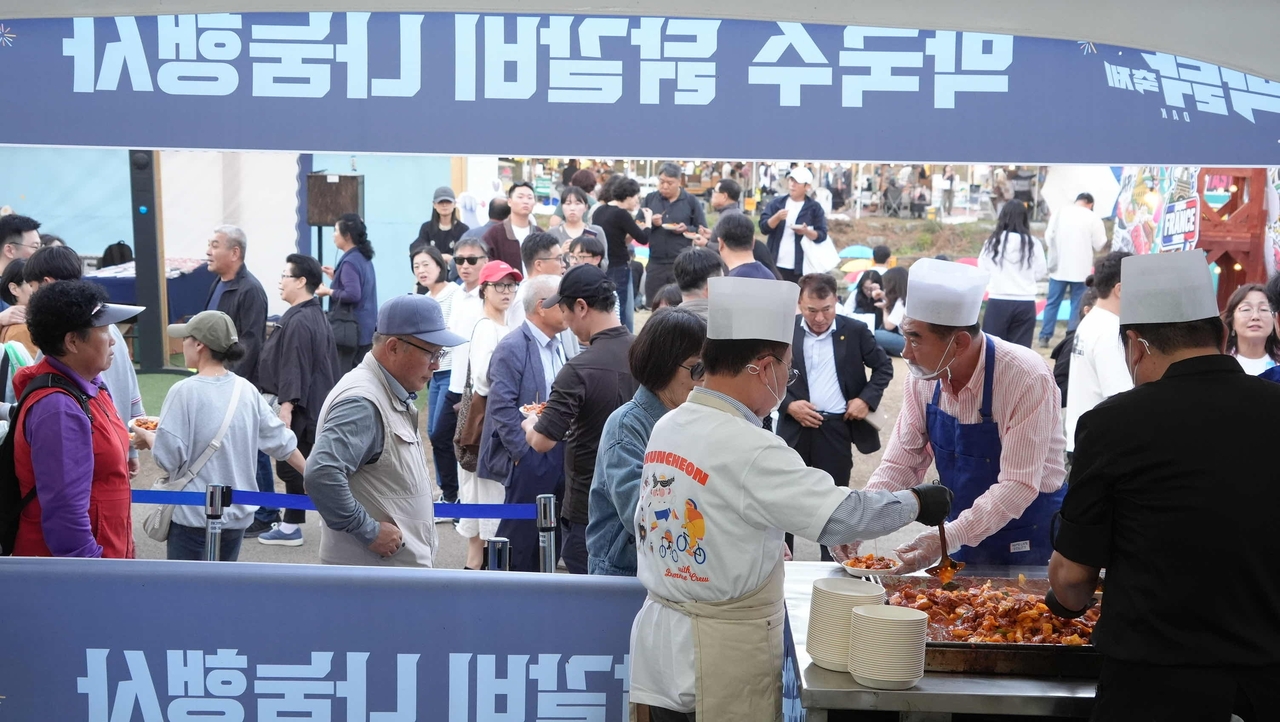
Drawing 100,000 visitors a day to a city of fewer than 300,000 residents is considered one of the strongest performances among regional festivals in South Korea.
The Chuncheon Makguksu Dakgalbi Festival, which wrapped up Sunday, attracted 510,000 visitors over five days. The economic impact was estimated at 21 billion won ($15.6 million).
While festivals across the country often try to cash in on crowds, Chuncheon took a different approach — winning visitors over through generous discounts, and it paid off.
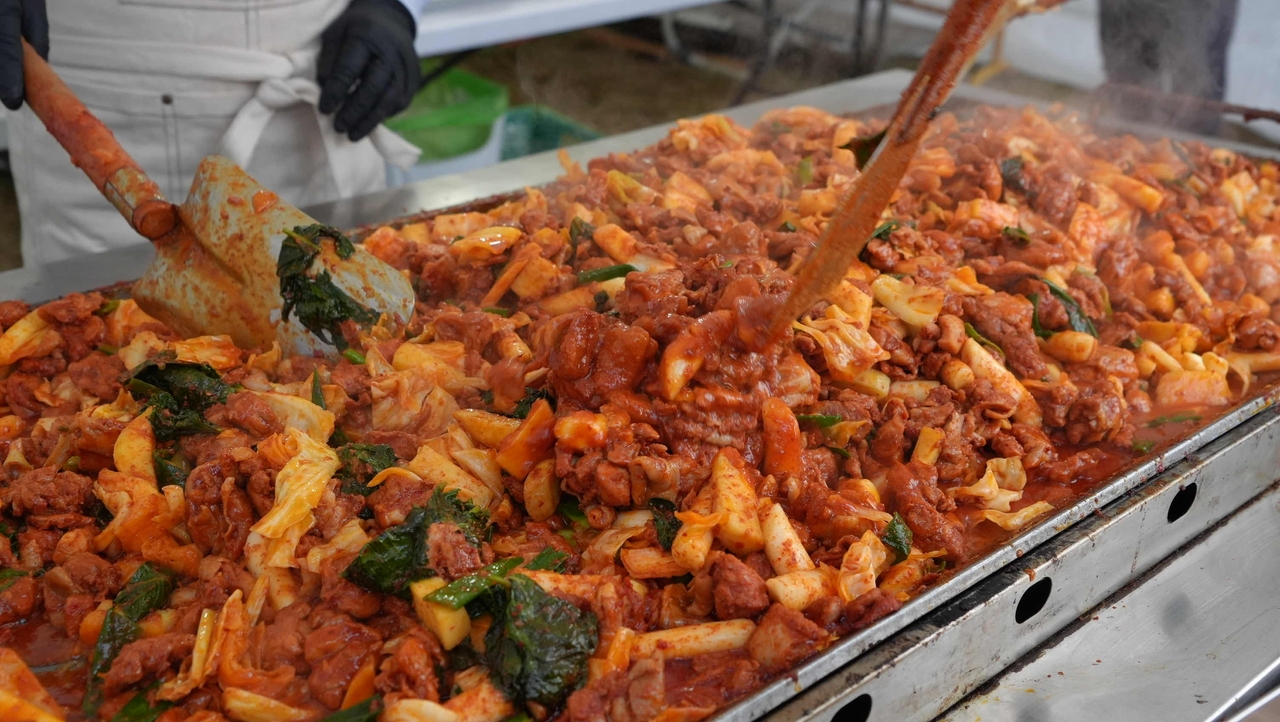
Dakgalbi was priced at 9,900 won and makguksu at 6,900 won, easing the financial burden on visitors. Dining and rest areas were expanded and improved from last year, allowing guests to eat and relax in comfort while enjoying local restaurant food at reasonable prices.
Online and offline discount vouchers were also available for restaurants outside the festival grounds. Discounts of 3,000 won on dakgalbi and 1,500 won on makguksu will remain valid through Oct. 25 at participating eateries across Chuncheon, encouraging visitors to explore the wider city even after the festival ends.
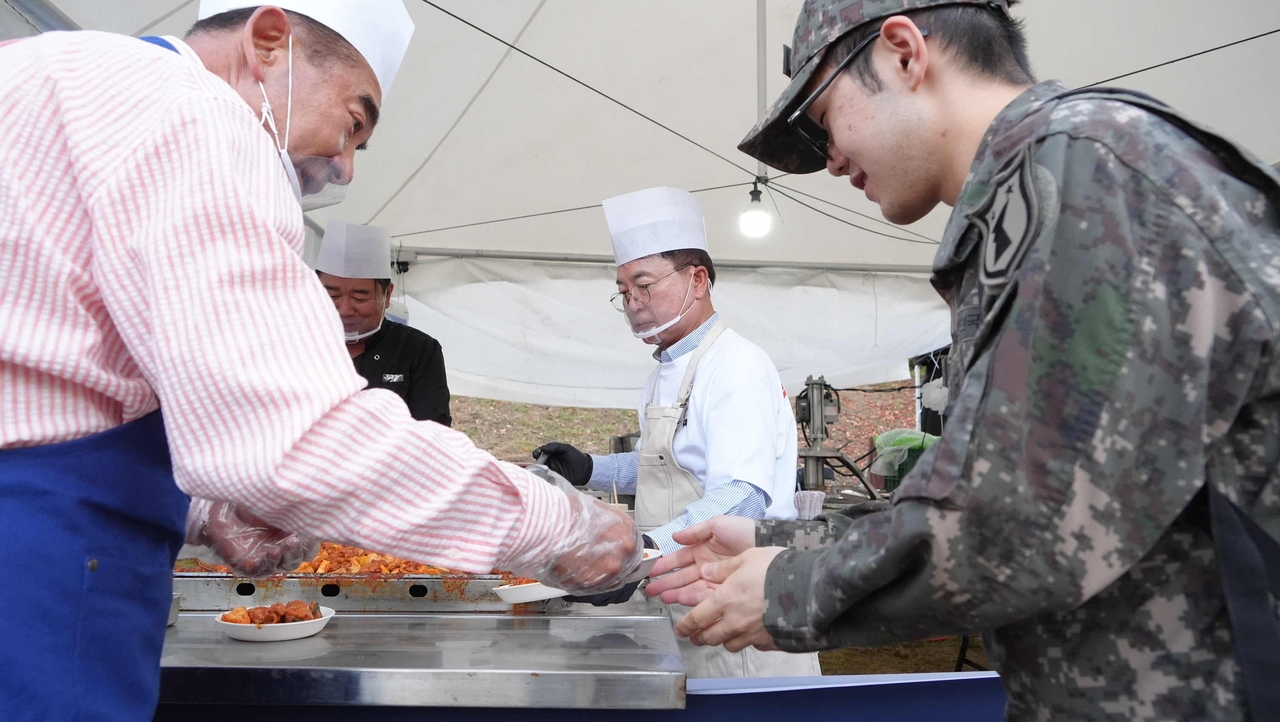
Throughout the festival, 100 servings each of dakgalbi and makguksu were given away free every day.
This year's festival featured 19 vendors — 11 dakgalbi restaurants and eight makguksu establishments — bringing together the dishes Chuncheon has long been known for, from iron-griddle stir-fried dakgalbi and charcoal-smoked dakgalbi to buckwheat-forward makguksu.
Visitors sampled dishes from multiple vendors, sharing the flavors of Chuncheon with family and friends.
Activities and performances alongside the food kept visitors lingering. Children tried horseback riding and traditional games from around the world, while families took part in hands-on noodle-making. A waterfront stage spanning Gongjicheon stream became a space where food, performances and scenery came together. Over the five days, a range of cultural shows played out there — including performances by Lee So-na, a Chuncheon-born singer who won the fourth season of the TV singing competition "Miss Trot" — giving tourists a leisurely autumn afternoon for both the eyes and the palate.
As in last year, a local market and farmers' market showcased regional food products and agricultural specialties. At the Makdak Experience and Promotion Center, 100 servings each of makguksu and dakgalbi were distributed free daily, introducing visitors and residents alike to Chuncheon's signature dishes.
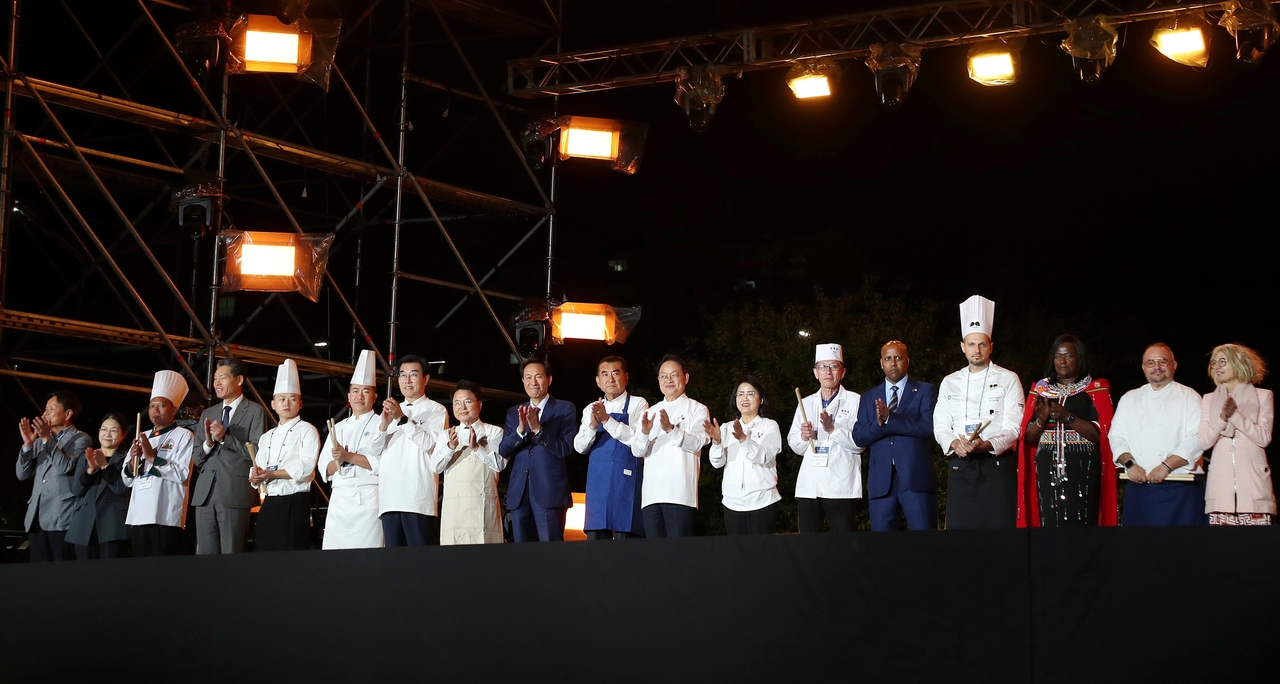
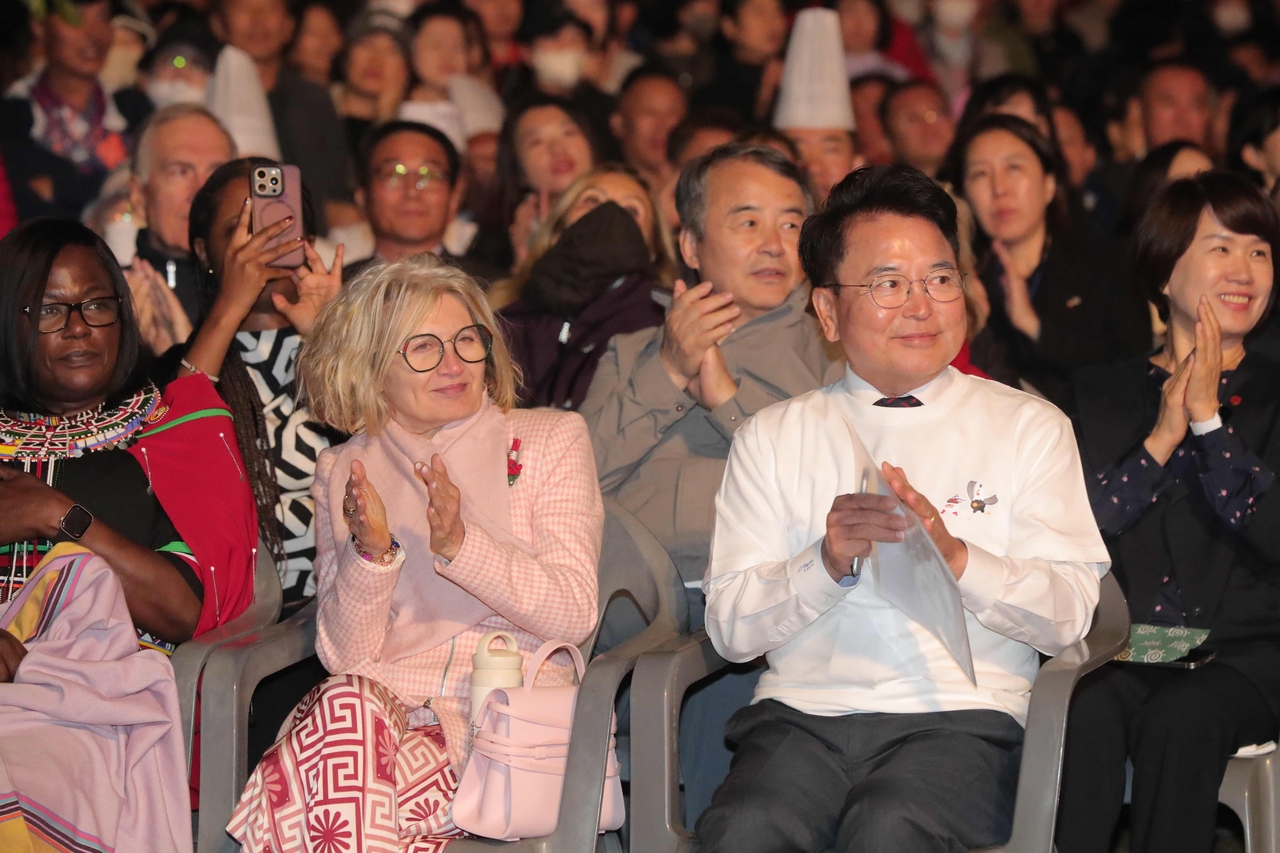
The international pavilion "Global Village" grew significantly from last year's student-centered food and activity experience into a full culinary and cultural exchange space, bringing together chefs from overseas cities, Korean embassies and the Korea-Africa Foundation under the Ministry of Foreign Affairs.
Chefs from Dalian and Changzhou in China, Lam Dong province in Vietnam, Hofu in Japan, and Parma in Italy, along with French and Spanish culinary specialists, presented 11 dishes in total. Free world-food tastings and family cooking classes were fully booked in advance, with about 4,500 people taking part in tastings over the five days.
Among the participants were Michele Buia, who carries on a family culinary tradition from Parma; Huang Jinyu, a gold medalist in Chinese cuisine at a Liaoning Province vocational skills competition; and Liu Ruwen and Wang Lie, specialists in Changzhou local cuisine and traditional snacks. Nguyen Tran Trung and Phan Van Minh from the Lam Dong Province Chefs Association in Vietnam also took part, as did Nakatani Yasushi, a Japanese specialist in traditional kaiseki cuisine, and Lucas Charton, who has worked at a Michelin two-star restaurant and brings more than 36 years of international culinary experience.
A standout creation was "dakgalbi tortelli," a collaboration between Chef Michele Buia and Kim Sung-chul, head chef of Chuncheon's Tongnamuzip Dakgalbi restaurant, which brought the food cultures of two cities onto a single plate. Fresh Italian pasta was filled with Chuncheon dakgalbi — going beyond an introduction of local cuisine to produce an entirely new dish. At the family cooking class, participants made Parma-style tortelli and Dalian abalone mandu by hand, learning both the recipes and the food cultures behind them.
What began with food expanded through "Africa Week" into performance and everyday culture. The Kenyan troupe Kayamba Africa staged a dynamic show blending dance, percussion and vocal harmonies. Members of the Ethiopian community roasted coffee beans and brewed coffee on-site, sharing their traditional coffee ceremony as an expression of their culture's hospitality.
Additional programming included coffee tastings and hands-on experiences with traditional clothing and instruments at the Kenya pavilion, an African film screening at the Chuncheon Municipal Youth Library, and a special lecture by a Kenyan diplomat at Bomnae Middle School.
Programs were also designed to turn festival visits into broader travel and spending across Chuncheon. The "Chuncheon Gye Gathering Train," which ran Friday, drew 232 participants. Offered as a Chuncheon K-Chicken Belt travel package — part of the "2026 K-Gourmet Belt" project promoted by the Ministry of Agriculture, Food and Rural Affairs and the Hansik Promotion Institute — the program let travelers follow curated routes matched to their dining preferences and group type, visiting the festival grounds, local restaurants, a brewery, a rural experience village and tourist attractions.
In the Myeong-dong and Brown Street shopping areas, purchase-verification cashback events, roulette games and a flea market were held. Dance, mime, puppet shows and university band performances in Myeong-dong and at Soyang Art Circle meant visitors could enjoy shopping and cultural programming beyond the Gongjicheon festival site.
As in last year, reusable containers were used throughout to cut down on single-use waste and reduce rubbish at the festival grounds — a deliberate effort to weave resource recycling into the experience of a food-centered event that draws large crowds.
Twenty student supporters from Hallym University assisted with weekend operations and monitoring. A global Chuncheon tourism crew of 20 international students from eight countries also experienced the festival firsthand, helping to promote it on social media and assess the environment for foreign visitors. Both groups are seen as a foundation for the festival's continued growth.
"The flavors of Chuncheon, prepared together by residents and local restaurants, have been enriched by the food and culture of the world, broadening the festival's possibilities," Chuncheon Mayor Yuk Dong-han said. "We will develop this into South Korea's premier K-gourmet festival, ensuring that every visit for makguksu and dakgalbi leads to travel and spending throughout the region."
The economic impact figure was estimated by aggregating consumer spending at the festival grounds and in the surrounding local commercial district, based on per-visitor expenditure data.
abc@heraldcorp.com