Korea Federation of Industries surveys 1,000 young job seekers nationwide
32.8% rely on parents or family to cover costs
Those targeting large firms spend about 700,000 won monthly
Respondents cite exam fees as top priority for government support
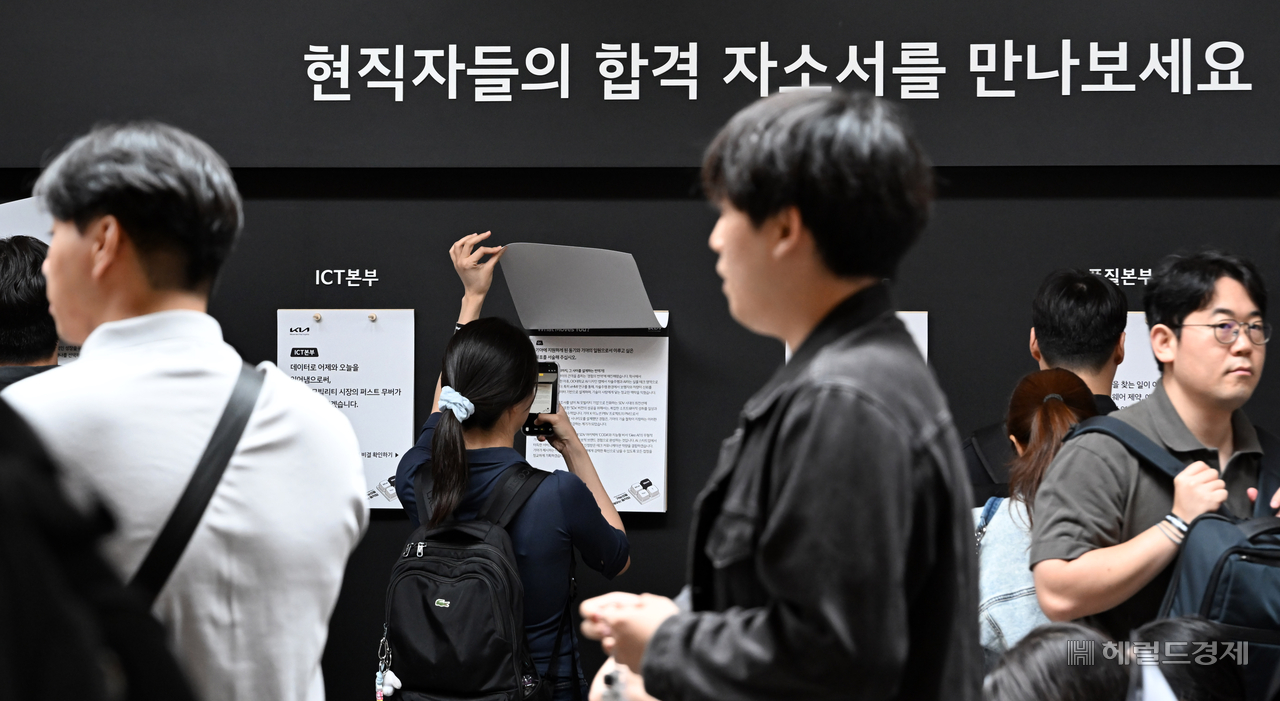
Young job seekers in South Korea spend an average of 580,000 won ($430) a month preparing for employment, with those in education, medicine and health fields spending the most at around 740,000 won, a new survey shows. Certification and language test fees accounted for the largest share of those costs.
The Korea Federation of Industries released the findings Monday, based on a survey of 1,000 job seekers between the ages of 19 and 34 conducted nationwide by polling firm Mono Research.
Respondents reported average monthly job-preparation spending of about 580,000 won over the three months prior to the survey. Costs varied by age, field of study, target employer type and length of job search.
By age group, those between 30 and 34 spent the most at about 600,000 won per month, followed by the 25-to-29 age group at 580,000 won and the 19-to-24 group at 560,000 won.
By field of study, respondents in education, medicine and health spent the most at about 740,000 won per month, followed by arts and physical education majors at 690,000 won, natural sciences and engineering at 550,000 won, and humanities and social sciences at 520,000 won.
By target employer type, those hoping to join large conglomerates spent about 700,000 won per month on average, more than those targeting mid-sized firms at 630,000 won and small and medium-sized enterprises at 590,000 won.
The longer a job seeker had been searching, the heavier the financial burden. Those who had been preparing for three or more years spent about 800,000 won per month — far more than those who had been searching for less than six months at 560,000 won, or those in the six-month-to-one-year range at 520,000 won.
When asked how burdensome these costs were, 69.3 percent of respondents said they felt financially strained, while only 7.3 percent said they did not.
The single largest spending category was certification and language test fees, which accounted for 30.7 percent of total job-preparation costs. That was followed by tuition and course fees at 22.6 percent, textbooks and study materials at 16.1 percent, transportation at 12.4 percent, and fees for cafes and study spaces at 7.3 percent. Learning-related costs — including exam fees and private education — made up more than half of total spending.
The survey also found that 70.8 percent of respondents lived with their parents, while only 29.2 percent lived independently — well below the 45.6 percent independent-living rate recorded for the broader 19-to-34 age group nationwide.
The most common way respondents covered their job-preparation costs was through support from parents or family, cited by 32.8 percent. That was followed by income from part-time work at 29.5 percent, personal savings at 27.3 percent, and government or local authority subsidies at 7.9 percent.
When asked what policy measures would most help ease the financial burden, respondents ranked subsidies for certification and language test fees first at 25.9 percent. Support for monthly rent and other housing costs came second at 16.7 percent, followed by general-purpose vouchers for job-preparation expenses at 16.1 percent and transportation subsidies at 11.4 percent.
"As youth unemployment persists, a significant number of young job seekers feel financially burdened during the preparation process," said Lee Sang-ho, head of the Korea Federation of Industries' economic bureau. "There is a particular need to strengthen support for language and certification exam fees and education costs to ease the economic strain on youth from lower-income households."
joze@heraldcorp.com