Yu bows twice before National Assembly audit panel
Museum expects 7 million visitors this year
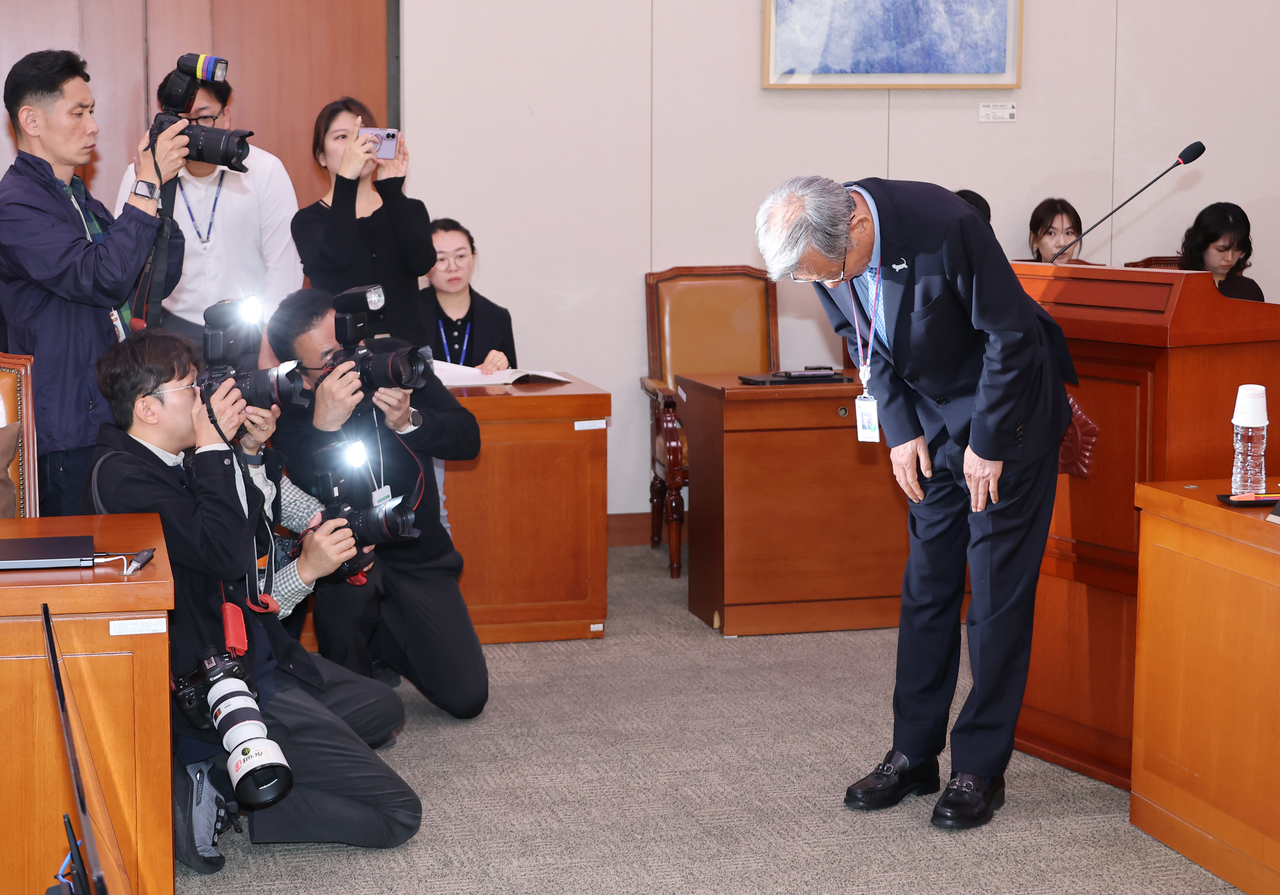
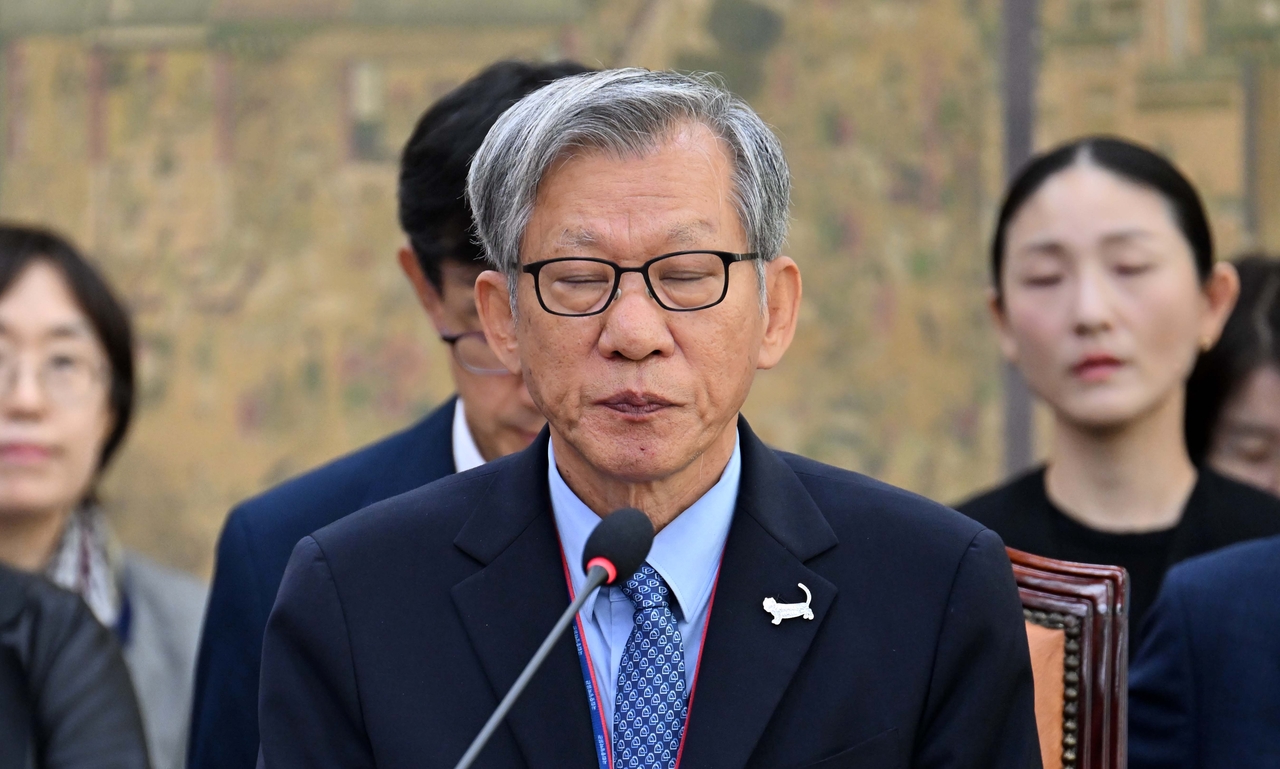
National Museum of Korea Director Yu Hong-jun apologized Monday for exhibiting a piece from his personal collection without proper verification, saying the episode "caused the public's trust in the museum to collapse in an instant."
Speaking at the National Assembly's Culture, Sports and Tourism Committee national audit, Yu bowed his head and said, "The deep trust the public has placed in the museum, and the value built up through the efforts of museum staff, crumbled in an instant due to my grave negligence."
Yu added that "no academic rationale or explanation can serve as an excuse in the face of the disappointment the public must feel," and apologized again, calling it "a serious personal failing."
The controversy centers on a calligraphic work titled "Ilban siguguen" — meaning "even a bowl of rice is a grace bestowed by the nation" — that was displayed at the museum in August. The piece was initially attributed to independence activist Park Won-geun (1912–1950), but about a month after the exhibition opened, allegations emerged that it was more likely the work of Park Jung-yang (1874–1959), a pro-Japanese collaborator during the colonial era.
The museum launched a verification process, and a panel of seven experts in calligraphy, modern history, classical documents and conservation science concluded that the work was indeed by Park Jung-yang. Park served as a member of the Central Advisory Council and as an imperially appointed member of the Japanese Imperial Diet's House of Peers during the colonial period, and is known as the "adopted son" of Ito Hirobumi (1841–1909).
The revelation that the calligraphic work was from Yu's personal collection deepened the shock. Yu purchased the piece through an online auction in 2019, where it was listed as a work by "Park Deok-won," described as a member of the Joseon Tongsinsa diplomatic mission. The starting bid was 10,000 won ($7), and it sold for a final price of 50,000 won.
The museum and Yu had issued a total of four apologies over the inadequate verification of the exhibited piece, but at no point during that process did they disclose that the work belonged to Yu's personal collection.
Yu also apologized to the family of independence activist Park Won-geun, who had been wrongly identified as the calligraphy's author. "The authentication error inflicted deep wounds on the honor of the independence movement and on the hearts of his surviving family," Yu said. "I apologize to the patriot and to his family."
On his failure to disclose from the outset that the piece was his own, Yu said: "When we announced the removal of the exhibit and the verification results, I issued a public apology, but I was not forthright in revealing that it was the director's personal property. Failing to publicly acknowledge my mistake as an art historian was a grave error and a serious lapse in judgment."
Yu also reported on visitor numbers, saying that as of Monday the museum had surpassed 6 million visitors this year — a 20 percent increase over the same period last year — and that annual attendance was expected to exceed 7 million.
He said the growth represented "not a fleeting spike driven by the success of KPop Demon Hunters, but a meaningful shift showing that the museum has become a cultural space that all citizens enjoy and cherish in their daily lives."
Meanwhile, Yu also submitted a personally owned embroidered wrapping cloth to the museum's "Our Table" exhibition, in addition to the disputed calligraphic work. A stone tiger statue donated by his wife is currently on display on the steps of the museum's open courtyard. Yu has claimed he purchased the piece intending to donate it to the Buyeo Cultural Center, but questions are growing in cultural circles over whether the donations were a form of "laundering" to inflate the artifacts' value, regardless of whether the donations actually took place.
pink@heraldcorp.com