Police caught between civil liberties and rule of law
Student origins complicate crackdown
One officer dead, 1,000 injured
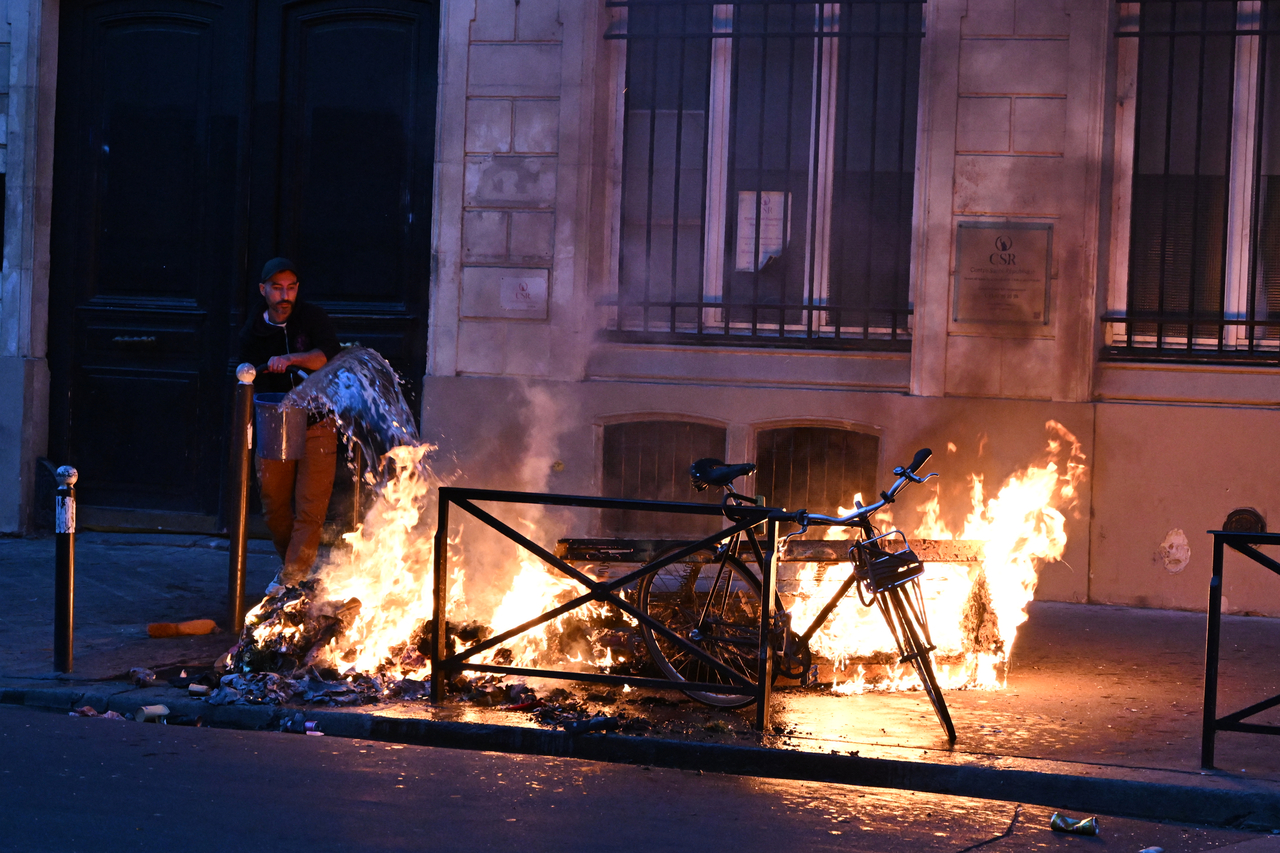
What began as high school students demanding better educational conditions has spiraled into arson, violence and looting, putting France's security forces to the test.
Mass protests swept the country Sunday, with looting and fires breaking out across multiple cities. France's Interior Ministry said more than 550,000 people took part in about 110 simultaneous demonstrations on Saturday alone. The General Confederation of Labor, known as the CGT, put the turnout even higher, at around 800,000.
In Paris, shops and banks were ransacked. Twelve stores near the Place de la République in the city center were looted as tear gas filled the streets. In Bordeaux, assailants smashed their way into a Louis Vuitton store and fled with handbags, while in Marseille, masked individuals broke into a government building and toppled a bust of Marianne, the symbol of the French Republic.
In the central city of Limoges, protesters set fire to a 143-year-old city hall. More than 3,000 demonstrators poured into the streets, seizing vehicles and hurling objects at firefighters called in to battle the blaze. Some 1,500 stores were damaged in a single day.
Protesters continued burning barricades Sunday, pushing the unrest toward full-scale rioting. As the demonstrations intensified, the question of how forcefully police should respond came into sharp focus. A heavy-handed crackdown risks accusations of suppressing free expression and violating civil liberties, while a softer approach risks allowing lawlessness to spread — leaving authorities with no easy answer.
The fact that the protests were initially led by underage students has made it particularly difficult for police to use physical force, observers said. Early in the unrest, a 14-year-old boy suffered a fractured jaw during a police dispersal, and a girl was placed in a headlock by an officer in Alençon in the northwest — incidents that drew widespread condemnation as excessive force.
According to AFP, Paris police have also faced criticism for deploying tear gas and water cannons against demonstrators gathered in public squares. Jean-Marie Godard, a French security expert, told the AP that officers sent to violent protest scenes are often ill-equipped and undertrained. "They are likely to become agitated quickly out of anger and fear," he said, adding that direct physical confrontations are inevitable, leaving casualties on both sides.
The Interior Ministry, meanwhile, said the toll on law enforcement has also been severe, with more than 1,000 officers injured — seven of them seriously. Interior Minister Laurent Nunez disclosed that one officer had died during the crackdown and said the violence "cannot be justified for any reason."
President Emmanuel Macron said those who "attacked police stations and stores and looted city halls will be indicted and punished," adding that he felt "anger and shame" over the looting and violence. He also said he had ordered an investigation to determine whether there had been failures in police preparedness.
kate01@heraldcorp.com