Union warns of strike from Friday if final talks Thursday fail; city activates emergency transport plan
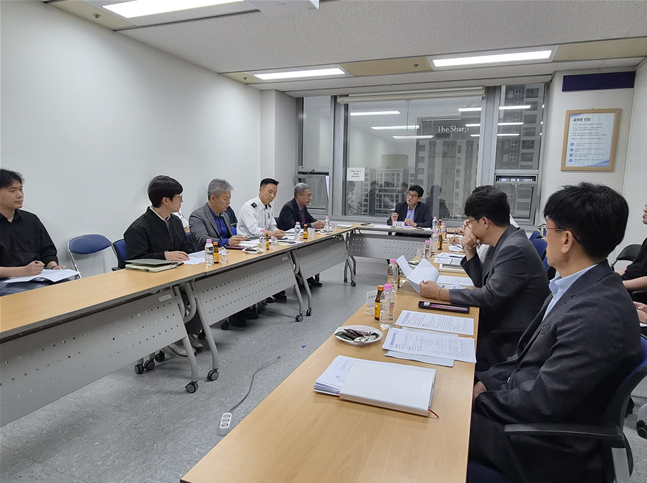
Busan city has activated an emergency transport plan after the Busan Transportation Corporation union announced it would launch a strike from the first train Friday if labor-management talks fail to reach an agreement Thursday.
The two sides have held 18 rounds of collective bargaining since May without reaching a deal. Mediation by the Busan Regional Labor Relations Commission also broke down on Sept. 29.
The dispute centers on staffing levels, working conditions and the scope of bargaining responsibility between the primary contractor and subcontractors. The union and management have clashed over how many additional workers are needed to operate the Yangsan Line extension, set to open in December. A further flashpoint emerged after a law commonly known as the "Yellow Envelope Act" took effect in March, raising the question of whether the primary contractor — Busan Transportation Corporation — must directly take responsibility for the working conditions of subcontracted employees.
The union is demanding that Busan Transportation Corporation, as the entity that effectively controls the working conditions of subcontracted cleaning and technical workers, engage in substantive negotiations under the Yellow Envelope Act. It is also calling for additional safety personnel and improvements to rest rooms and shower facilities at worksites.
Management has said staffing increases "cannot be decided unilaterally by the corporation, given budget and regulatory constraints," while continuing last-ditch talks to avert a strike. If the two sides fail to reach a breakthrough at Thursday's final session, commuters face significant disruption to subway services.
In response, Busan city held an emergency coordination meeting Tuesday with the Busan Metropolitan Police Agency, Busan Transportation Corporation and Yangsan city to finalize a cooperative response framework and announced Wednesday it had drawn up an emergency transport plan to minimize inconvenience to residents.
If the strike goes ahead, the city plans to deploy essential maintenance personnel to keep subway operations running at an average of 75 percent of normal weekday service. Lines 1 through 3 will run on their usual four-to-five-minute intervals during morning and evening rush hours, but will be stretched to eight-to-20-minute intervals at other times, bringing off-peak service to about 58 percent of normal. Saturday service will be maintained at 73.9 percent, with trains running every 10 to 24 minutes, and Sunday service at 58.7 percent, with intervals of 10 to 30 minutes. Line 4, which operates on fully automated, driverless technology, will run at 100 percent as normal.
To offset reduced subway frequency, the city plans to lift the vehicle-free day restrictions starting on the first day of any strike, concentrate taxis near subway stations and increase city bus frequencies on key routes.
Should the strike drag on and the transportation corporation request additional support, the city said it would deploy civil servants to stations to assist with ticketing and passenger management.
"We urge both labor and management at Busan Transportation Corporation to engage actively in dialogue and reach an agreement as soon as possible, so that commuters are not inconvenienced," said Hwang Hyeon-cheol, the city's transportation director. "We will keep our emergency transport plan and inter-agency coordination framework on full alert for any contingency, and do everything we can to minimize disruption for residents."
kaf2002@heraldcorp.com