59 capsizing and sinking accidents in past 5 years, leaving 89 dead and 60 missing
2 autonomous underwater vehicles lost during trials, commercialization timeline uncertain
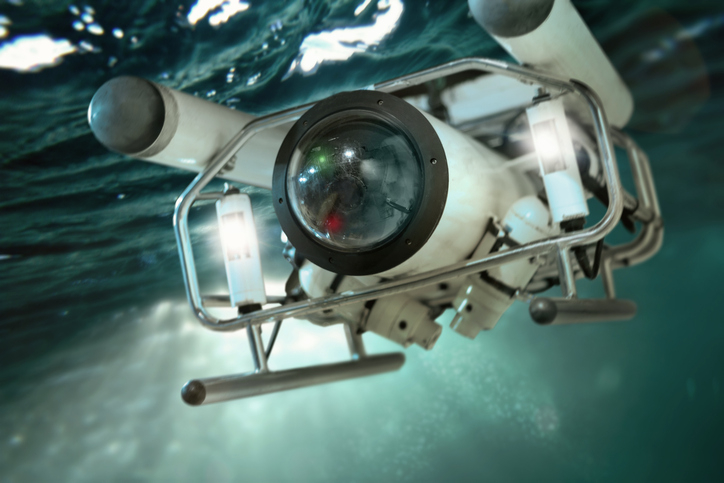
It took six days to locate the hull of a tugboat that sank off Busan — and a program the Korea Coast Guard has poured more than 22 billion won ($16.6 million) into to speed up such searches is itself in trouble, after two autonomous underwater vehicles were lost during trials, leaving the deployment timeline unresolved.
Data submitted to Democratic Party of Korea lawmaker Moon Geum-ju of the National Assembly's Agriculture, Food, Rural Affairs, Oceans and Fisheries Committee showed that 59 vessel capsizing and sinking accidents involving fatalities or missing persons occurred between 2022 and September this year. Those accidents left 89 people dead and 60 missing.
The capsizing and sinking of the tugboat TNS Catcher near Oryukdo off Busan on Sept. 2 is a prime example. It took six days after the accident before the sunken hull was located — and only after the Navy deployed its own underwater drone.
Quickly pinpointing the location of a sunken hull is critical to searching for missing persons and conducting rescue operations. Even when rescue teams reach the accident site, they face serious difficulties conducting underwater searches if the hull's position cannot be confirmed.
The Korea Coast Guard currently operates underwater search equipment including side-scan sonar, which uses sound waves to detect seafloor terrain and objects. However, sea conditions such as wave height and currents can limit how the equipment is used, and experts say more versatile search tools are needed to handle varying water depths and maritime environments at accident sites.
To address this, the coast guard launched an autonomous underwater vehicle and operating system development project in 2021. The total budget allocated was 22.02 billion won. The project aimed to develop unmanned submersibles capable of navigating and searching underwater without direct human control, along with the systems to operate them.
Research and development, however, wrapped up in June this year — six months behind the original schedule. During the final verification trials, two autonomous underwater vehicles were lost. The resulting shortage of validation data has left a research institute carrying out remedial work, and a commercialization date has yet to be set.
Critics have also noted that the project, as the country's first research effort of its kind, focused heavily on acquiring the underlying technology while giving insufficient thought to commercialization after development. Although the research phase has ended, follow-up procedures and an operational plan for deploying the vehicles at actual maritime accident sites remain unresolved.
"Even if rescue teams arrive quickly at a maritime accident, they will inevitably struggle to save lives if they cannot locate the sunken hull," Moon said. "Follow-up procedures and a field deployment plan must be drawn up without delay so that the results of research costing more than 22 billion won can actually be put to use at rescue sites."
Moon also called for a pilot introduction of new detection technologies — such as underwater acoustic positioning devices — targeting aging fishing vessels and those with repeated accident records. "We need to strengthen cooperation with the Navy and other relevant agencies, secure a range of underwater search technologies, and build an underwater search support system that can locate sunken hulls and missing persons more quickly," she said.
adastra@heraldcorp.com