Panel urges clustering of agencies around existing innovation cities, creation of quality jobs, and improved settlement conditions
Commission calls for swift finalization of relocation plan, pan-government dedicated body, and stronger foundation for retaining local talent
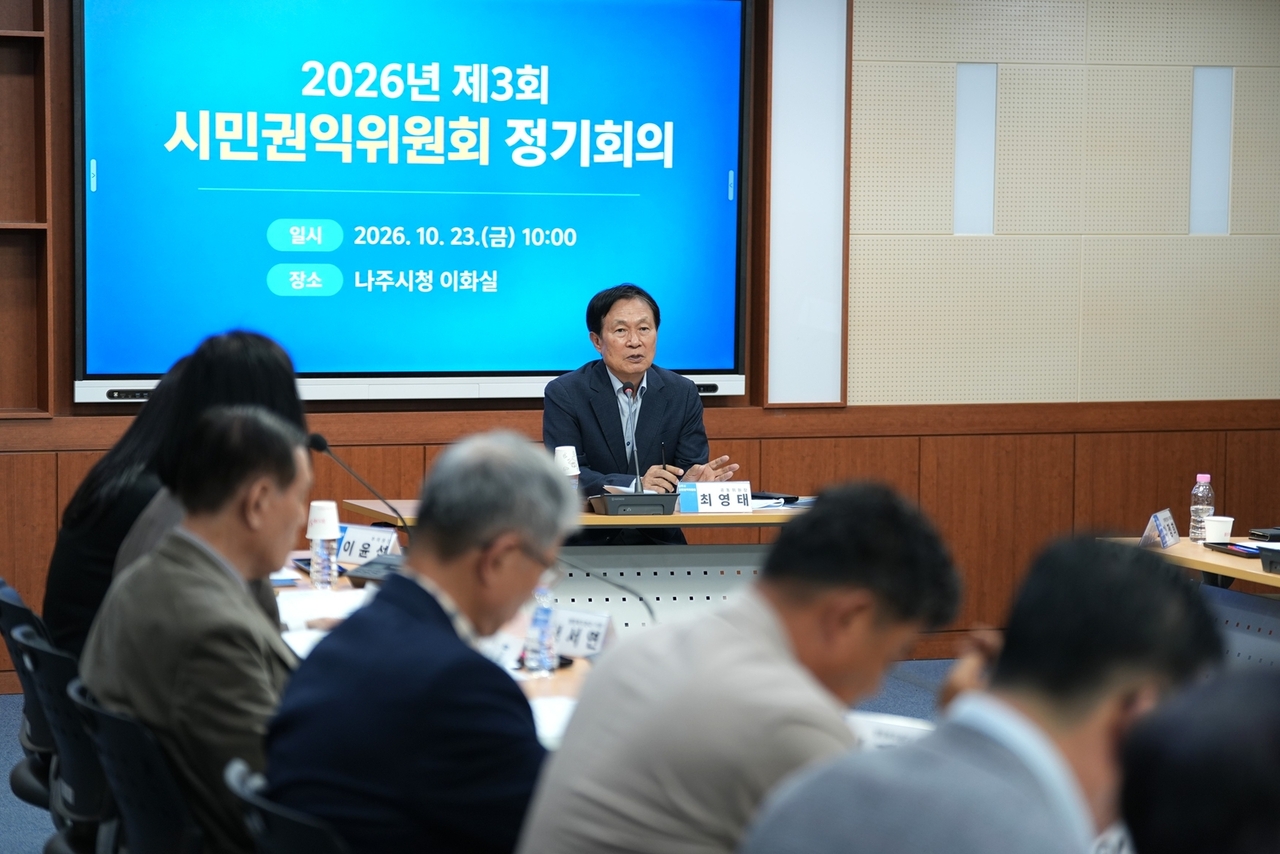
The Naju City Citizens' Rights Commission said it supports the government's basic principles for a second round of public agency relocations to regional areas, but said the move must go beyond a simple transfer of institutions — it should strengthen the functions of Bitgaram Innovation City and serve as a genuine driver of regional growth by improving local employment, settlement conditions and residents' quality of life.
According to the city of Naju, the commission held its third regular meeting Friday and discussed the direction of regional development under the second relocation round and the commission's own role in the process. It adopted a position statement titled "Stance on the Successful Implementation of the Second Public Agency Relocation and the Development of Innovation Cities."
The government laid out its basic principles for the second relocation round on Sept. 3, calling for minimizing the number of agencies remaining in the Greater Seoul area, clustering relocated agencies around existing innovation cities, linking them with regional universities and industries, expanding self-sufficient settlement infrastructure, and moving at pace.
While expressing support for that policy direction, the commission said "for the basic principles to translate into tangible regional development outcomes, the target agencies and specific implementation plans must be finalized without delay, and a responsible execution framework must be established to oversee the process from policy design through to implementation."
It also proposed that "to minimize excessive competition and conflict among regions over agency placements, the central government should take responsibility for making final location decisions by comprehensively weighing functional linkages and regional conditions, and should establish a pan-government dedicated body for innovation cities to ensure policy momentum and continuity."
The commission also said the second relocation must not amount to a mere physical transfer of institutions.
It said relocated public agencies, local businesses, universities and research institutions must collaborate closely to create new industries and quality jobs, and to build a sustainable industrial ecosystem where local talent can study, find employment and settle in the region.
Expanding the hiring of local talent and equipping young people with education, employment and startup opportunities to build their futures in the region were also presented as key tasks for the relocation policy.
Bitgaram Innovation City is home to Korea Electric Power Corporation and 15 other public institutions, and has built an industrial and research base spanning energy, information and communications technology, agri-biotech, and culture and the arts.
The commission said that in the second relocation round, "if related public agencies are clustered together with sufficient consideration given to linkages with existing industries and functions, it will strengthen cooperation among institutions, raise the competitiveness of regional industries, and further enhance the innovation city's self-sufficiency."
It also said "a regional development strategy that encompasses the city as a whole must be prepared so that the benefits of additional agency relocations do not remain confined to Bitgaram Innovation City but spread to the original city center, rural areas, local businesses and commercial districts."
In the position statement, the commission urged the government to swiftly finalize and responsibly implement the second relocation plan; cluster agencies around existing innovation cities based on functional linkages; foster regional industries and create quality jobs; expand the hiring of local talent; improve settlement conditions in education, healthcare, transportation and culture; and pursue balanced development between the innovation city and surrounding areas.
The commission said it plans to continue gathering diverse public opinions throughout the second relocation process and to work with the community to identify practical development measures, fulfilling its core mandate of protecting citizens' rights and proposing policy.
Choi Young-tae, chair of the Naju City Citizens' Rights Commission, said the second relocation "is not simply about moving a handful of agencies — it is an important opportunity to transform the region's industries, jobs and living environment together." He added that the commission would "faithfully gather the diverse voices of citizens and propose policies, and join forces with the community, so that the government's relocation policy leads to a revitalized local economy, quality job creation, the settlement of local talent, and an improved quality of life for residents."
kkm9971@heraldcorp.com