Successful exits from KES Environment and Goodrich
Firm targets 100 billion won blind fund
Track record builds as Japan investment push takes shape
Some buy, some sell, and others reload for the next deal. Even in the same mergers and acquisitions market, private equity fund managers pursue vastly different strategies with vastly different results. [House Review] takes a close look at where major managers invested this year, what they achieved, and where they are looking next. [Editor's note]
Private equity fund manager JC Partners has validated its investment capabilities this year through a string of successful exits, posting strong results from bets placed across two very different industries — waste landfill operator KES Environment Development and general insurance agency Goodrich.
What stands out is how those results were achieved. JC Partners has built its identity around what it calls "pioneering investment" — identifying market potential before others take notice and staying alongside portfolio companies until they become genuinely competitive. With that approach now bearing fruit, the firm is moving into its next chapter with renewed confidence, launching a drive to raise a 100 billion won ($75.5 million) blind fund built on the investment experience and networks it has accumulated since its founding in 2018.
Nine years in the making: KES Environment exit pays off
JC Partners wrapped up the sale of controlling stakes in both KES Environment Development and Goodrich this year. The two deals share a common thread: the firm spotted the growth potential of each market and the competitive strengths of each company well ahead of the crowd, then put in the work to build their value.
The KES Environment Development story begins in 2017. The company operated a fledgling waste landfill in Seokpo-ri, Hwaseong, Gyeonggi Province. Waste disposal companies are now a favored target for private equity managers, prized for their stable cash flows — but in 2017, the sector was unfamiliar territory for most funds.
KES Environment Development presented an even steeper challenge: it had not yet built its landfill facility. The company could not begin operations until it had navigated a demanding permitting process and completed construction. That made the investment highly unusual by the standards of infrastructure buyouts, which typically follow only after stable cash generation has been confirmed.
JC Partners saw two things worth betting on: the long-term growth of the waste disposal market and the scarcity value of KES Environment Development itself. The firm was convinced that waste processing fees would trend upward over time. It placed particular weight on the company's status as the only privately operated landfill in the Greater Seoul area — a distinction extremely difficult to replicate, given that any new entrant in Seoul, Gyeonggi Province or Incheon must clear hurdles ranging from site acquisition and environmental impact assessments to community opposition and negotiations with local governments.
After investing, JC Partners focused on turning that potential into reality. It held sustained talks with Hwaseong city and the relevant environmental authorities while simultaneously working to build goodwill with the local community. In 2023, even as the real estate project financing market had frozen, the firm raised 105 billion won to fund construction of the landfill facility, which broke ground the following year. Full commercial operations began in March this year.
As JC Partners worked through each obstacle in the development process, KES Environment Development's enterprise value rose with it. A development project whose permitting had once been far from certain was transformed into a stable infrastructure asset capable of generating long-term cash flows — a textbook example of pioneering investment, from the earliest stages of a business through to its operational foundation.
JC Partners sold KES Environment Development to E&F Private Equity in May. Having invested 18.5 billion won, the firm recorded an internal rate of return of 12 percent and a multiple on invested capital of 2.9 times.
Early bet on insurance brokerage market pays off as regulation reshapes the industry
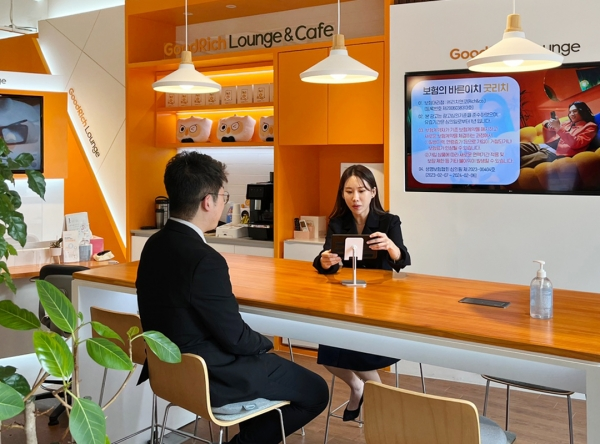
The Goodrich investment showcases JC Partners' ability to read market shifts ahead of time and build fundamental strength through a disciplined value-creation strategy. In 2022, the firm invested 185 billion won to acquire a controlling stake in Goodrich — then known as Rich&Co — marking the first time a private equity fund had taken control of a domestic general insurance agency.
Goodrich was in difficult shape at the time. Despite building a sales force of more than 4,000 insurance agents since its founding in 2006, growth had slowed and profitability had deteriorated. The company posted an operating loss of 16.1 billion won in 2021, and losses continued into 2022 with a 2.7 billion won operating deficit.
JC Partners looked past the near-term numbers and focused on Goodrich's growth potential. Beyond its agent sales network, the company had developed its own insurance management app and proprietary IT platform — capabilities that JC Partners believed gave it a differentiated edge through systematic management of both customers and its sales organization.
The firm concentrated on building a foundation that could withstand shifts in market conditions and regulatory regimes. It injected 100 billion won in new equity during the acquisition to strengthen the balance sheet and proactively introduced an installment-based commission payment system for insurance sales. The move reduced early cash outflows and stabilized monthly and annual cash flows. At the same time, JC Partners built a system capable of retaining agents through long-term contract management.
That value-creation work aligned closely with subsequent regulatory changes. The Financial Services Commission, starting in July this year, capped first-year insurance sales commissions paid to agents at general insurance agencies at 12 times the monthly premium. Further restrictions are set to follow — a four-year installment system from 2027 and a seven-year system from 2029. The revenue structure overhaul JC Partners had already driven through effectively positioned Goodrich to absorb those regulatory shifts.
The results showed up in the financials. Goodrich's sales doubled from 321.3 billion won in 2022 to 644.6 billion won last year, while operating profit swung from a 2.7 billion won loss to a 55.2 billion won gain. Its operating profit margin of 8.6 percent as of 2025 ranks among the highest in the sector.
JC Partners completed its exit this year by selling its stake back to Goodrich founder Han Seung-pyo. The value of JC Partners' stake, which stood at 350 billion won at the time of acquisition, had risen to around 600 billion won — delivering an IRR of 21 percent and a MOIC of 2.4 times over roughly four years since the 2022 investment.
KES Environment Development and Goodrich operated in entirely different industries, but the investment philosophy JC Partners applied to each was the same: find potential that others have overlooked, and stand alongside portfolio companies to work through the hard moments together. That is what makes this year's exit results especially meaningful to everyone at the firm.
From exits back to investing: the blind fund challenge
With two major exits secured, JC Partners has turned its attention to building its next engine of growth. About six years after forming a 30 billion won blind fund in 2020, the firm is now working to raise a new one, targeting 100 billion won.
JC Partners has historically sourced investment opportunities primarily through project funds, and managed to deliver meaningful exits from KES Environment Development and Goodrich without holding a large blind fund. This time, the firm plans to leverage its accumulated track record to attract capital from institutional investors and secure a more stable investment base.
The firm is also exploring opportunities in Japan. JC Partners Chief Executive Lee Jong-cheol spent many years at Japanese financial group Orix, including a stint as head of Orix PE Korea, making him one of the private equity industry's most recognized Japan specialists. His goal goes beyond simply investing in Japanese companies — he aims to serve as a bridge between Korea and Japan, using the local networks he has built over the years to invest in Japanese companies seeking to enter the Korean market.
park.jiyeong@heraldcorp.com