Fire safety grant forecast to fall 27.6% next year
45% allocation structure from cigarette excise tax shows its limits
Government reviewing national-local cost-sharing framework
A controversy over fire department funding — ignited by Gyeonggi Province Governor Choo Mi-ae's remarks about what she called a "financial straw" draining fire resources — is now spilling into a debate over raising tobacco taxes. As declining cigarette sales expose a structural shortfall in fire funding, calls are growing to increase tobacco levies frozen for 11 years.
Critics note, however, that even a tax hike would leave intact the underlying problem: fire funding remains hostage to cigarette consumption. They argue that a more fundamental overhaul of the financing system is needed to secure a stable revenue base.
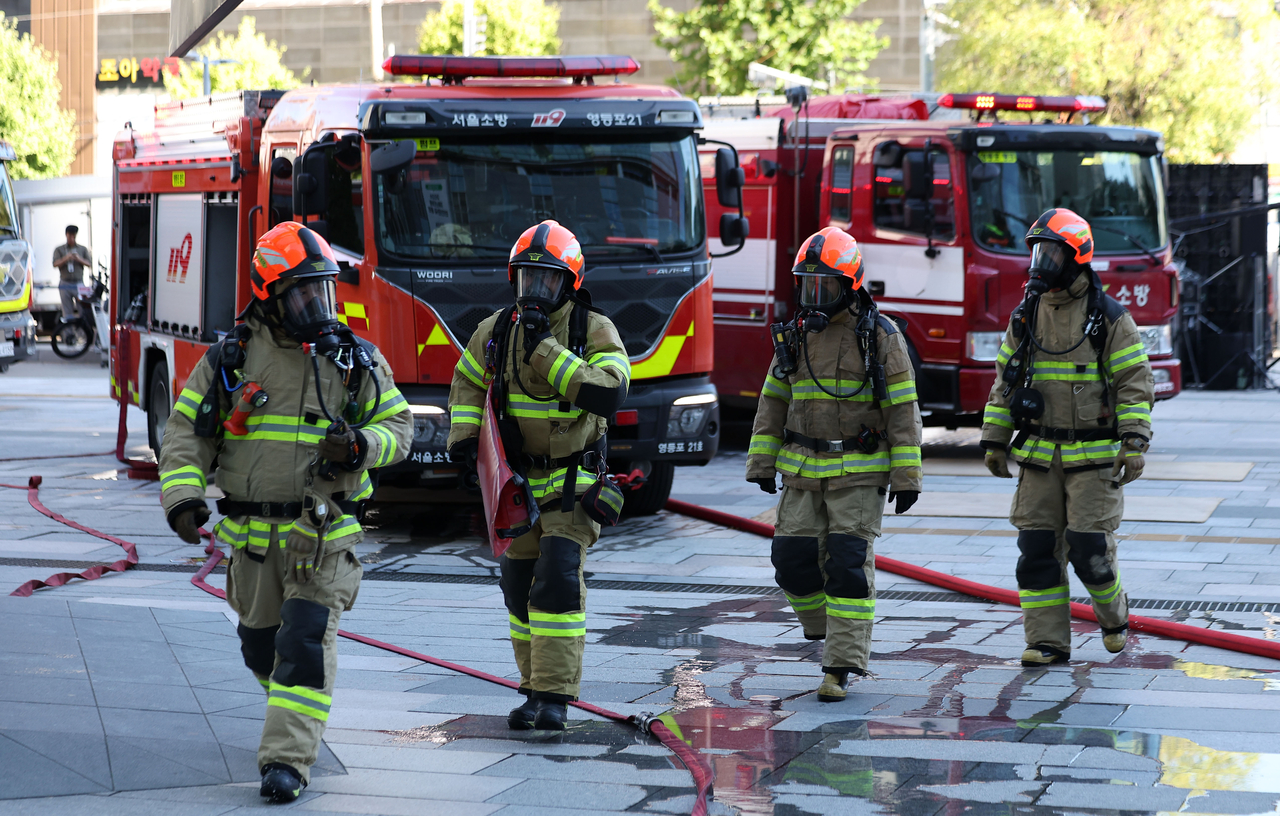
The fire safety grant for next year is projected to fall to 760.5 billion won ($574 million), down 289.7 billion won, or 27.6 percent, from the 1.05 trillion won allocated this year, according to the government and the National Assembly.
The fire safety grant is a system through which the central government transfers funds to local governments to cover firefighter salaries and the procurement of fire trucks and rescue equipment. The Ministry of Interior and Safety said the projected decline reflects lower excise tax revenue forecasts tied to falling cigarette sales, as well as a settlement of actual tax receipts from last year, and that the government has not arbitrarily cut the budget.
The reason the fire funding debate has shifted toward tobacco taxes lies in how the fire safety grant is financed. Under the current system, 45 percent of the individual consumption tax levied on cigarettes is allocated to the grant. When cigarette sales fall and less tax is collected, fire funding shrinks accordingly.
This structure was created in 2015 when the government raised cigarette prices from 2,500 won to 4,500 won per pack, introducing an individual consumption tax and earmarking 20 percent of the revenue for the fire safety grant. The rationale was to direct a portion of tobacco tax receipts toward fire prevention and response. In 2020, when firefighters were reclassified as national civil servants, the allocation rate was raised to 45 percent to help fund the expanded workforce.
The problem is that firefighter salary costs keep rising — driven by pay increases and seniority-based wage growth — while cigarette consumption continues to fall. Domestic cigarette sales declined for two consecutive years, dropping from 3.63 billion packs in 2022 to 3.61 billion packs in 2023 and 3.53 billion packs in 2024.
Against this backdrop, raising tobacco taxes has emerged as one option for shoring up fire funding. The individual consumption tax on a standard pack of 20 cigarettes currently stands at 594 won — a figure unchanged since the tax was introduced in 2015. The retail price of cigarettes has also been frozen at 4,500 won for 11 years. Proponents argue that inflation has eroded the real price of cigarettes, leaving room to adjust the tax rate.
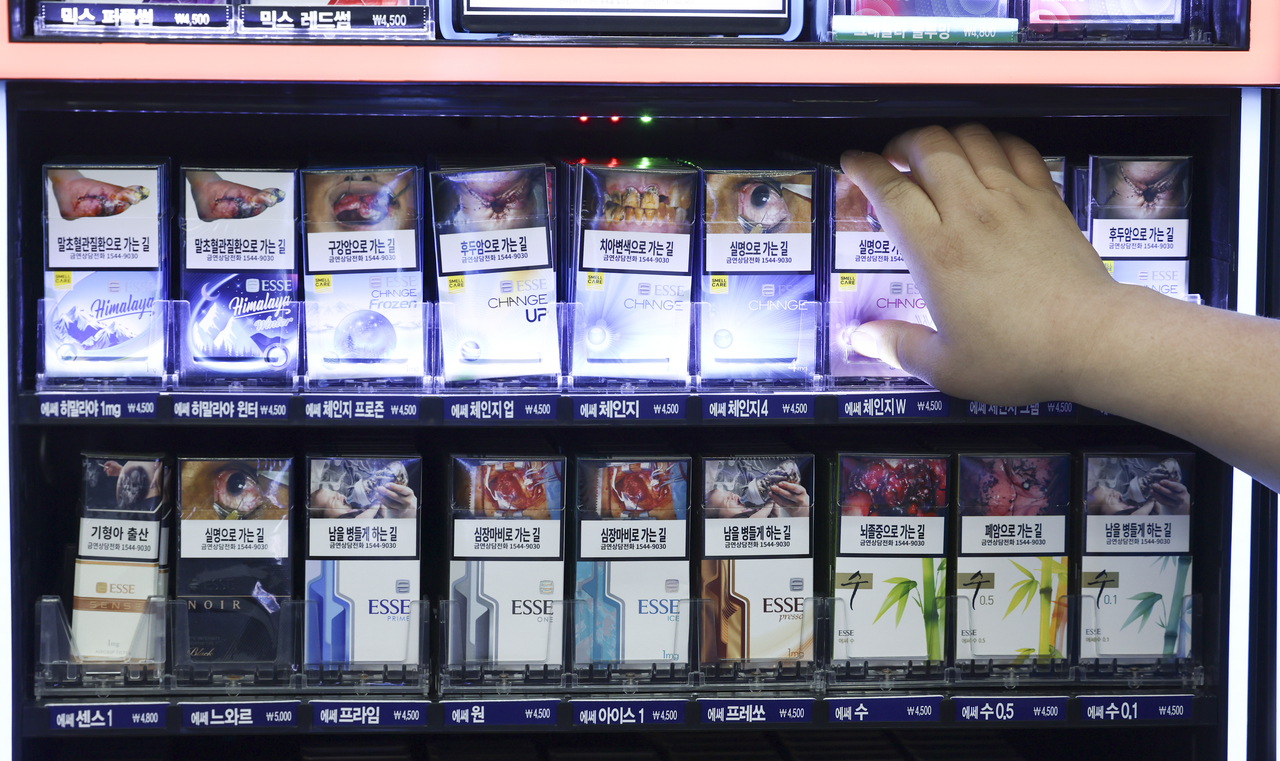
Calculations suggest that raising the individual consumption tax by 300 won per pack could substantially replenish fire funding. Assuming 2024 sales of 3.53 billion packs hold steady, the increase would generate about 1.06 trillion won in additional annual tax revenue.
Applying the current 45 percent allocation rate, the fire safety grant would receive about 476.4 billion won more — exceeding the projected 289.7 billion won shortfall for next year. However, if higher taxes prompt a further drop in cigarette sales, actual additional revenue would fall short of that estimate.
Increasing the share of tobacco tax revenue directed to fire services would, however, conflict with other fiscal demands. The remaining 55 percent not allocated to the fire safety grant is set to fund a special account for regional essential medical care starting next year. Expanding the fire share would mean less money for regional healthcare.
Ministry of Planning and Budget Minister Park Hong-keun agreed Friday at a comprehensive national audit session of the National Assembly's Finance and Economy Planning Committee that raising the allocation ratio further would be difficult. When Democratic Party lawmaker Jeong Tae-ho raised the conflict with regional healthcare funding, Park replied, "That's right."
A tobacco tax increase also intersects with public health policy goals. In its Korea Economic Survey 2026, released in July, the OECD said South Korea has room to raise tobacco taxes further to reduce smoking and improve public health.
Still, critics say a tobacco tax hike alone cannot fundamentally resolve the fire funding problem. Higher taxes would increase the burden on smokers, and if cigarette consumption continues to decline over the long term, fire funding would again come up short.
The heavy reliance on local government budgets in the current fire financing system is also flagged as a structural issue requiring reform. Although firefighters were reclassified as national civil servants in 2020, fire administration remains the responsibility of local governments. At Friday's national audit, lawmaker Jeong said the national government's share of the total fire budget had fallen from 14.9 percent in 2021 to 10.7 percent, while the local government share rose from about 85 percent to 89.3 percent over the same period.
As personnel costs consume a growing share of fire budgets, funds available for equipment procurement have shrunk in relative terms. The share of total fire spending devoted to salaries rose from about 71 percent in 2022 to 76 percent, while the share for operational projects fell from 28.7 percent to 24.2 percent. Jeong cited Germany's fire protection levy and Finland's fire insurance premium surcharge as models, and proposed expanding national government funding and diversifying revenue sources.
In response, Minister Park said discussions were needed on "what principles and criteria should govern the division of responsibilities between the national and local governments," and identified improving firefighters' working conditions, expanding advanced safety equipment, and securing stable fire funding as key priorities.
Park added that the ministry would gather input from the Ministry of Interior and Safety, the National Fire Agency and local governments to review what measures could be reflected in next year's budget and what longer-term systemic reforms may be necessary.
y2k@heraldcorp.com