Hanwoo output falls, pushing prices up by double digits year-on-year
Imported beef also rises on supply shortage and higher tariffs
Seoul samgyeopsal price has climbed three times this year
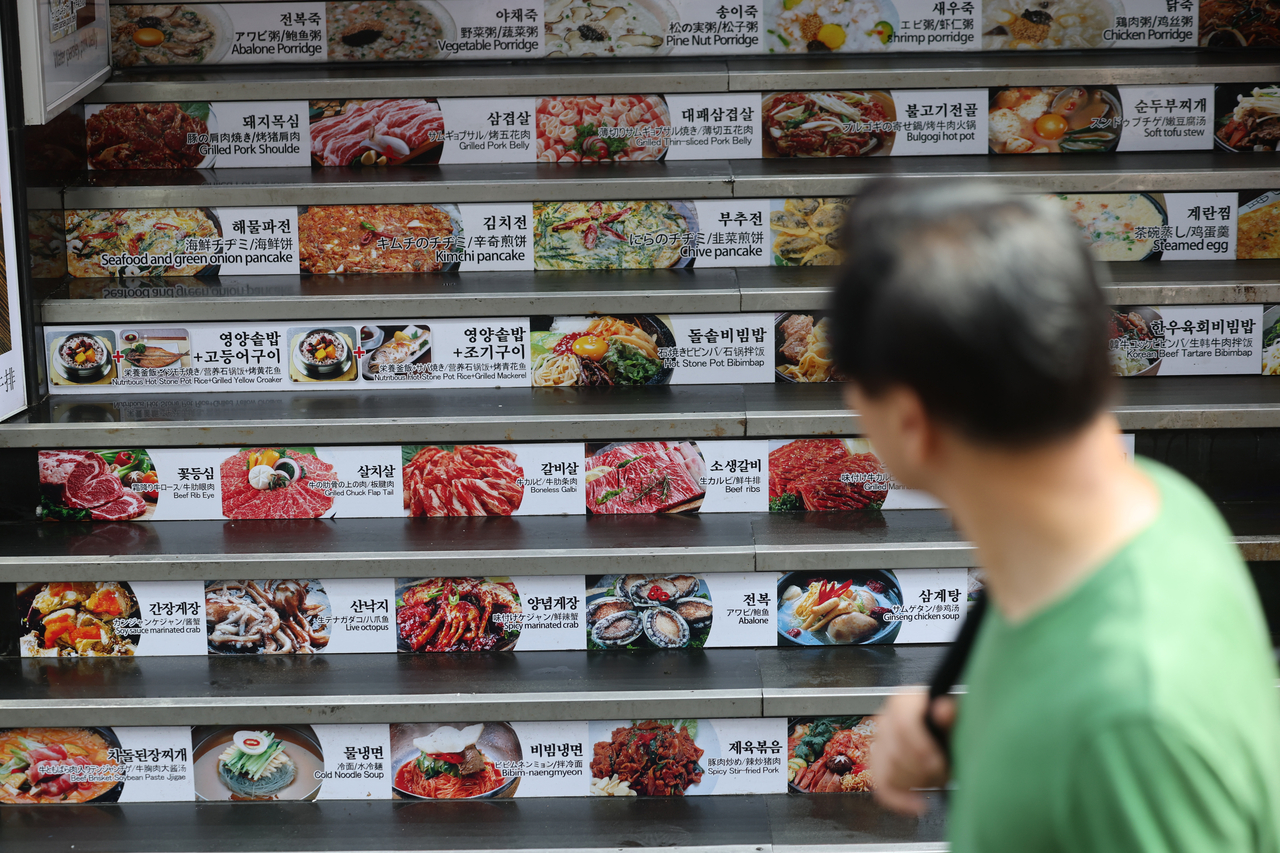
"Year-end gatherings are becoming a real financial burden. When five team members go out for a meat dinner, the bill easily tops 300,000 won ($227)."
Kim, a 45-year-old office worker in Seoul, spent a long time deciding where to hold this year's end-of-year work dinner. He had planned to rebook the same barbecue restaurant his team visited last year, but changed his mind after checking the menu — the price of a serving of samgyeopsal had gone up, making the outing more expensive than expected. "We're now discussing with team members whether to scale back the year-end gathering to a small lunch instead," Kim said.
The cost of dining out is expected to climb further as the year draws to a close, with prices for key food items rising sharply ahead of the holiday season. Restaurant bills are also increasing at a steep pace.
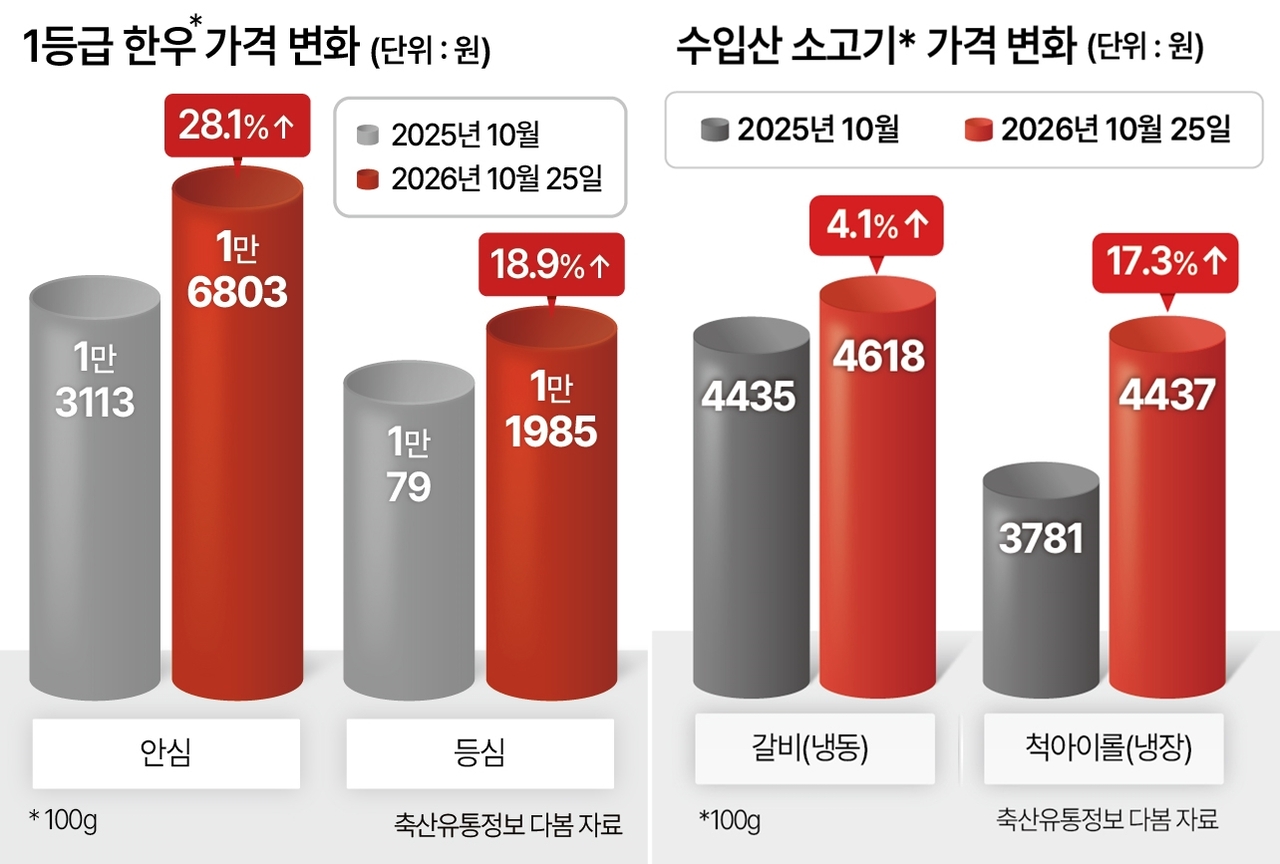
According to livestock distribution data platform Dabom, the national average retail price of Grade 1 hanwoo tenderloin on Sunday was 16,803 won per 100 grams — up 28.1 percent from the October last year average of 13,113 won. Grade 1 sirloin stood at 11,985 won per 100 grams, an 18.9 percent increase from 10,079 won in the same month last year.
Prices for imported beef, a common substitute, have also risen. Frozen imported galbi climbed 4.1 percent over the same period to 4,618 won per 100 grams. Chilled chuck eye roll reached 4,437 won per 100 grams, up 17.3 percent from 3,781 won a year earlier.
Pork and chicken prices have followed suit. Domestic samgyeopsal rose 3.0 percent year-on-year to 2,910 won per 100 grams, while domestic broiler chicken climbed 5.4 percent over the same period to 5,897 won per kilogram.
The price increases stem from supply shortages. For hanwoo, a years-long decline in the cattle herd has reduced overall output. According to a Korea Rural Economic Institute report, the number of hanwoo cattle peaked at about 3.727 million head in 2022, then fell to about 3.648 million in 2023, about 3.507 million in 2024, and about 3.368 million in 2025.
US beef supply tightened after the number of cattle slaughtered fell about 7.7 percent year-on-year as of July. For Australian beef, the low-tariff import quota was exhausted in July, pushing up the per-unit import cost thereafter. Broiler chicken faces a recurring threat each winter from highly pathogenic avian influenza. Chicken prices peaked in the second quarter before easing, but have rebounded since October.
As raw material costs rise, restaurant prices are climbing quickly. According to the Korea Consumer Agency's price monitoring service, bibimbap has seen the steepest increase among dining-out items this year. The price of a single serving in Seoul rose five times between January and September, reaching 12,000 won. Jajangmyeon went up four times over the same period to 7,808 won, while samgyeopsal climbed three times to 21,321 won.
Food price inflation is expected to persist for now. A key factor is the rise in agricultural and livestock prices in the producer price index, which leads consumer prices. The Bank of Korea's preliminary producer price index for September showed farm produce and livestock prices up 3.7 percent and 2.7 percent, respectively, from the previous month. Items driving the increase included beef (up 10.4 percent), hairtail (9.4 percent), olive flounder (7.5 percent) and pork (4.2 percent).
"With both domestic and imported meat prices rising together, the burden on restaurant-goers is bound to grow," an industry official said. "As year-end approaches and gatherings such as year-end parties increase, consumers will feel the pinch even more."

soho0902@heraldcorp.com