The Merlion spouts water to summon wealth
A skyline view from 200 meters above Sands
18 artificial supertrees stage a nightly light show
Dreamy jellyfish and an underwater dining room
A romantic riverside strip born from an old wharf
A small Southeast Asian island ringed on all sides by the sea has sharpened and refined itself into a vast gateway linking continent and ocean.
The air of Singapore — where cutting-edge architecture and meticulously tended greenery mesh like precision gears — is thick with firm discipline. The city's reputation as a "Fine City," where even spitting out gum or dropping litter draws a heavy fine, paradoxically puts travelers at ease and lets them roam freely.
The Merlion's wish and the city's vertical landmarks
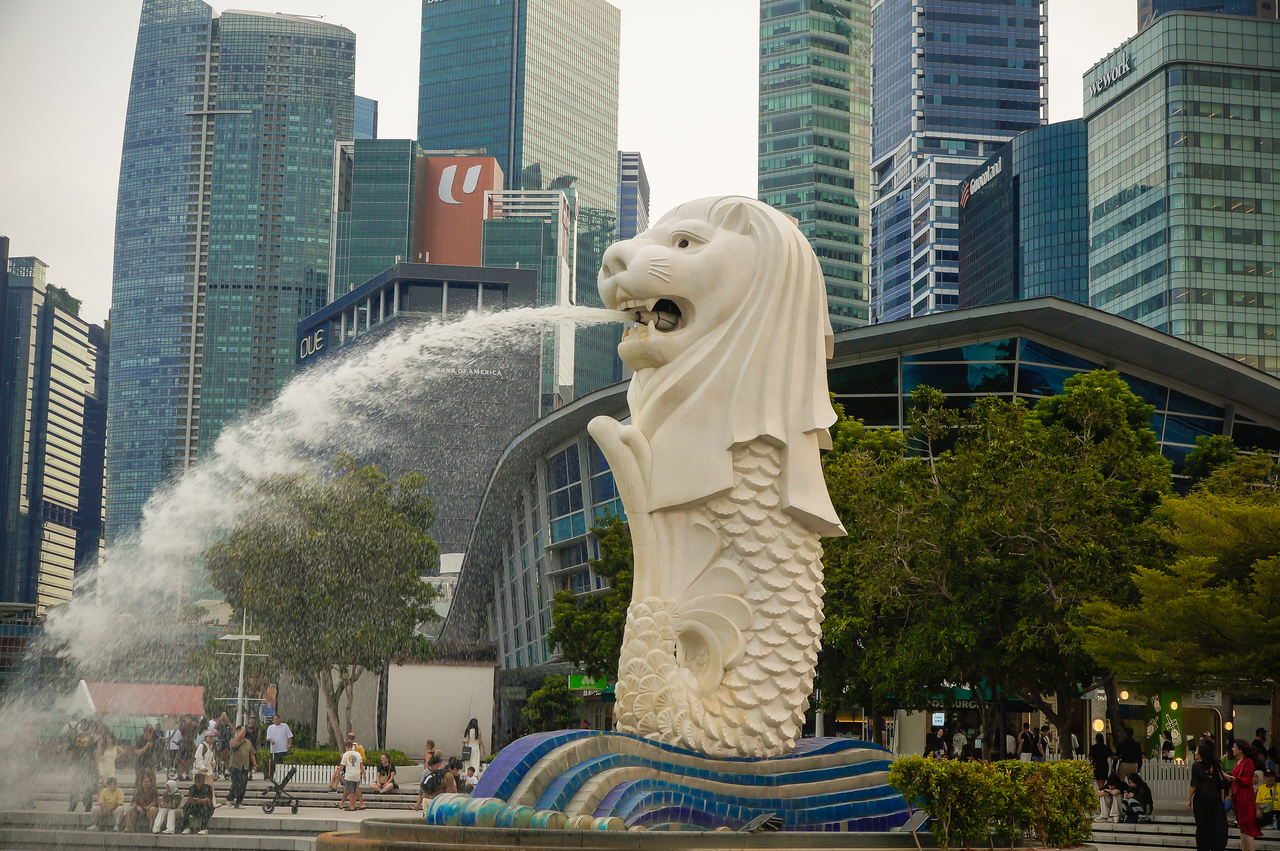
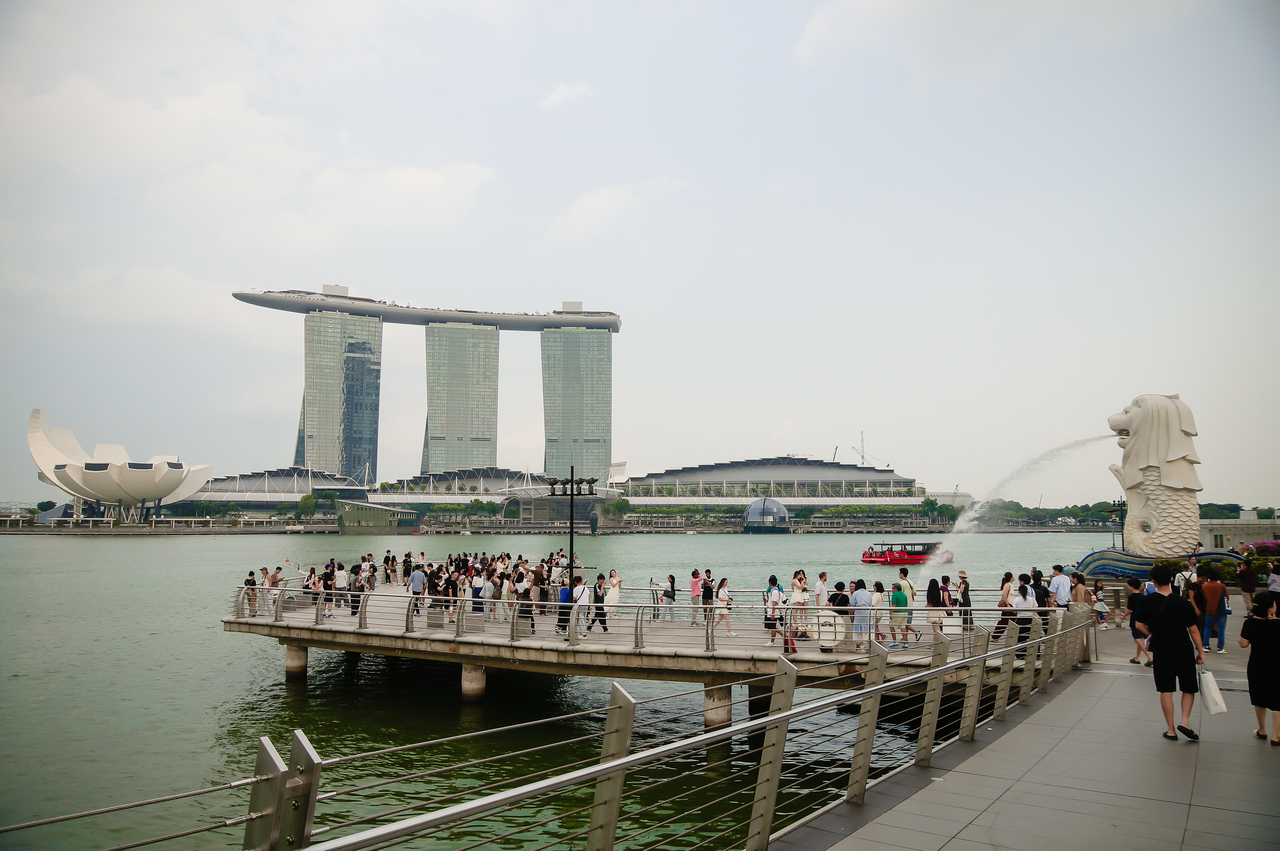
Arriving at Marina Bay, the waterfront district in the southern heart of Singapore's main island, visitors are greeted by the rush of churning water. It pours from the Merlion — a mythical creature with the body of a fish and the head of a lion. In front of the stone statue, with skyscrapers rising like a folding screen behind it, travelers are busy snapping playful optical-illusion photos, palms outstretched or mouths open to "catch" the cascading stream.
The Merlion is more than a decorative fountain. The statue faces east, toward the rising sun, to invite prosperity, while the ceaseless flow of water carries a feng shui wish for the unending circulation of wealth. Whether or not that wish reached the heavens, Singapore has established itself as one of the world's top financial hubs alongside New York, London and Hong Kong, and last year its per-capita GDP surpassed $100,000.
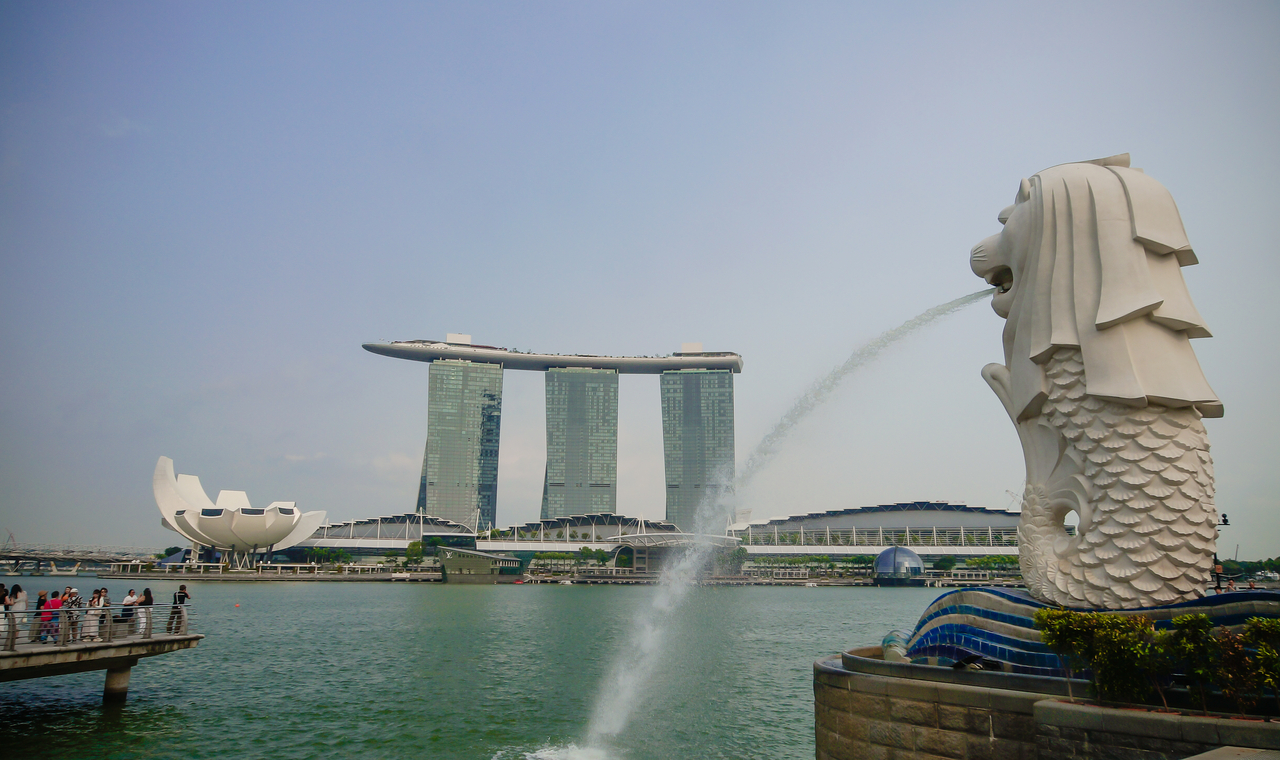
Turn your gaze and the full grandeur of Marina Bay Sands comes into view — three hotel towers topped by what looks like an enormous streamlined ship. The upper floors of the hotel, built by South Korea's Ssangyong Engineering & Construction, house an observation deck overlooking the entire city.
Step into a high-speed elevator and within seconds you are launched to the SkyPark observation deck, 200 meters above ground. From there, Singapore's precisely engineered blueprint unfolds below. To the west, the towers of the financial district form a silver forest; in another direction, cargo ships and oil tankers dot the calm strait like black stones on a go board. The countless merchant vessels on the water explain why this small city has become the crossroads where the world's money and goods converge.
18 artificial giants and a nightly performance of light
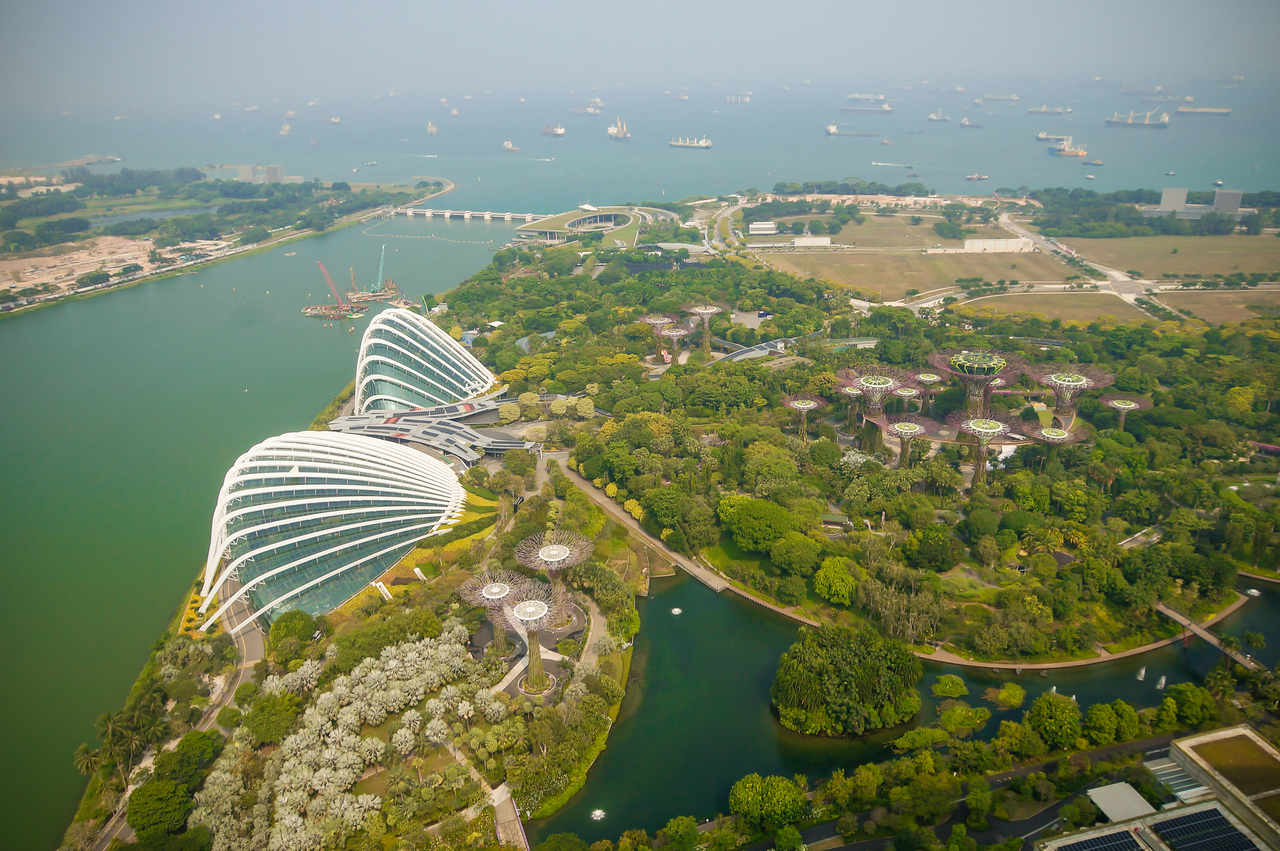
Step out from the vast shadow of Marina Bay Sands and walk around to the other side, and Gardens by the Bay opens up before you, brimming with green life.
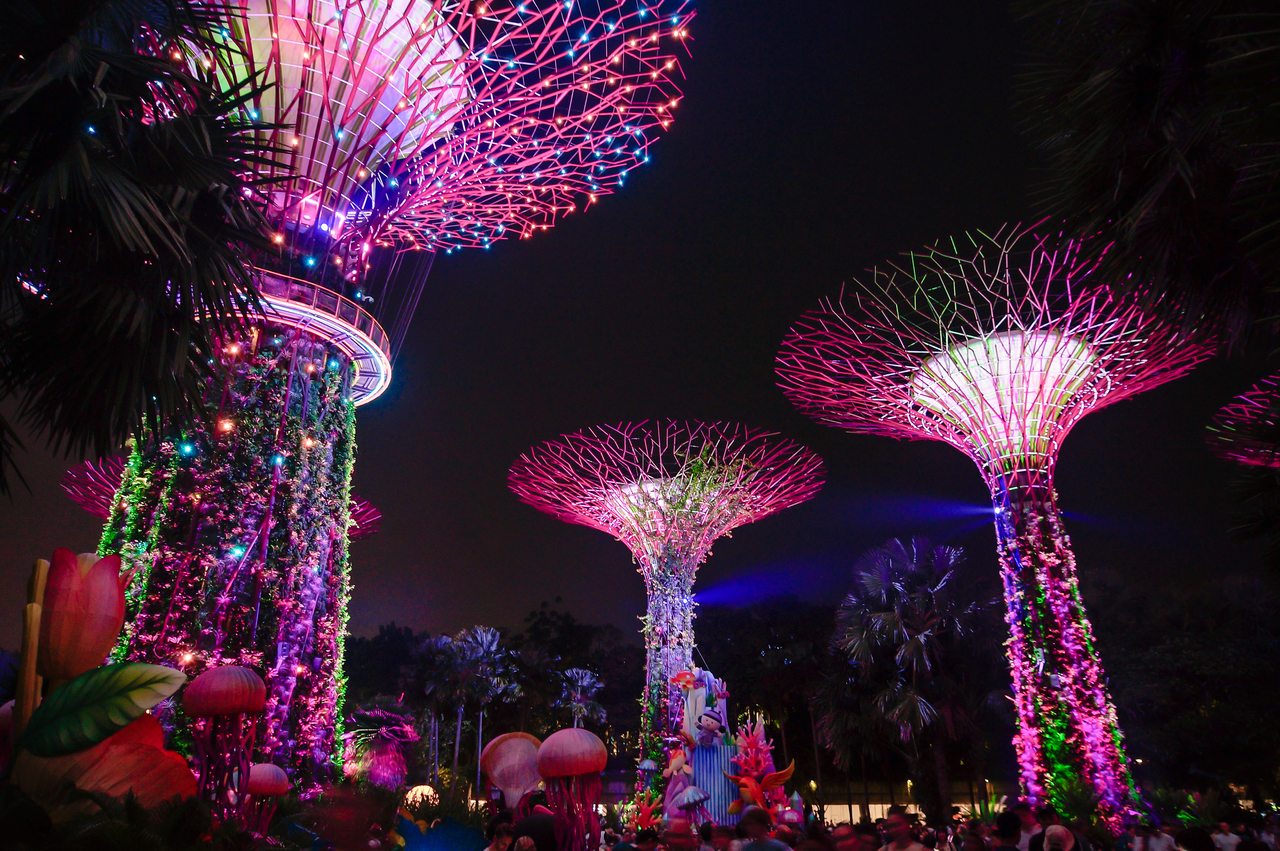
The undisputed highlight of this enormous green complex — born of Singapore's bold ambition to become a "City in a Garden" — is the Supertree Grove, a cluster of artificial vertical gardens soaring into the sky. The 18 tree-like structures, ranging from 25 to 50 meters tall, create a surreal sensation of having wandered into a forest of giants. Their concrete-and-steel frames are draped with more than 200 species and over 160,000 individual plants — ferns, orchids and tropical climbers — breathing vivid life into the cold artificial structures.
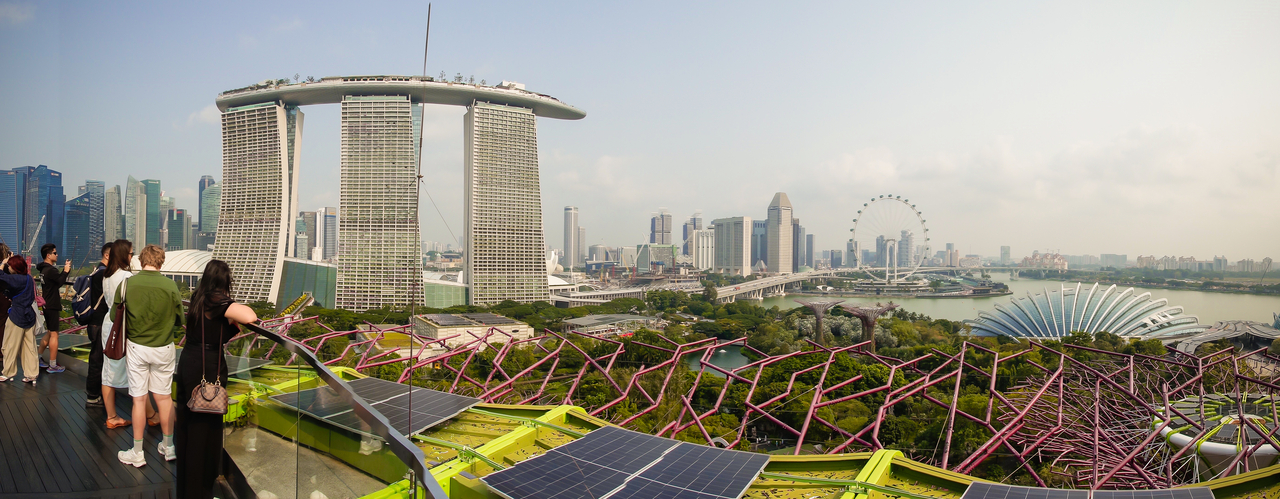
Atop the tallest of the 18 Supertrees — the 50-meter centerpiece — sits the Supertree Observatory, open to the sky in every direction. Step onto the outdoor circular deck at the very top and there are no columns or glass walls to interrupt the view: you face the full panorama of the Marina Bay area with the tropical wind on your skin.
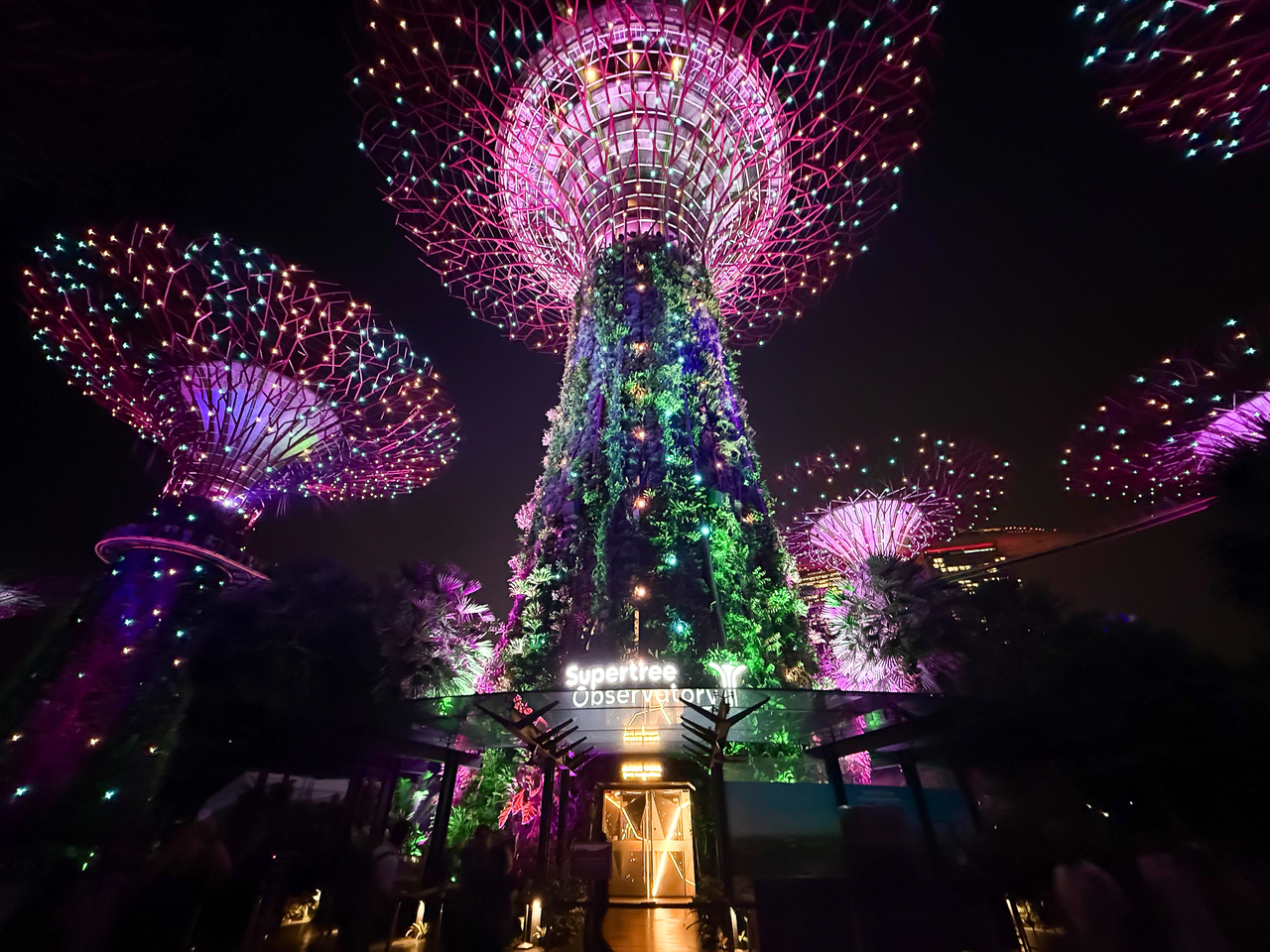
When dusk fades, the Supertrees transform into a vast festival of light. Every night at 7:45 p.m. and 8:45 p.m., the light show "Garden Rhapsody" begins, and multicolored lights embroider the trees to a gentle melody. Audience members spread mats on the lawn — or simply lie flat on the ground — and gaze up at the shower of light, their eyes sparkling throughout the show.
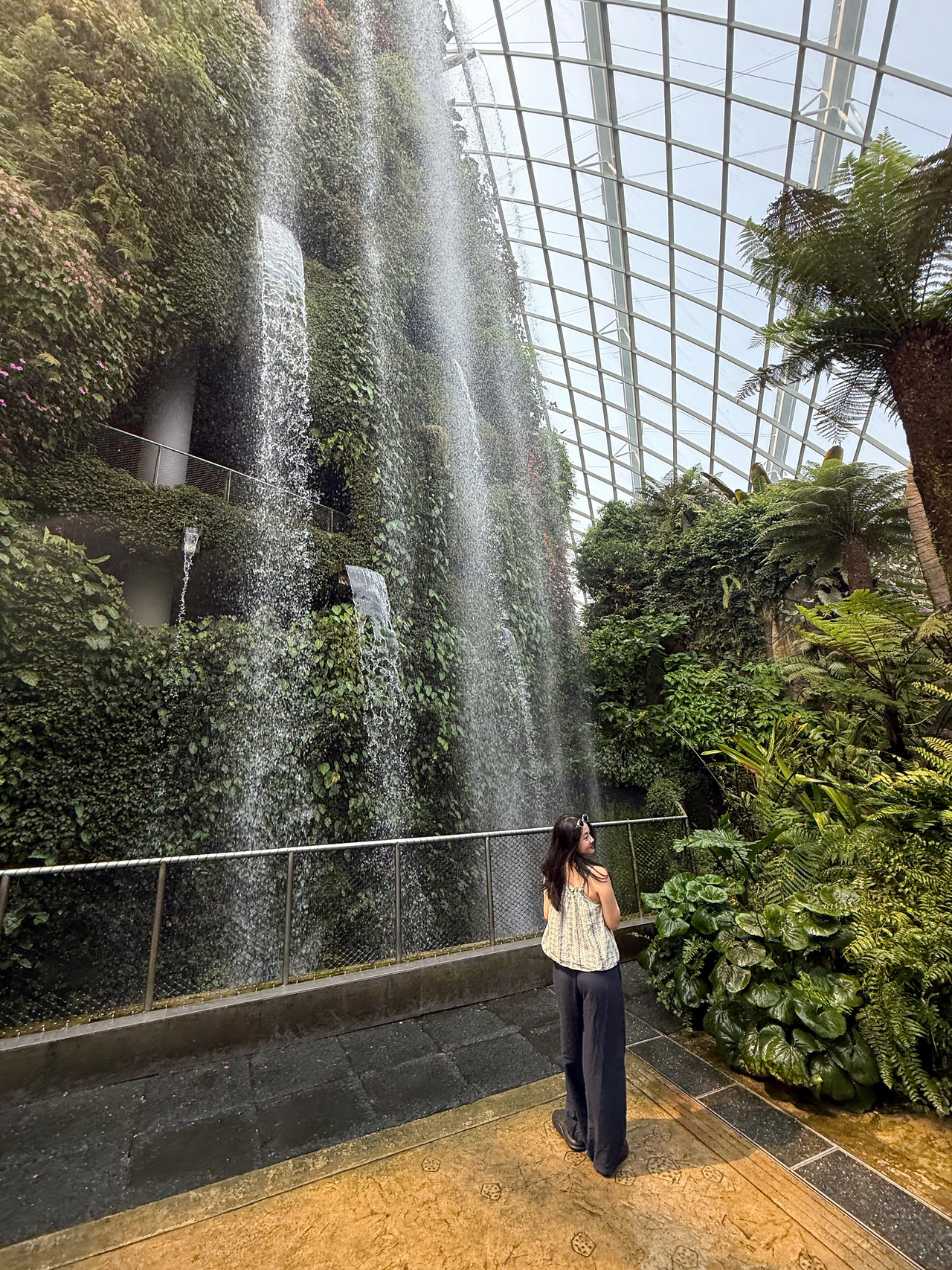
Inside Gardens by the Bay, the glass-dome conservatory Cloud Forest is a greenhouse that transplants a tropical mountain forest into the middle of the city.
The moment you enter, a waterfall thunders down from a 35-meter artificial mountain. Take the elevator to the upper level and descend along a spiraling aerial walkway that winds around the mountainside; below your feet, a dense colony of some 72,000 plants spreads out, making you feel as though you have stepped deep into a real forest.
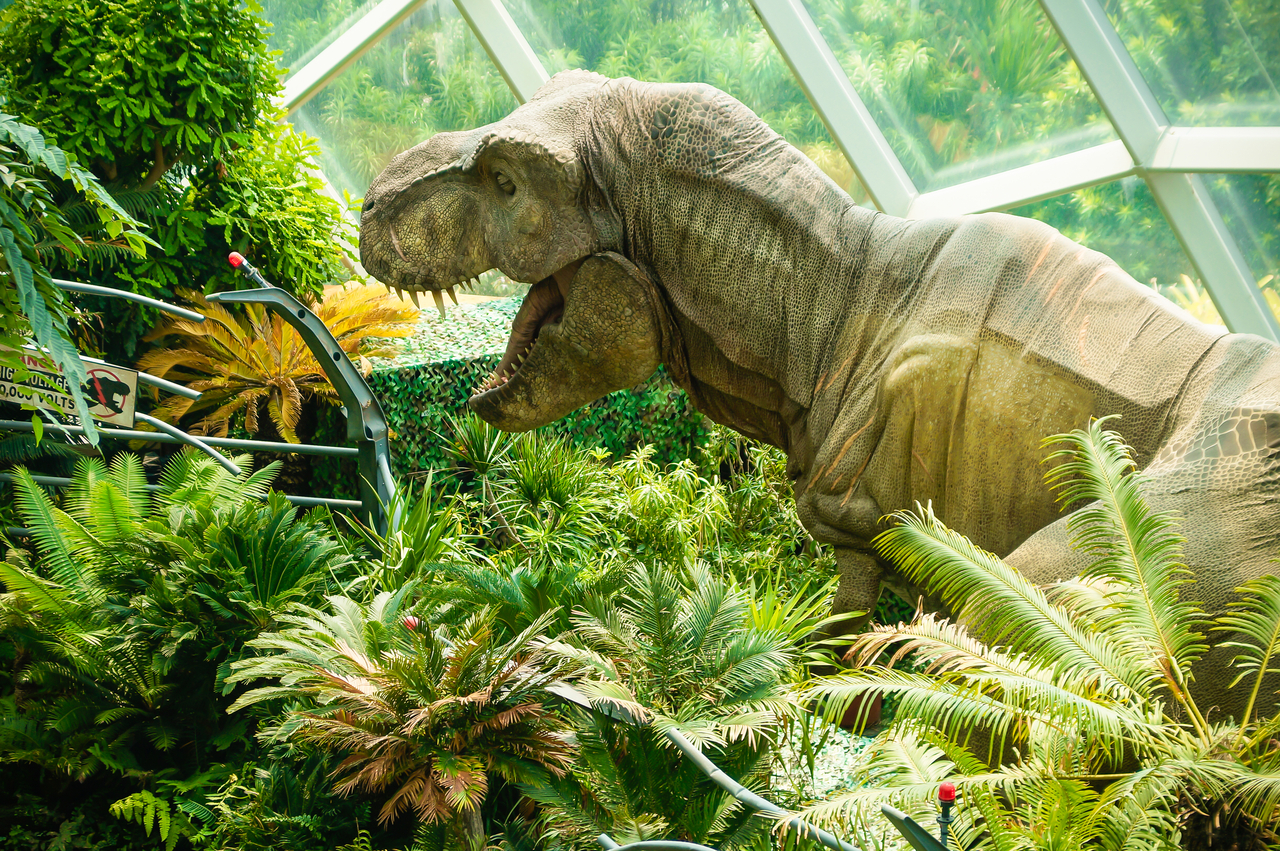
A special zone featuring robotic sculptures created in partnership with the film "Jurassic World" particularly amplifies the sense of primeval wilderness. A Brachiosaurus stretching its long neck stands 8.5 meters tall among ancient plants, while a life-size, moving Tyrannosaurus rex adds to the menace. It is a clever concept that layers popular immersion onto the ecological narrative of an urban botanical garden.
An aerial panorama shaped by feng shui and engineering
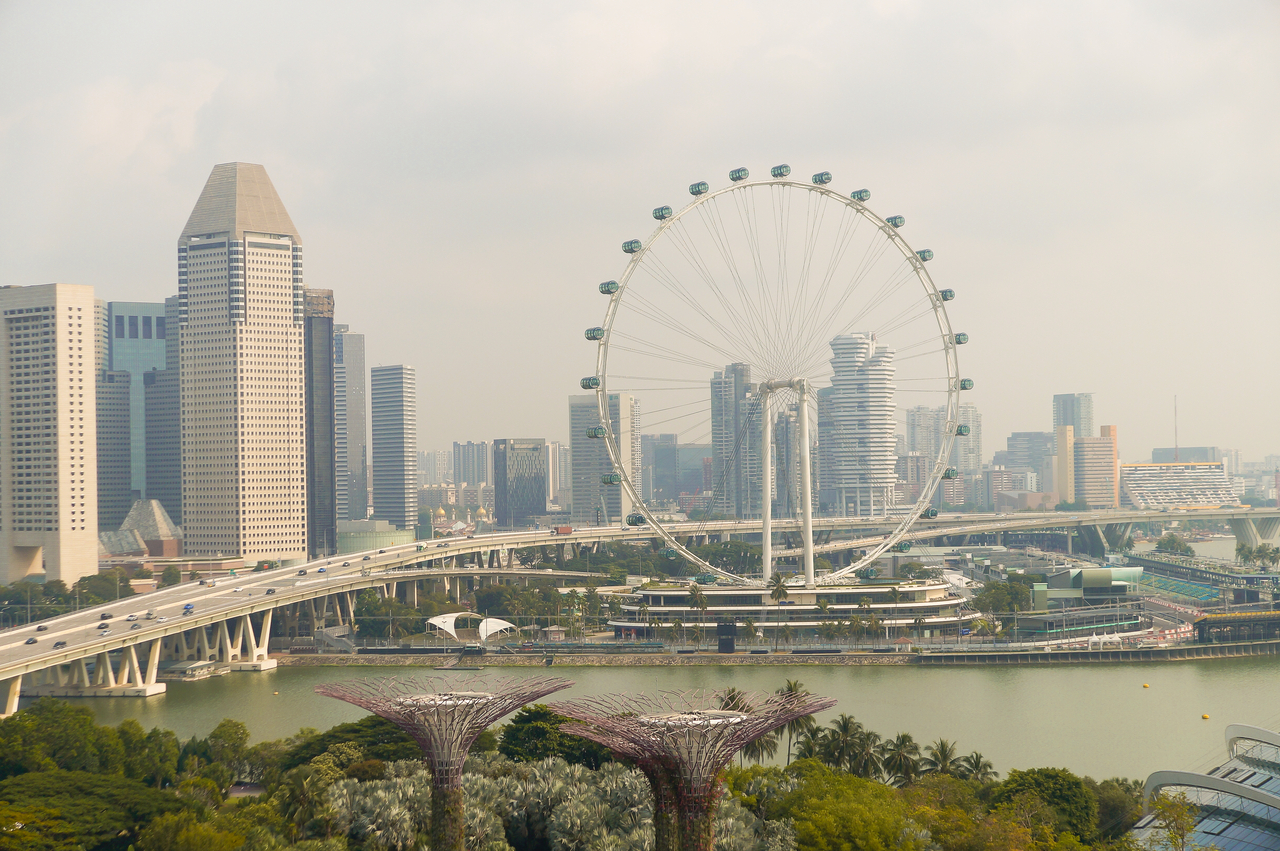
On the northeastern waterfront of Marina Bay stands the Singapore Flyer, a giant observation wheel reaching 165 meters at its highest point. Where the view from Marina Bay Sands offers the exhilarating sensation of looking down from a great height, the Flyer delivers a more leisurely experience — slowly gaining altitude from ground level and unfolding the city's panorama layer by layer.
Completed in 2008, the observation wheel is also well known as a structure shaped by feng shui calculations. When it first opened, the wheel rotated toward the sea, but feng shui experts raised concerns that the city's wealth and good fortune were being swept out to the ocean. The direction of rotation was reversed so that the vitality and prosperity rising from the sea would be drawn inward toward the city. The Flyer also carries exactly 28 capsules, and each capsule holds a maximum of 28 passengers.
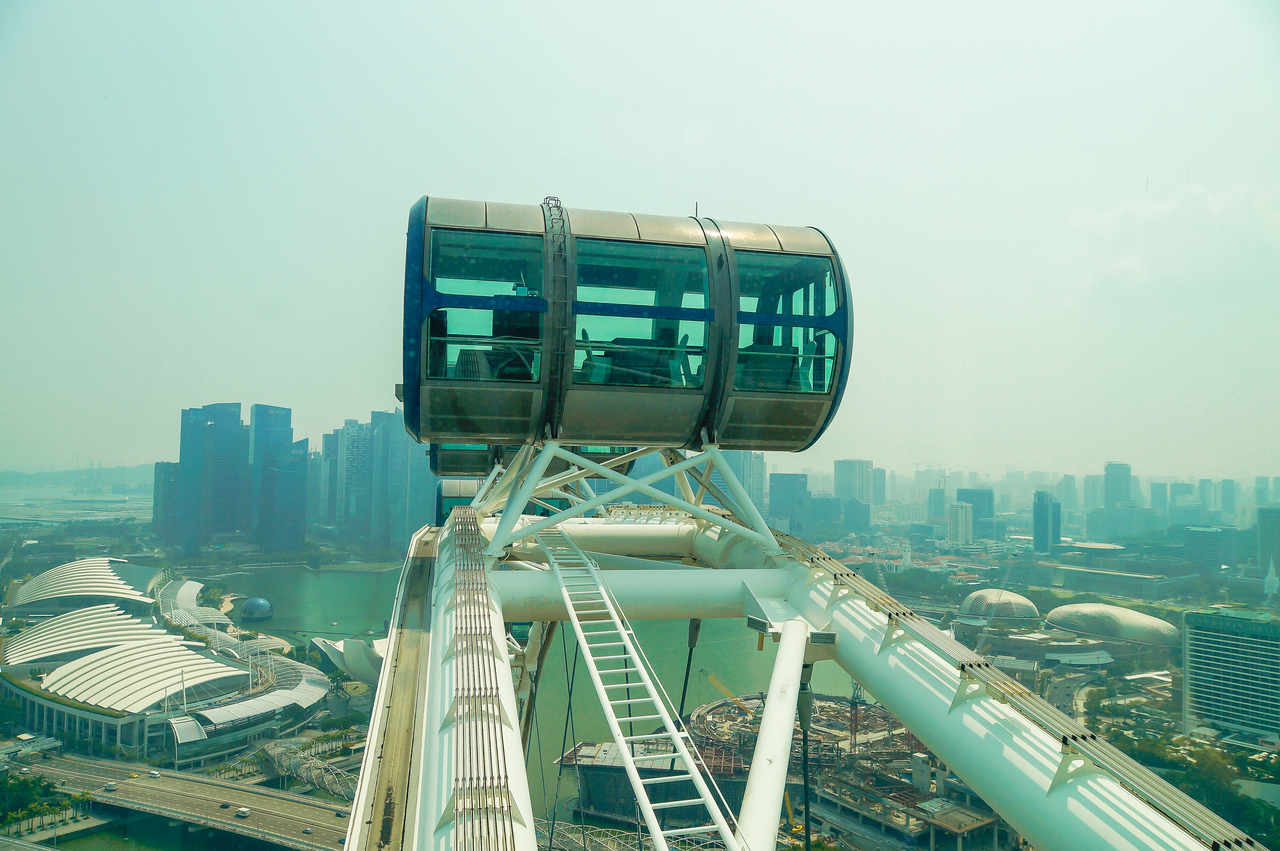
A local guide explained the significance of the number: "In Cantonese, the number two sounds like the word for 'easy,' and the number eight sounds like the word for 'making money,' so together they carry the auspicious meaning of 'building wealth with ease.'"
The capsules glide at 0.24 meters per second, moving with a calm that feels almost weightless. Over the roughly 30-minute journey, Marina Bay Sands and Gardens by the Bay spread out below. On a clear day, the landmasses of Malaysia and Indonesia are visible on the horizon. Those 30 minutes — suspended between land and sea — leave a deep impression on travelers, like a spacewalk conducted at the world's lowest altitude.
An underwater world and the glow of an old wharf at night
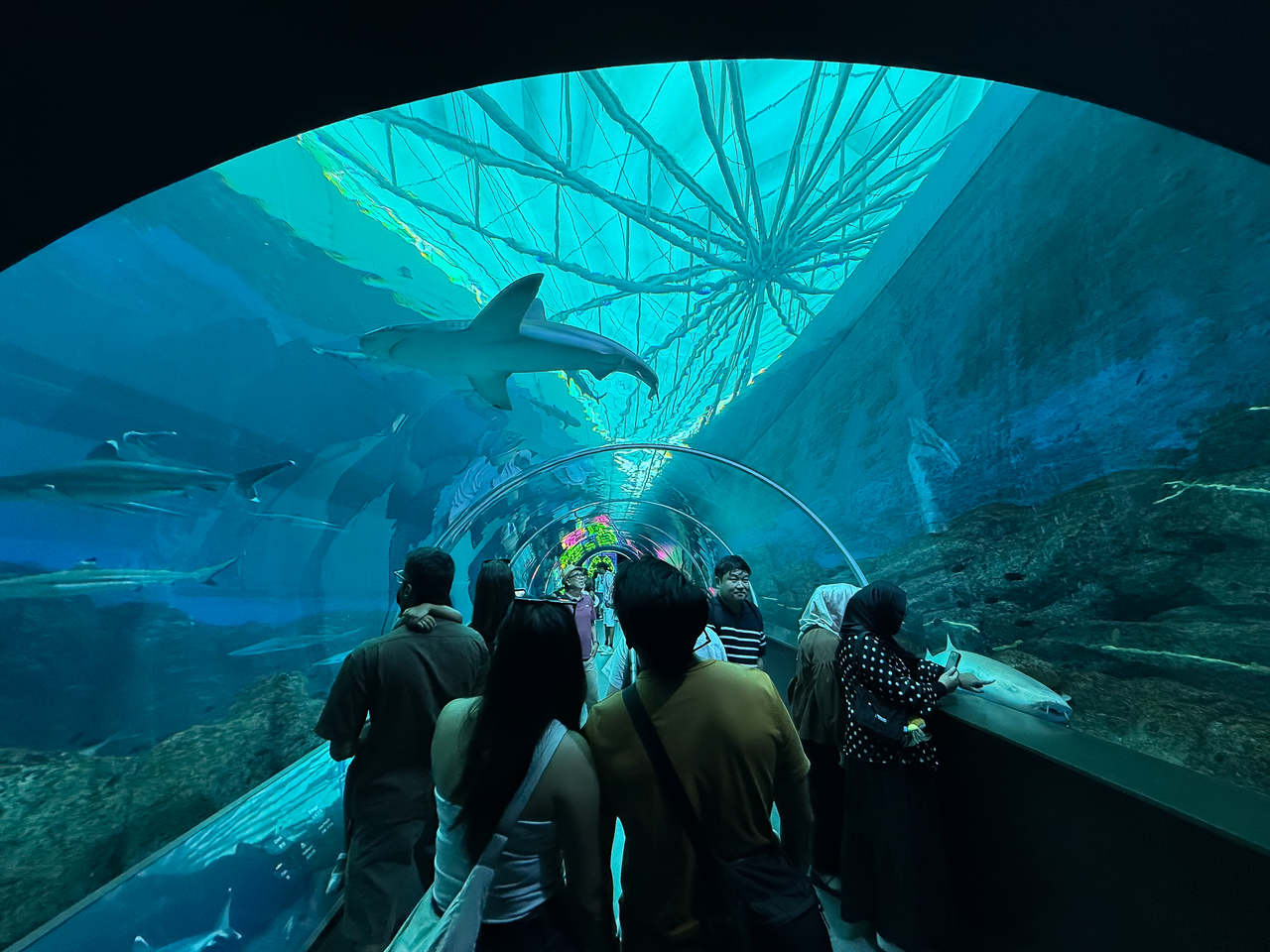
Leave the glittering skyline behind and head south to Sentosa Island, where Singapore Oceanarium awaits with the depths of the sea captured within. Step into Ocean Wonders inside the aquarium and you are met by jellyfish filling a vast circular tank. Moon jellyfish — their transparent, umbrella-shaped bodies pulsing open and closed — drift up and down in a hypnotic rhythm. The dreamlike scene, as though lifted from an animated film, makes it hard to walk away.
Inside a glass underwater tunnel, sand tiger sharks and distinctive T-shaped-headed winghead sharks glide silently overhead. Each time a large fish swims past on the other side of the glass, visitors raise their phones and let out gasps of wonder.
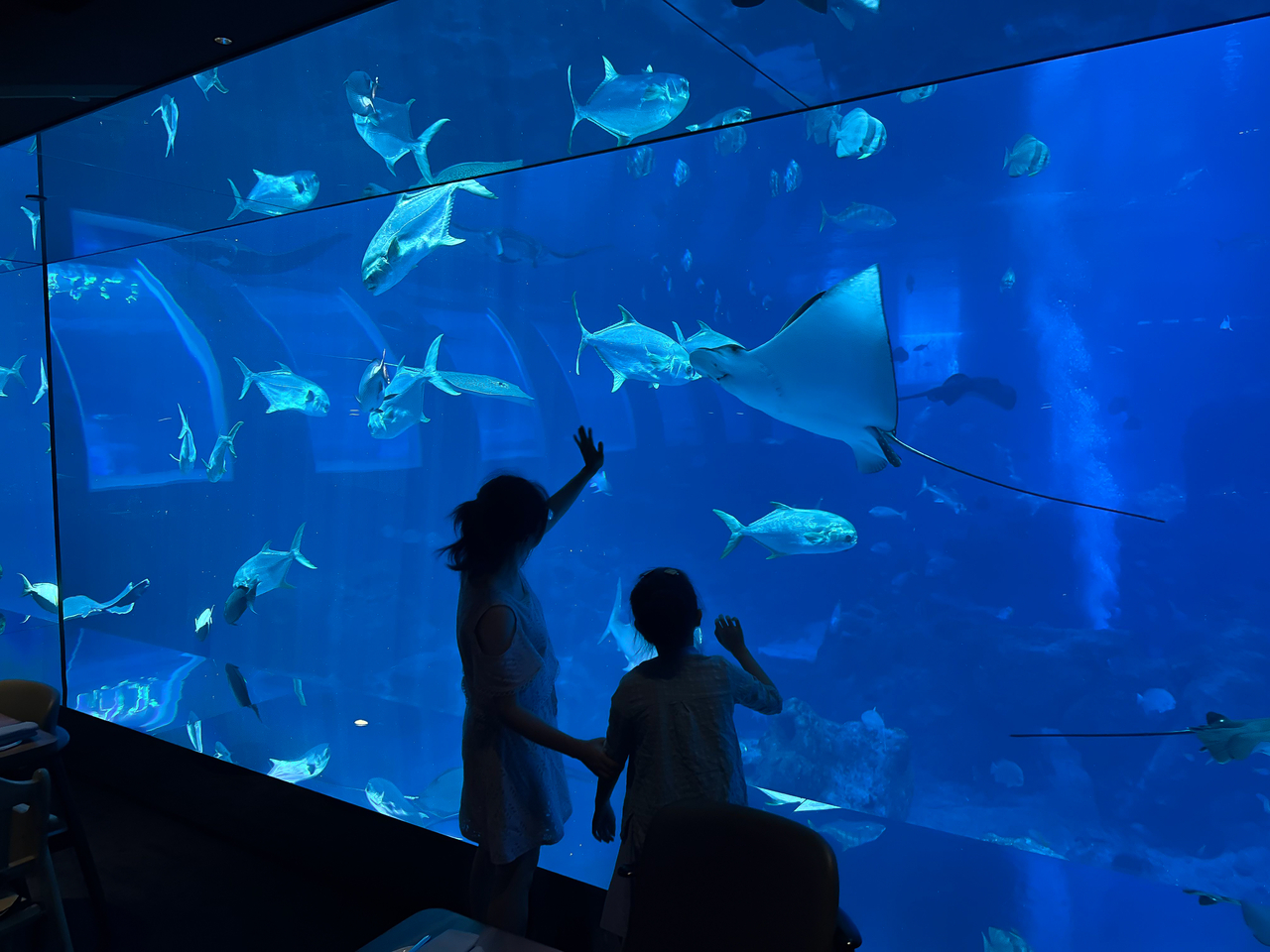
Ocean Restaurant, located inside the aquarium, lets diners eat while watching marine creatures swim past through a floor-to-ceiling glass wall. The sharks that were gliding through the tunnel moments ago pass by again, and manta rays sweep past with the grace of outstretched wings — enough to make you forget the menu in front of you.
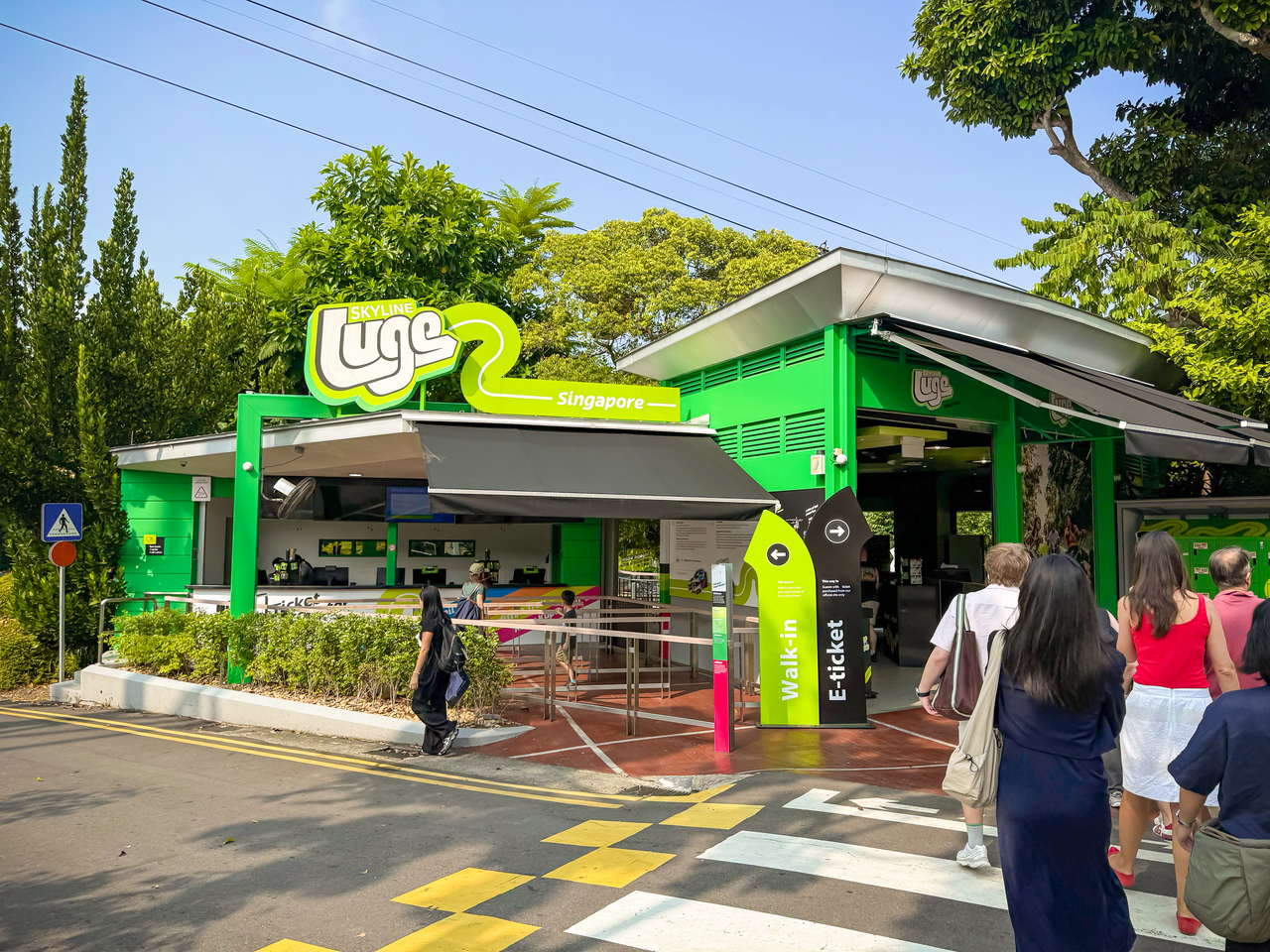
Break away from the calm of the sea and a seven-minute drive brings you to Imbiah Lookout hill, where the Skyline Luge sends riders racing down a track powered by gravity alone. The design is simple — no pedals, just a handlebar and a brake — but the thrill of feeling every bump in the surface and carving through sharp bends is superb. By the time you reach the bottom, the tension has dissolved into a clean, exhilarating sense of release.
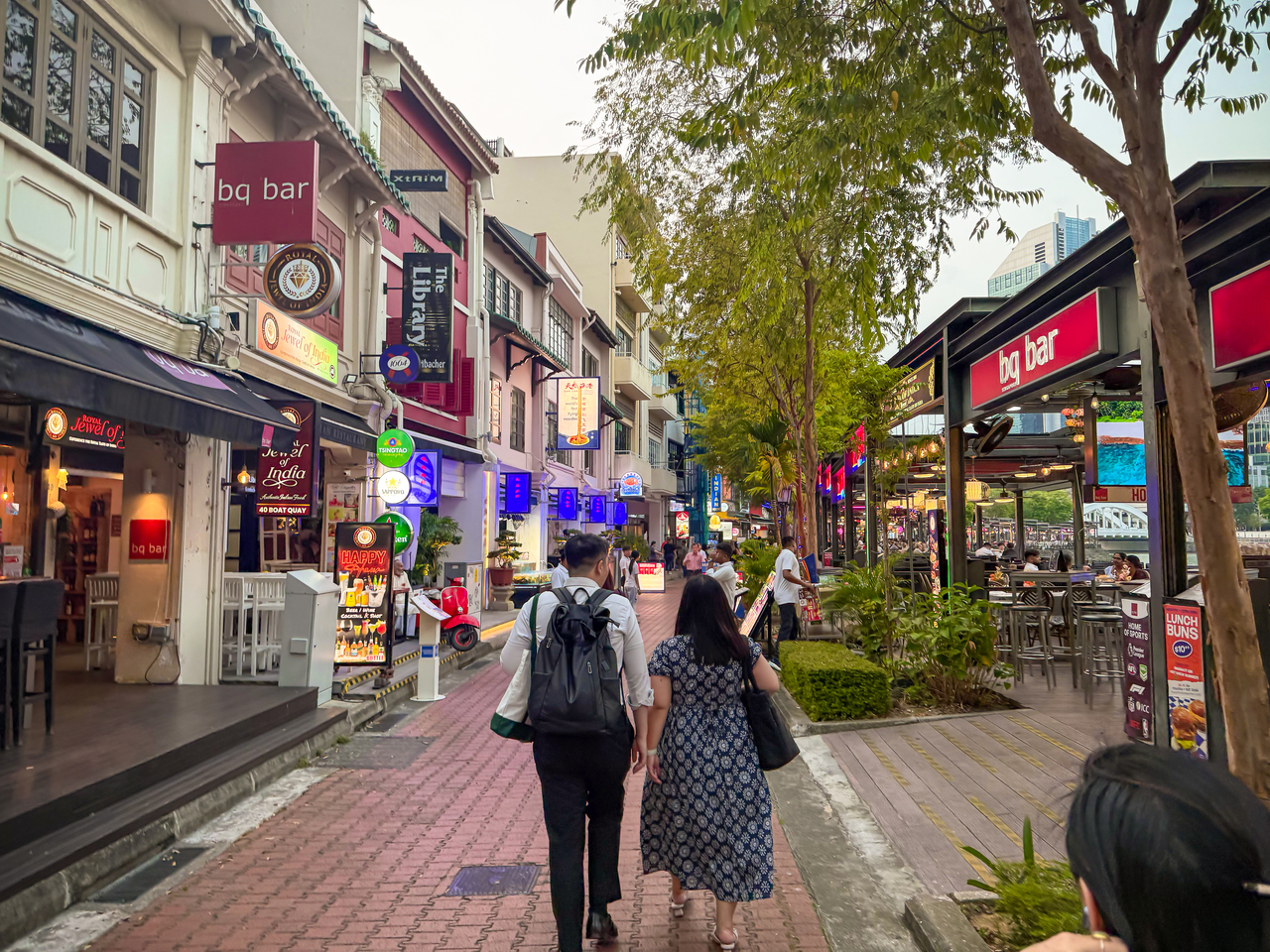
As twilight gives way to night, Boat Quay — the riverside cultural strip hugging the Singapore River — fills with crowds. In the mid-19th century, impoverished immigrant laborers sweated here hauling sacks of grain and spices along a cargo wharf; urban renewal and regeneration have since transformed it into what it is today. At the outdoor terraces of shops that still preserve their original facades, the warmth of travelers clinking beer glasses and bursting into laughter softens the cool night air. It is the moment when a city-state woven tight with order and discipline finally lets its guard down and shows a freer face.
Travel tips for Singapore
For travelers who want to cover Singapore's major attractions efficiently in a short time, a reliable curated list can be a useful guide.
Trip.com's Trip.Best ranking is one such resource — a big data index that combines user ratings and reviews, search and booking statistics, and demand and sales figures, then analyzes service quality and facility characteristics. As of this month, the top spot on Trip.Best goes to the theme park Universal Studios Singapore, followed by Gardens by the Bay in second place and Singapore Oceanarium in third.
The full rankings are available on the Trip.com app.
terry@heraldcorp.com