Kim Byung-joo says SCM must nail down timeline; warns of independent exercise if talks fail
Kang says Seoul exploring options while maintaining close coordination with US
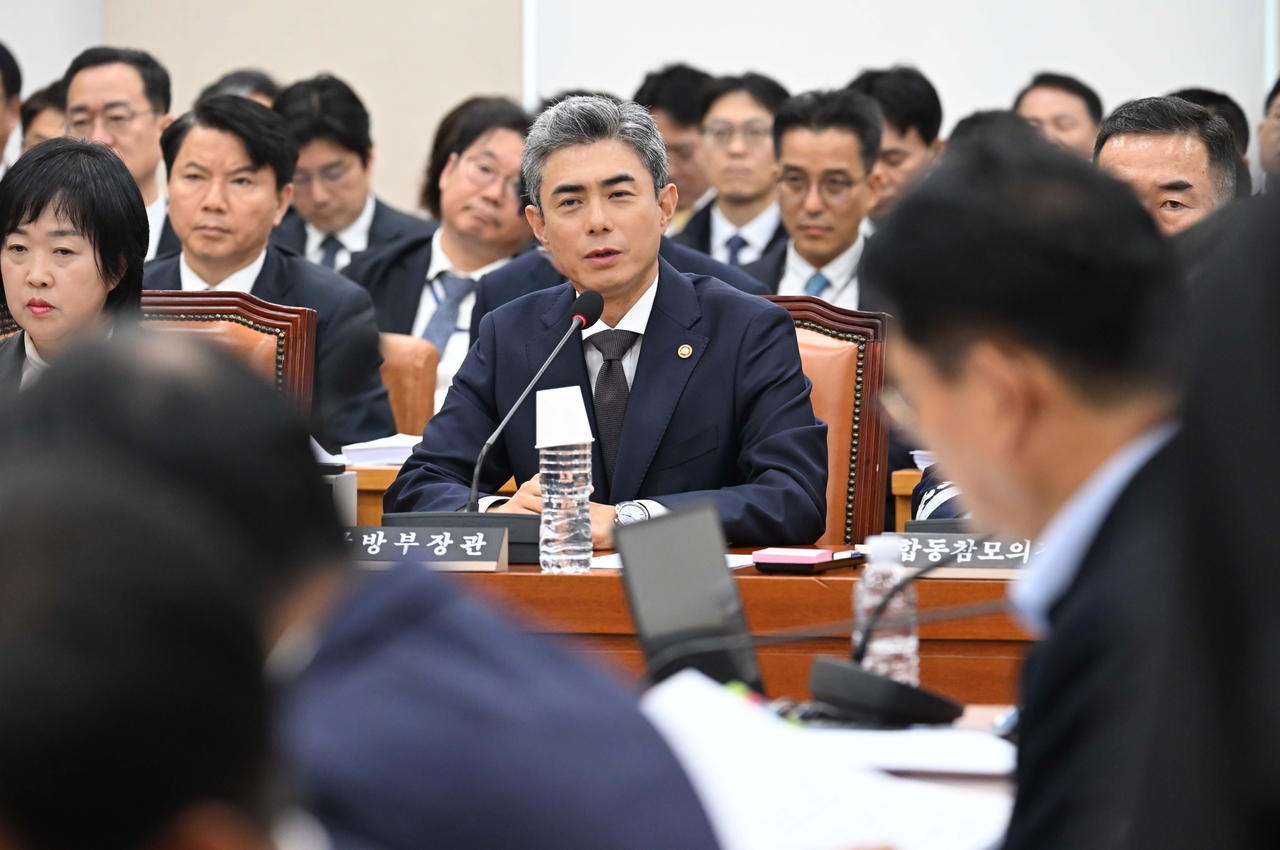
Defense Minister Kang Shin-chul said Monday that South Korea and the United States are in close consultations to complete the Full Operational Capability (FOC) verification and set a specific year for the transfer of wartime operational control (OPCON).
Kang made the remarks during a comprehensive audit of the Ministry of National Defense by the National Assembly's Defense Committee, responding to Democratic Party of Korea lawmaker Kim Byung-joo, who said the timeline must be firmly established at the Security Consultative Meeting (SCM) at the end of the year.
Kim asked whether Seoul had a contingency plan if Washington refused to commit to a timeline at the SCM. Kang said the ministry was "exploring various options" but was currently maintaining close coordination with the US side.
Kim pressed further, arguing that if the US refused to engage and talks fell through, South Korea should declare independent exercise of OPCON. Kang said his principled position — that the OPCON transfer must take place with trust fully assured — remained unchanged, and that he had taken Kim's point well.
Kim also stressed the role the National Assembly should play. He said a resolution urging the return of OPCON should pass a plenary session, adding it would be best if the Defense Committee could reach a bipartisan agreement on the matter. He noted that while Article 74 of the Constitution stipulates that the president commands the armed forces, in wartime it is the US military that commands South Korean troops. Kim said legislation was needed to make clear in law that the president's command authority over the armed forces is fully exercised in both peacetime and wartime, and said he was reviewing a related bill.
In response, Kang thanked the National Assembly for its support but reiterated that Seoul and Washington would continue to work closely together.
Kang also said South Korea had conveyed its concerns to the US after USFK Commander Gen. Xavier Brunson recently suggested that the conditions required for the OPCON transfer could be subject to change. He said the US side had expressed understanding of those concerns.
Remarks by Eighth Army Commander Lt. Gen. Joseph Hilbert in a foreign media interview — in which he suggested US Eighth Army forces could be deployed to address threats beyond the Korean Peninsula — also drew scrutiny. When Democratic Party lawmaker Min Hong-chul raised the issue, Kang said South Korea had "strongly expressed its concerns at the working level." On the question of so-called strategic flexibility — the possibility of deploying USFK forces outside the Korean Peninsula — Kang said it was a long-standing issue that had been managed for some time and was also being closely coordinated.
FOC verification is the second of three stages for assessing the mission capability of the Future Combined Forces Command, which a four-star South Korean general will lead after the OPCON transfer. The government aims to complete FOC verification and set a transfer year at the SCM, which it is working to hold in the United States around December. However, differences remain between Seoul and Washington over whether the conditions required for FOC verification have been met, and the government is expected to focus on resolving those gaps before the SCM.
rimsclub@heraldcorp.com