AI firm eyes $100 billion raise, topping SpaceX's all-time record
Founders to hold 50.1% voting control regardless of stake
Filing flags AI misuse as existential risk, cites tensions with Pentagon
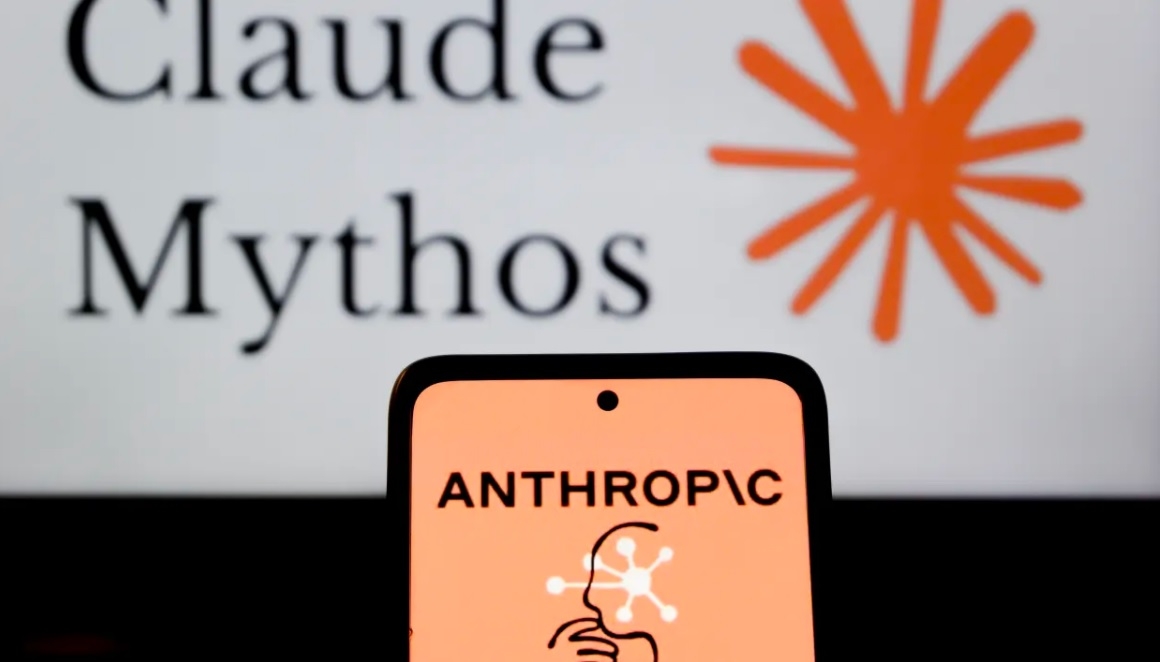
Anthropic filed a registration statement with the US Securities and Exchange Commission on Monday (local time), formally kicking off its initial public offering process.
The company plans to list Class A common shares on NASDAQ next month under the ticker symbol "ANT." The filing did not specify the number of shares to be offered or a target price range. The Wall Street Journal, citing sources, reported that Anthropic is aiming for a valuation of up to $2 trillion and hopes to raise as much as $100 billion through the offering.
If Anthropic hits those targets, it would surpass the records SpaceX set in June, when the rocket company achieved a valuation of $1.77 trillion and raised $75 billion — both all-time highs for a private company listing.
According to the filing, Anthropic posted sales of $16.29 billion in the first half of this year, more than 14 times the figure from the same period last year. Net losses, however, also ballooned more than sixfold over the same period to $80.75 billion. The company noted that roughly $72.4 billion of those losses reflected non-cash accounting charges tied to changes in the fair value of convertible bonds and derivatives issued during fundraising rounds.
Stripping out those one-time non-cash charges, adjusted operating profit came to $1.62 billion — marking the first time in the company's history that it turned an operating profit on a half-year basis.
As of June 30, Anthropic also held approximately $112.4 billion in cash and cash equivalents and about $19.3 billion in short-term investments, giving it substantial liquidity.
Anthropic devoted roughly 94 pages — about a quarter of the 400-page filing — to risk factors, the majority of which centered on the dangers of AI.
On advanced AI systems, the company wrote that "if such systems are misused, replicated, weaponized, or operated with high levels of autonomy, they could pose catastrophic or existential risks to humanity." The filing cited incidents in which Anthropic's own AI tools had been exploited in hacking attempts as examples.
The company also listed tensions with the US Department of Defense as a risk factor, adding that the dispute could lead companies selling products and services to the US government to avoid using Anthropic's AI models.
The governance structure disclosed in the filing shows that a separate limited liability company called "Founder LLC," established by the co-founders, holds a single Class F share. That share is designed to carry 50.1 percent of the voting power on general matters put to shareholders, giving the founders sweeping control over shareholder votes regardless of their actual equity stakes.
However, the founders' authority over board composition is more limited. A "Long-Term Benefit Trust" made up of five independent trustees holds Class T shares that carry the right to elect and remove a majority of the board's directors.
Strategic partners that have already invested in Anthropic — including Amazon and Google — received Class N shares, which carry economic rights such as dividends but no voting rights. Class N shares convert to Class A common shares when sold to third parties.
Co-founders including siblings Dario and Daniela Amodei each hold between 230 million and 250 million shares. They have pledged to donate 80 percent of their personal stakes to charitable causes. Anthropic as a company has also committed 5 percent of its total shares to a public-interest fund.
Markets are watching the offering closely, hoping it will dispel concerns about an AI bubble and serve as proof of the technology's potential through the largest stock market debut on record. The IPO is widely seen as a test of genuine global investor appetite for AI.
Matt Kennedy, senior strategist at Renaissance Capital, said that while investors had not questioned AI company valuations just a few months ago, "Anthropic is trying to enter an IPO market that is considerably more difficult than it was this past summer."
kate01@heraldcorp.com