Korea Institute of Energy Research develops selective chemical vapor deposition process, raising ethylene production yield 29-fold
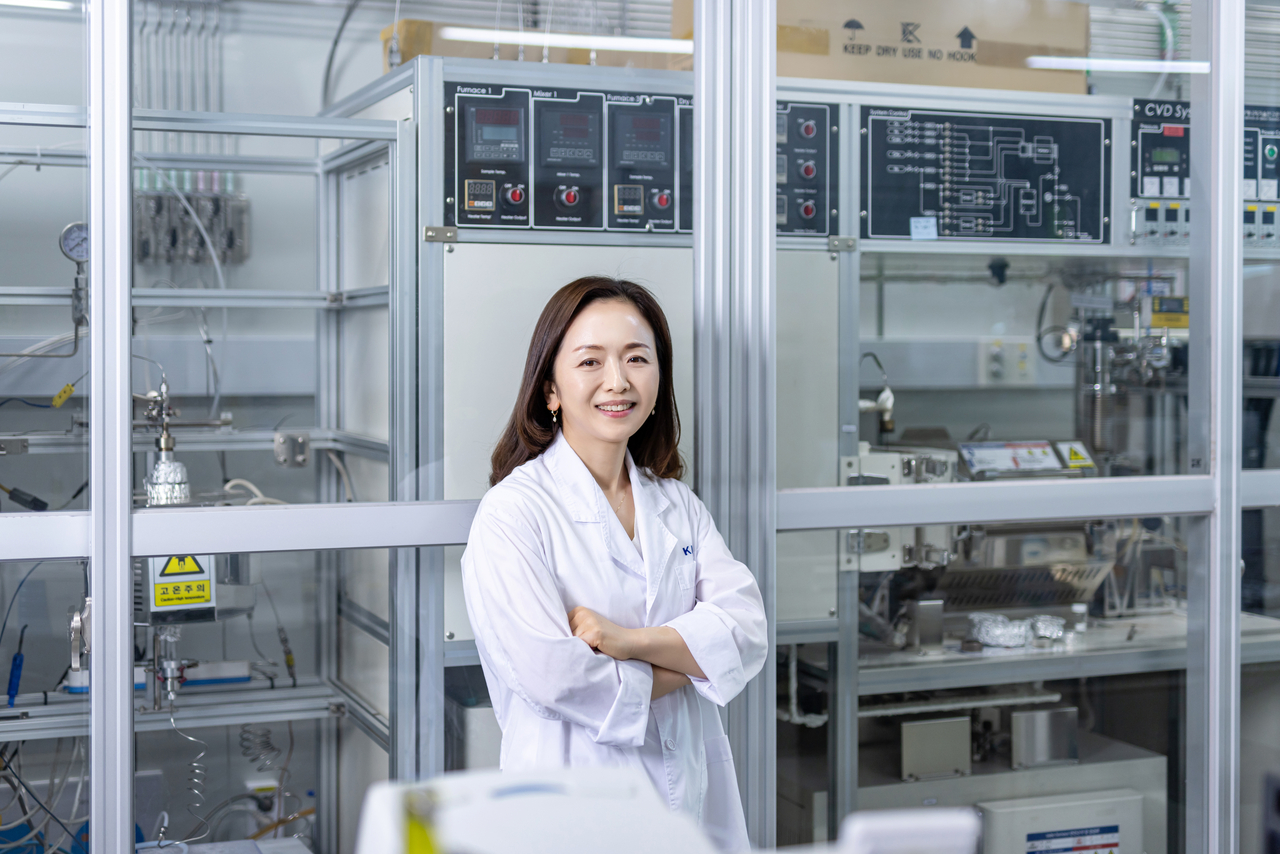
South Korean researchers have developed a technology that precisely places catalyst atoms only where they are needed, boosting methane conversion rates 7.5 times over conventional methods.
The Korea Institute of Energy Research announced Tuesday that a team led by Kim Hee-yeon of its Hydrogen Energy Research Laboratory had developed a "selective chemical vapor deposition (CVD)" process capable of precisely controlling the size, position and surrounding structure of catalyst atoms.
Catalysts are key materials that accelerate chemical reactions or help produce desired substances. Even when the same components are used, reaction efficiency can vary significantly depending on where and in what configuration atoms are arranged.
Conventional methods have largely relied on a "liquid-phase process," in which catalyst components are dissolved in a liquid and absorbed into a support material. While simple to manufacture and well-suited for mass production, the approach has two limitations: catalyst particles tend to clump together, and placing components precisely where they are needed is difficult.
To address these shortcomings, the research team devised a new manufacturing process that deposits catalyst atoms only at targeted locations.
The team first used the conventional liquid-phase process to create nanoscale co-catalyst particles, then supplied gaseous raw materials so that the primary catalyst atoms would bond exclusively to the surface of those co-catalyst particles. This allows catalyst components to be precisely arranged as individual atoms or small atomic clusters.
The process operates at relatively low temperatures and ambient pressure — unlike the CVD processes used in conventional semiconductor manufacturing — which reduces production costs. It can also be applied not only to the powdered catalysts used in laboratories but also to industrially shaped catalysts, making it well-suited for mass production.
The team validated the technology by applying it to the direct conversion of methane into ethylene.
In conventional manufacturing, tungsten and manganese particles are distributed randomly within the catalyst, reducing reaction efficiency. The research team instead created a structure in which tungsten atoms are selectively coated onto the surface of manganese particles in a manner resembling an eggshell.
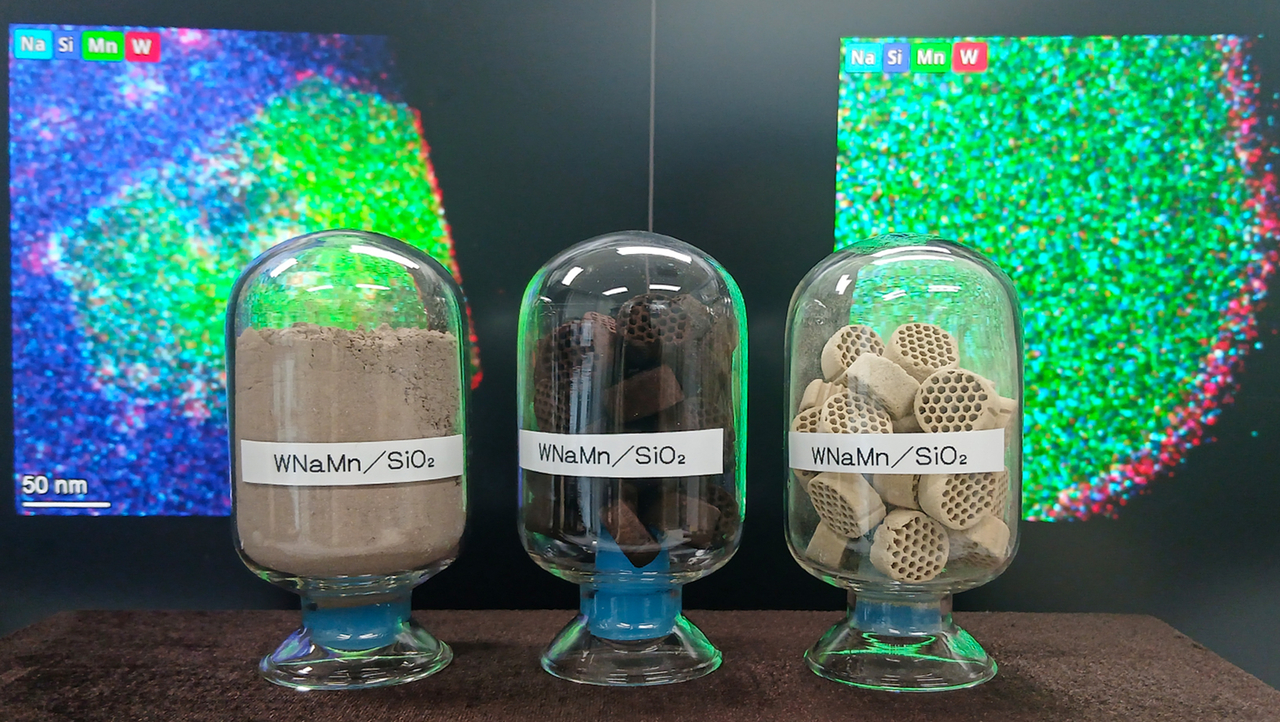
As a result, the proportion of tungsten actually used in catalytic reactions rose from 28 percent to 82 percent — roughly a threefold increase.
The methane conversion rate climbed from 6.9 percent to 51.7 percent, a roughly 7.5-fold increase, while ethylene production yield improved from 0.9 percent to 26.0 percent, a roughly 29-fold gain.
After 180 consecutive hours of operation at 800 degrees Celsius, the catalyst atoms showed no signs of clumping and maintained stable structure and performance throughout.
The technology is significant in that it goes beyond existing approaches — which focus on adjusting a catalyst's composition, content and particle size — by enabling the design of atomic positions and surrounding structures as well.
The team plans to expand the technology to a range of energy and chemical processes, including alloy catalysts for fuel cells and water electrolysis electrodes, as well as hydrocarbon reforming catalysts.
The longer-term goal is to develop the approach into a customized catalyst manufacturing platform in which the type and arrangement of catalyst atoms can be tailored to the characteristics of each target reaction.
"The selective CVD technology is both economical and efficient, as it preserves the mass-production capability of existing catalyst manufacturing methods while allowing catalyst components to be placed exactly where they are needed," Kim said. "We will continue developing it into a customized catalyst manufacturing platform applicable to fuel cells, water electrolysis and a wide range of chemical reactions."
The findings were published in the Sept. 11 online edition of Chemical Engineering Journal, an international peer-reviewed journal in the field of chemical engineering.
nbgkoo@heraldcorp.com