SK Innovation, S-Oil forecast to post triple-digit operating profit surge in Q3
Strong refining margins and lubricant business drive gains; freight costs, oil prices and regulations weigh on Q4
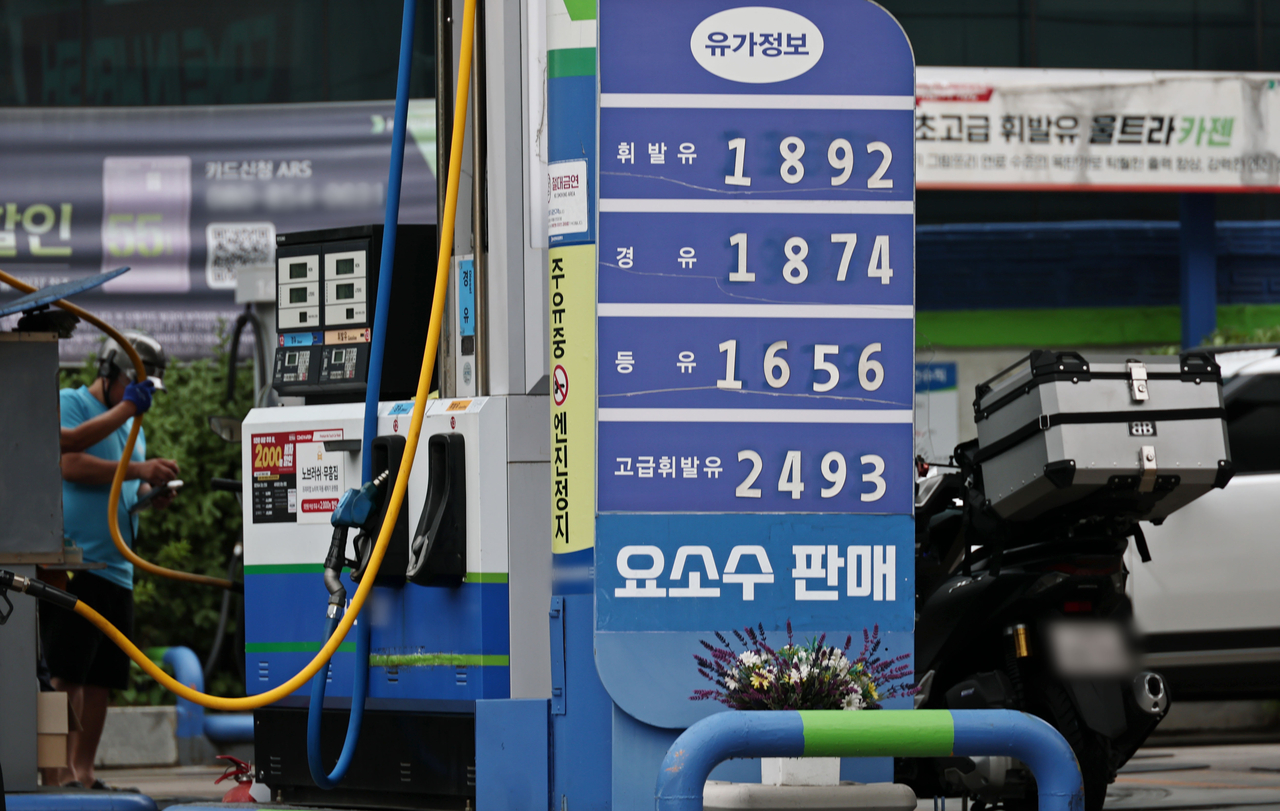
South Korea's refining industry is on track for record earnings improvement in the third quarter, as supply disruptions stemming from the war in the Middle East have kept oil product prices elevated. Strong refining margins, combined with solid performance in non-refining businesses such as lubricants, are expected to drive a sharp rise in operating profit at major refiners. However, analysts warn that a sustained rally into the fourth quarter remains uncertain, as soaring maritime freight costs, the risk of a reverse-lagging effect from falling crude prices, and government price controls and unresolved loss compensation add up to a formidable set of headwinds.
According to FnGuide, a financial data provider, the combined third-quarter operating profit of SK Innovation and S-Oil is expected to approach 4 trillion won ($3.02 billion). SK Innovation's consensus operating profit — the average of brokerage forecasts — stands at 2.86 trillion won on a consolidated basis, representing a 398.8 percent increase from the same period last year. S-Oil's forecast operating profit of 1.24 trillion won would mark a 439.8 percent year-on-year gain.
Strong refining margins fuel earnings surge
The earnings improvement reflects refining margins holding at elevated levels as prolonged conflict in the Middle East has deepened supply uncertainty for oil products. Non-refining businesses, including lubricants and LNG, are also expected to contribute. In a research note on SK Innovation, iM Securities said strong refining margins are expected to persist despite wider oil price volatility, with lubricant base oil also sustaining high margins. The brokerage projected SK Innovation's consolidated operating profit for the full year to approach 11 trillion won, citing improved earnings capacity across all business units.
Unlisted refiners GS Caltex and HD Hyundai Oilbank are also expected to benefit from the favorable margin environment. Heungkuk Securities said in a recent research note that geopolitical risks and regional operational disruptions would sustain supply-demand instability, keeping refining and lubricant margins on a firm trend for GS Caltex. LS Securities said HD Hyundai Oilbank stands to gain notably from strength in heavy distillates. With supply of heavy distillates tightening amid rising US shale output and disruptions to Russian and Middle Eastern crude, the brokerage said HD Hyundai Oilbank's specialized heavy-distillate processing capacity could translate into improved profitability.
Freight surge and oil price direction add uncertainty
Whether the strong performance will carry into the fourth quarter is far from certain. Soaring maritime freight costs driven by the prolonged Middle East conflict are squeezing the effective refining margins of Asian refiners, and a further drop in international crude prices could trigger a reverse-lagging effect that erodes profitability. Government price caps on oil products, export restrictions and unresolved loss compensation add further pressure.
The burden of crude procurement costs has grown heavier as freight rates have surged. According to a weekly market report published Monday by the Korea Ocean Business Corp., the time charter equivalent rate for very large crude carriers on the Middle East-to-China route stood at $1,294,761 per day. While the figure has retreated from its peak, it remains elevated. Domestic refiners, which import crude for processing, face higher procurement costs in direct proportion to rising freight rates, leaving their margins under pressure.
The direction of international crude prices is another variable. In the third quarter, rising refining margins driven by Middle East supply disruptions and inventory-related gains are seen as the main drivers of earnings improvement. When refiners bring in relatively cheap crude and oil product prices subsequently rise, a lagging effect boosts profitability. The reverse holds when crude prices fall: costs locked in at higher levels are recognized later, creating a reverse-lagging drag. If inventory valuation losses from declining crude and product prices are factored in, a significant portion of the third-quarter profit gains could be offset in subsequent quarters.
Price caps persist as loss compensation remains unresolved
Government regulation also constrains the earnings recovery. The Ministry of Trade, Industry and Energy kept the 11th round of petroleum product price caps unchanged, maintaining supply price ceilings at 1,784 won per liter for gasoline, 1,773 won for diesel and 1,380 won for kerosene. With domestic supply prices capped, refiners cannot fully pass on rising international crude and procurement costs to consumers. Export restrictions imposed to stabilize domestic supply are also cited as an obstacle to profitability.
Uncertainty over loss compensation under the price cap scheme also lingers. The government set aside 4.2 trillion won in discretionary reserves under this year's supplementary budget and included 1.45 trillion won for fourth-quarter loss compensation in next year's budget proposal, bringing the total to 5.65 trillion won. However, the actual amount to be compensated and the timing of payments have yet to be finalized. Disagreements between the government and the industry over the scope of recognized costs mean refiners remain uncertain about when and how much of their losses will be covered. "With Middle East uncertainty and a range of other variables at play, it is difficult to predict how the fourth quarter will unfold," an industry official said.

keg@heraldcorp.com