63 indexes affected by KRX industry classification revamp
ETFs tracking Kospi 200 alone hold 62.5 trillion won in assets
10 additions, 11 deletions forecast for Kospi 200 in December
SK Group, LG Group to move to IT sector; Hyundai Motor classified under mobility
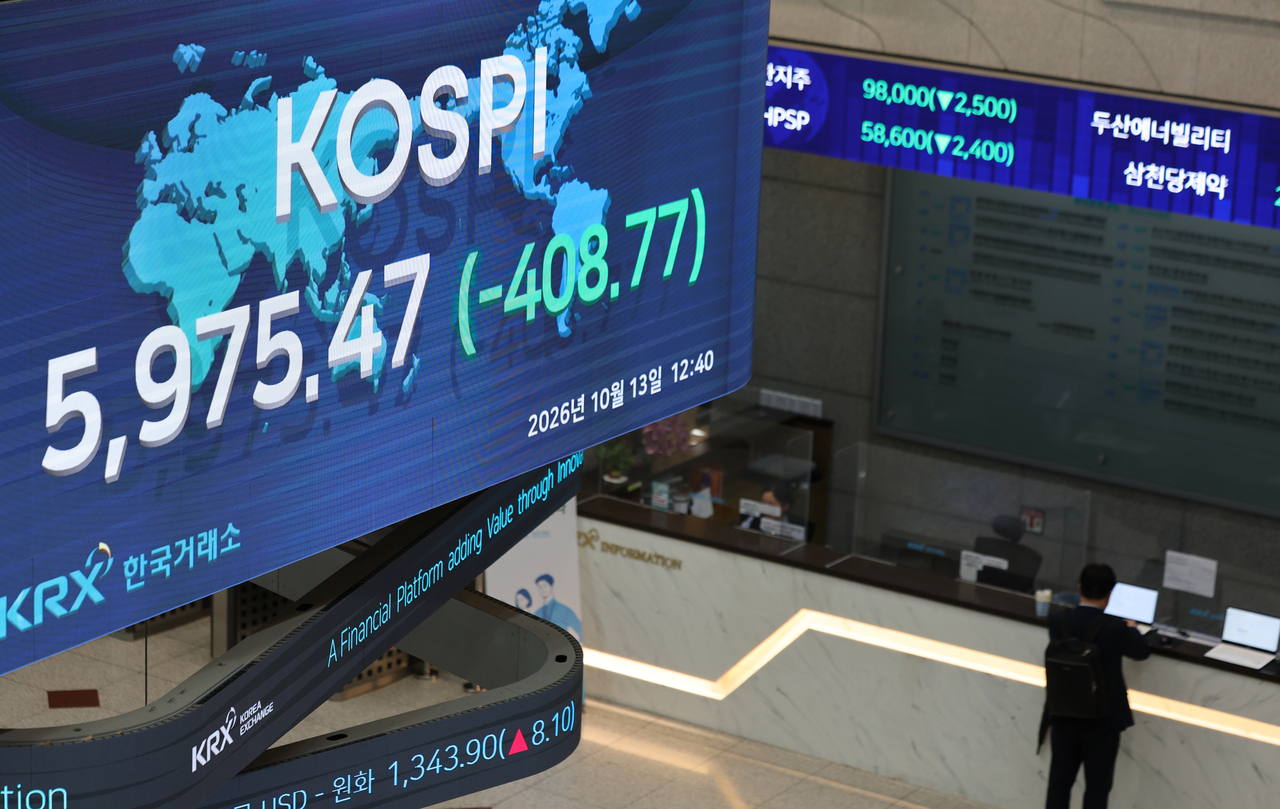
A sweeping overhaul of Korea Exchange's industry classification system is expected to trigger a major reshuffling of constituents in key stock indexes, including the Kospi 200 and Kosdaq 150. The revamp will affect 63 indexes in total, with the ETFs tracking them holding combined net assets of 88 trillion won ($66.5 billion), according to an analysis by Mirae Asset Securities. Attention is also turning to the flow of funds into and out of individual stocks ahead of the December periodic index rebalancing.
Mirae Asset Securities said the Korea Exchange industry classification overhaul will directly or indirectly affect 63 indexes, including the Kospi 200 and Kosdaq 150. The combined net assets of ETFs tracking those indexes stand at approximately 88.1 trillion won.
Korea Exchange earlier introduced its own proprietary classification framework, KRICS (KRX Industry Classification Standard), and released the resulting industry classifications for listed stocks on Monday.
The new system covers 2,559 domestically listed stocks and organizes them into four tiers: sector, industry group, industry and sub-industry.
The reclassification has shifted the sector designations of several large listed companies.
SK Group and LG Group have moved from the industrials sector to information technology, while Hyundai Motor and Kia have been placed under mobility. Samsung Electronics and SK hynix remain in the IT sector under semiconductors, and LG Energy Solution has been classified under batteries within the industrials sector.
When industry classifications change, indexes that select constituents based on those classifications can see additions and deletions as a result.
"ETF assets directly or indirectly tracking the Kospi 200 amount to 62.5 trillion won, accounting for 71 percent of the total," said Yoon Jae-hong, a researcher at Mirae Asset Securities. "When index funds and pension funds are factored in, total tracked assets could reach as much as 140 trillion to 160 trillion won."
Assets tracking the Kosdaq 150 were estimated at approximately 8.9 trillion won. "The absolute amount is smaller compared with Kospi 200 tracking assets, but the impact relative to Kosdaq market liquidity is significant," Yoon said.
The December periodic rebalancing is expected to bring a notably larger number of constituent changes to both the Kospi 200 and Kosdaq 150 than in previous cycles.
Mirae Asset Securities forecast that 10 stocks will be added to the Kospi 200, including Daeduck Electronics and Iljin Electric, while 11 will be removed, including Asia Cement and SeAH Steel.
That compares with just four additions and four deletions in the most recent periodic rebalancing, making the upcoming round a significantly larger reshuffle.
"The number of expected changes has increased compared with the previous rebalancing due to the industry classification overhaul," Yoon said.
The Kosdaq 150 is also expected to see 10 stocks added and 10 removed.
Candidates for inclusion include Fadu and Samt, while Innox Advanced Materials and Nextine are among those flagged for removal.
"Most of the additions and deletions are expected to occur within the IT sector," Yoon said.
Changes are also anticipated in the sector sub-indexes of the Kospi 200.
Within the Kospi 200 IT sector index — whose tracking ETF assets total approximately 2.4 trillion won — LG Electronics and Samsung SDI are expected to be removed, while SK Group and Daeduck Electronics are forecast to be added.
Under the new classification system, LG Electronics has been placed in the consumer goods sector and Samsung SDI in industrials.
Thematic indexes, the value-up index and KRX sector indexes are also subject to the new classification framework. Their periodic rebalancings are scheduled for next year, however, so the effects are expected to materialize gradually.
The December rebalancing will be assessed based on average daily market capitalization and trading volume from May 1 through Friday.
The list of stocks subject to the periodic change is scheduled to be announced sometime next month, with the actual effective date set for the first trading day after Dec. 10, the December futures expiration date.
When index constituents change, ETFs and index funds tracking those indexes may adjust their holdings to reflect the new weightings. This could generate buying demand for newly added stocks and selling pressure on those removed.
The additions and deletions currently being discussed, however, are brokerage estimates and not a finalized list.
Korea Exchange plans to collect feedback from market participants through Friday before finalizing the industry classifications.
"As Friday is the deadline for gathering market participants' opinions before the system takes effect, there remains a possibility that some classifications could change," a Korea Exchange official said. "The final classification information will be available after the 30th."
sjy@heraldcorp.com