Four days before detention period expires in '3 allegations' case
Supreme Court issues separate warrant in office-selling case
Court cites risk of evidence destruction and flight as grounds
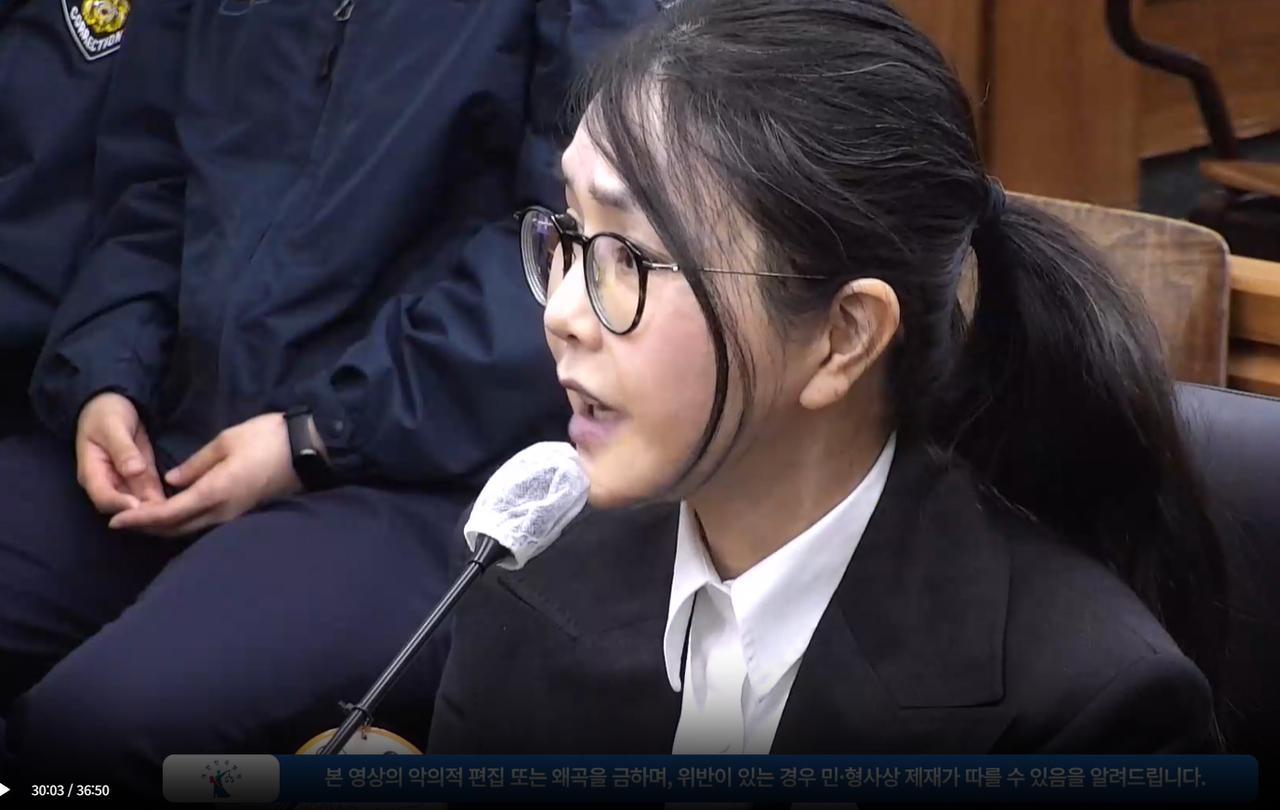
Kim Keon Hee, wife of former President Yoon Suk Yeol, will remain in custody as her trials continue. Four days before her detention period was set to expire in the cases involving Deutsch Motors share-price manipulation, Unification Church cash gifts, and free polling services from Myung Tae-kyun, the Supreme Court issued a separate arrest warrant in the so-called office-selling case.
The Supreme Court's Second Division, presided over by Justice Oh Kyung-mi, held a closed-door detention hearing Tuesday on charges of violating the Act on the Aggravated Punishment of Specific Crimes — specifically soliciting bribes — and issued the arrest warrant that afternoon. The court cited the risk of evidence destruction and flight as grounds for detention.
Kim attends hearing via video from detention center, cites deteriorating health
The hearing ran for about 45 minutes from 2:30 p.m. in Courtroom No. 1 of the Supreme Court, with the result announced around 6:30 p.m. — roughly four hours later. Kim participated via video link from Seoul Southern Detention Center, where she is being held, while attorneys from the Kim Keon Hee special prosecutor team, led by Special Prosecutor Min Joong-ki, and Kim's defense lawyers appeared in person.
According to Kim's defense team, she personally addressed the charges against her during the hearing and described her worsening health. On the personnel-appointment allegations, the defense said Kim clearly denied the claims, stating words to the effect that "President Yoon is such a principled and upright person — there is no way he would leave personnel matters to me. Given his character, it is simply inconceivable that he would accept anything in exchange for an appointment."
The defense team also said Kim explained that she had "suffered extreme psychological distress over many years from the spread of false information — including the so-called 'Julie' allegations — and personal attacks, and had been taking psychiatric medication for an extended period." The team said it hoped "a reasonable and fair decision would be reached with full consideration given to her health and right to mount a defense."
The Supreme Court's Second Division rejected Kim's arguments and issued the warrant. Kim will now remain in custody for up to eight more months regardless of whether a prison sentence in any other case is finalized. Under the Code of Criminal Procedure, the maximum detention period at the first-instance level is six months, while the maximum at the appellate and Supreme Court levels is eight months each.
Special prosecutor team breathes easier with four days to spare
Kim is currently in custody and undergoing Supreme Court proceedings in the so-called "three allegations" cases — Deutsch Motors share-price manipulation, Unification Church cash gifts, and free polling services from Myung Tae-kyun. She was sentenced to four years in prison at the appellate level in those cases, but the Supreme Court referred the matter to its full bench in July, delaying a final ruling. Her detention period in the three-allegations cases expires Saturday.
The special prosecutor team submitted a request to the Supreme Court on Oct. 15 for an arrest warrant in the office-selling case, arguing it was necessary to maintain custody of Kim even after the existing detention period expired. With the court issuing the additional warrant Tuesday, Kim will continue to stand trial in custody — now with a separate legal basis for detention in the office-selling case, independent of the three-allegations cases.
The office-selling case centers on allegations that Kim received expensive gifts in exchange for facilitating personnel appointments during Yoon's presidency. She was indicted on charges including receiving a luxury necklace and other valuables from Lee Bong-gwan, chairman of Seohee Construction, along with a request to secure a favorable appointment for his eldest son-in-law.
The first-instance court sentenced Kim to seven years in prison in that case, while the appellate court reduced the sentence to five years after acquitting her on some of the charges the lower court had found proven. Both Kim's side and the special prosecutor team appealed, bringing the case to the Supreme Court. On Thursday, the division and presiding justice assigned to hear the case were determined.
yg@heraldcorp.com