Xi sends condolences to family of former Prime Minister Fukuda Yasuo
Calls on Japan's current leaders to uphold four key bilateral political documents
Message seen as aimed at Prime Minister Takaichi Sanae over Taiwan remarks
Fukuda credited with strengthening China-Japan ties during his tenure
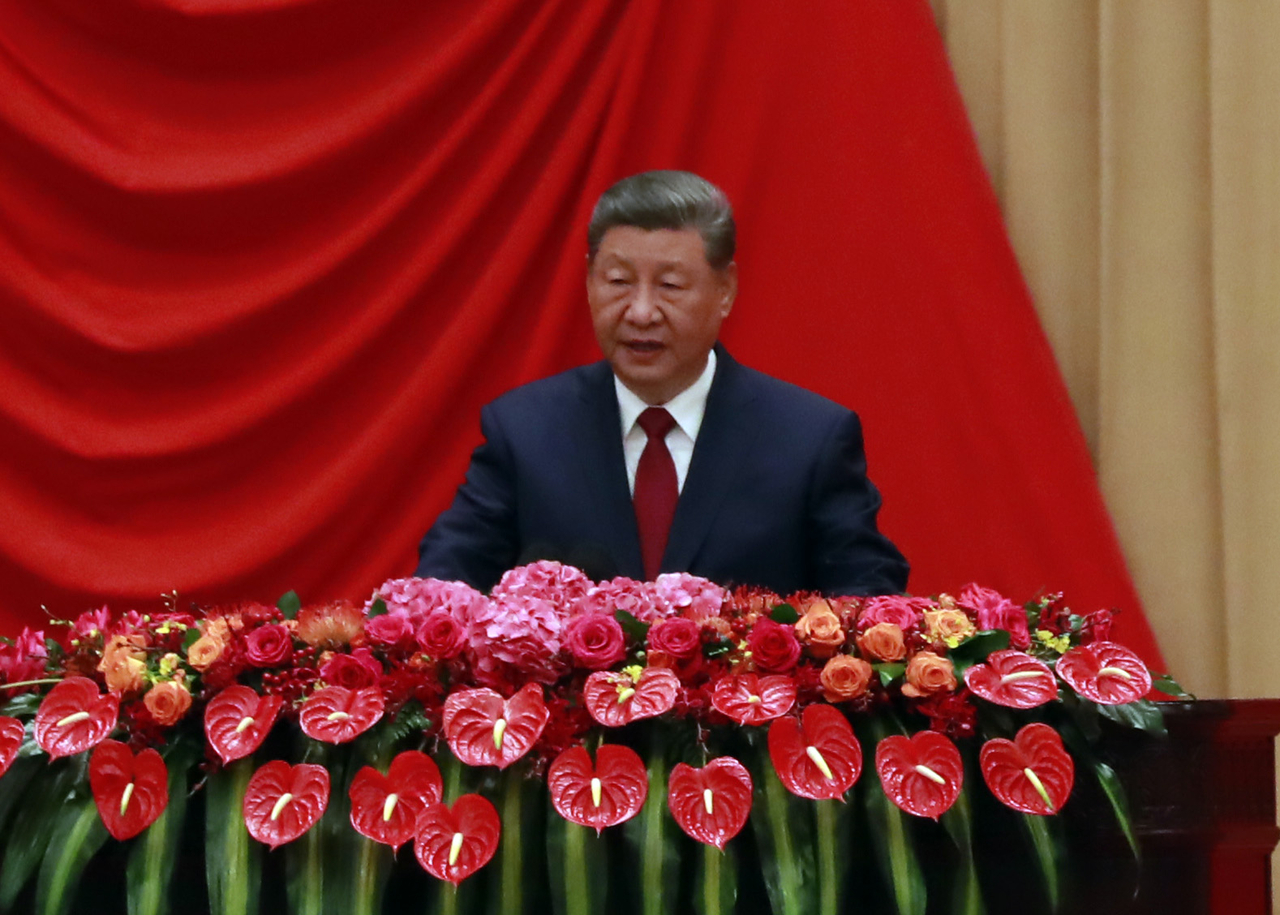
Chinese President Xi Jinping mourned the death of former Japanese Prime Minister Fukuda Yasuo while urging Japan's current leaders to uphold the diplomatic foundations laid by their predecessors — a message widely seen as directed at Prime Minister Takaichi Sanae, whose comments on Taiwan last year put her at odds with Beijing.
According to China's state-run Xinhua News Agency, Xi sent a condolence message Tuesday to the family of Fukuda, who died Thursday.
"Mr. Fukuda was a politician of integrity and a sense of responsibility in Japan, and a longtime friend of the Chinese people," Xi said.
He added that Fukuda had long devoted himself to China-Japan friendship, maintained a correct view of history, and during his tenure concluded the fourth political document between the two countries, which clarified important principles for developing bilateral relations.
"China will deeply remember Mr. Fukuda's contributions to China-Japan relations and Asia's development," Xi said, also asking the family to carry on Fukuda's legacy by working toward China-Japan friendship.
Xi's condolence message also included a direct reference to Japan's current political leadership.
"I hope Japan's leaders will cherish the painstaking efforts of their predecessors, abide by the four political documents between the two countries, and genuinely safeguard the political foundation of bilateral relations," Xi said.
The inclusion of such a remark in a message mourning a former leader was seen as implicitly questioning the diplomatic stance of Japan's sitting government.
The four China-Japan political documents Xi cited are the major diplomatic agreements that define the basic principles governing bilateral relations.
They include the China-Japan Joint Statement issued at the normalization of diplomatic ties in 1972, the China-Japan Treaty of Peace and Friendship signed in 1978, the China-Japan Joint Declaration of 1998, and the China-Japan Joint Statement of 2008.
The documents enshrine both countries' positions on the "one China" principle, mutual respect for sovereignty and territorial integrity, and opposition to the pursuit of hegemony.
Xi's renewed emphasis on these agreements is widely interpreted as an indirect expression of displeasure over Takaichi's remarks on Taiwan.
Takaichi suggested last November that Japan could intervene militarily in the event of a Taiwan contingency. China reacted sharply, and relations between the two countries have remained strained for roughly a year.
The message is seen as reaffirming Beijing's position that Japan must respect the spirit of past bilateral agreements, given that China regards the Taiwan issue as a core interest.
Fukuda was regarded within Japan's Liberal Democratic Party as a moderate who placed great importance on relations with Asian neighbors.
Shortly after taking office as prime minister in 2007, when asked about visiting Yasukuni Shrine, he replied, "Is there any need to do something the other side dislikes?" — a response that signaled his sensitivity to neighboring countries' concerns.
He was also credited with distancing himself from right-wing historical views prevalent in Japan and prioritizing improved relations with South Korea, China and other neighbors.
During his tenure as prime minister from 2007 to 2008, he maintained relatively smooth diplomatic relations with both South Korea and China.
Even after leaving office, he continued to play a role in improving China-Japan ties.
In 2014, when tensions over the Senkaku Islands — known in China as the Diaoyu Islands — were running high, he made a private visit to China and held talks with Xi.
That meeting is credited with laying the groundwork for a subsequent summit between Xi and then-Prime Minister Shinzo Abe.
As Xi highlighted Fukuda's diplomatic legacy, attention is also turning to whether China-Japan relations might shift at next month's Asia-Pacific Economic Cooperation summit in Shenzhen, China.
The Japanese government said it is coordinating Takaichi's attendance at the APEC summit, but has not yet decided whether she will hold bilateral talks with Xi on the sidelines.
sjy@heraldcorp.com