Anti-Netanyahu bloc projected at 52–53 seats in exit polls
Pro-Netanyahu camp falls short of majority at 50 seats
Arab parties hold kingmaker role with 17–18 seats
Voter turnout tops 74%; coalition talks expected to drag on
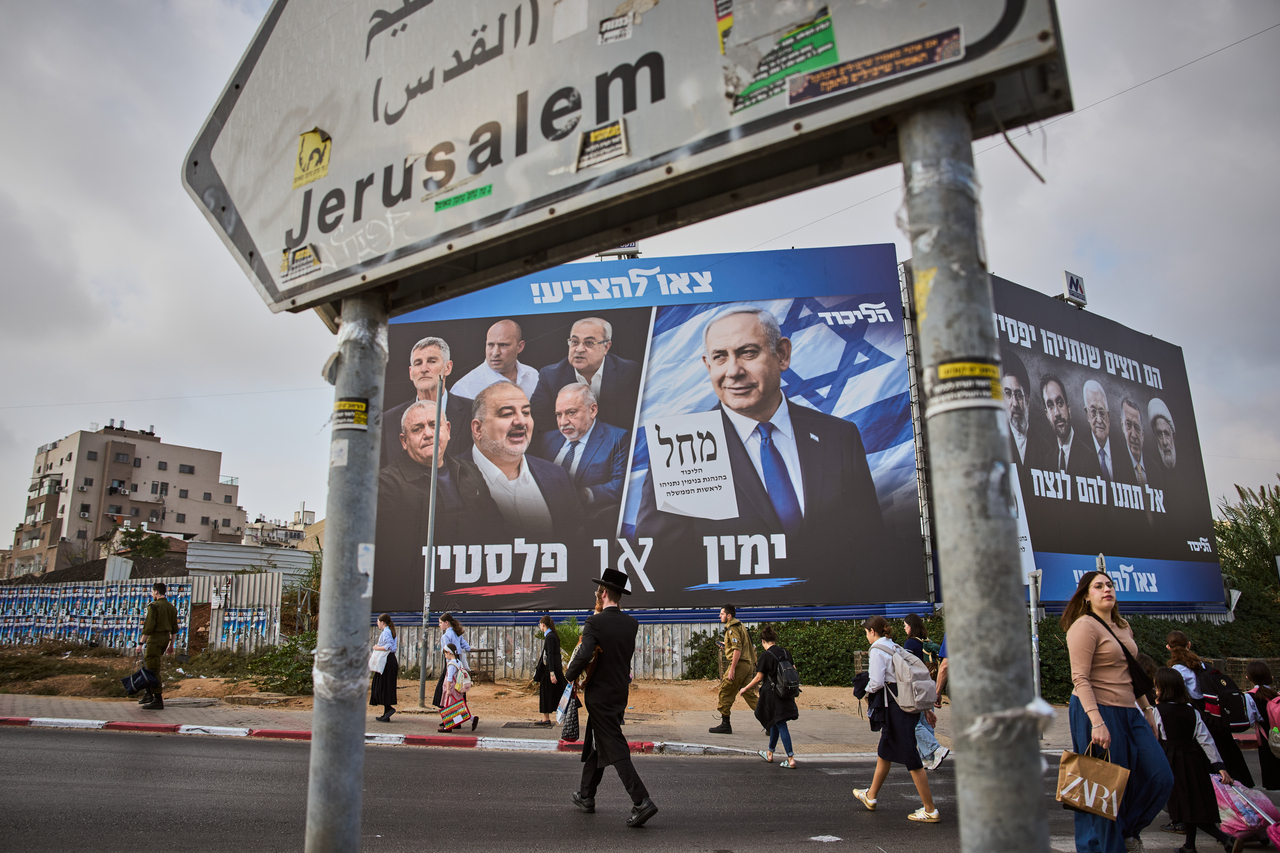
Exit polls from Israel's general election showed the anti-Netanyahu bloc holding a narrow lead over the pro-Netanyahu camp, though neither side appeared on track to secure the parliamentary majority needed to form a government — leaving Arab parties as the pivotal force in determining who leads the next coalition.
According to the Times of Israel, exit polls released by Israeli broadcasters immediately after polls closed at 10 p.m. Tuesday (local time) showed the anti-Netanyahu bloc edging ahead of the pro-Netanyahu camp.
Israel's parliament, the Knesset, has 120 seats in total, and a coalition government requires at least 61 to command a majority.
A Channel 12 exit poll projected Netanyahu's ruling Likud party at 24 seats. Pro-Netanyahu parties combined were forecast to win 50 seats.
By contrast, four Jewish opposition parties aligned against Netanyahu were projected to win a combined 52 seats.
Among them, Yashar — led by former Israel Defense Forces Chief of Staff Gadi Eisenkot — was forecast to take 22 seats.
Arab parties Ra'am and the Joint List were projected to win 7 and 11 seats, respectively.
A Channel 13 exit poll produced similar results.
It projected the anti-Netanyahu bloc at 53 seats, the pro-Netanyahu camp at 50, and Arab parties taking the remaining 17.
Both broadcasters' exit polls showed the anti-Netanyahu side ahead by two to three seats, but neither bloc reached the 61-seat threshold for a majority.
Arab parties are therefore expected to hold the kingmaker role in forming the next coalition government.
Should the anti-Netanyahu bloc secure Arab party support, Netanyahu's bid to extend his time in power could be blocked.
However, the possibility that the pro-Netanyahu camp could still assemble the seats needed to form a coalition has not been ruled out.
The Associated Press said that with neither side securing a majority in the exit polls, weeks of intense coalition negotiations were expected to follow.
The razor-thin margins also mean it could take time to determine which party will emerge as the largest in parliament.
Voter enthusiasm was notably high in this election.
According to Israel's National Election Commission, more than 74 percent of eligible voters had cast ballots as of 8 p.m. that day.
That was 8 percentage points higher than the turnout recorded at the same point during the 2022 general election.
With hourly turnout figures setting records throughout the day, whether Netanyahu extends his hold on power will ultimately depend on the final vote count and the coalition negotiations that follow.
sjy@heraldcorp.com