Ministry of SMEs and Startups holds working-level meeting on new-security innovation firms
Companies to be assessed on technological innovation and national security contribution
Up to 10 billion won in R&D support over five years and dedicated fund under discussion
The government has identified 538 small and medium-sized enterprises and venture companies in emerging security sectors — including AI, drones and aerospace — as part of an effort to cultivate homegrown defense-tech champions modeled on US data-analytics firm Palantir. The selected firms will be evaluated on their technological capabilities and contributions to national security, with plans to provide up to 10 billion won ($7.56 million) in research and development support and expand investment.
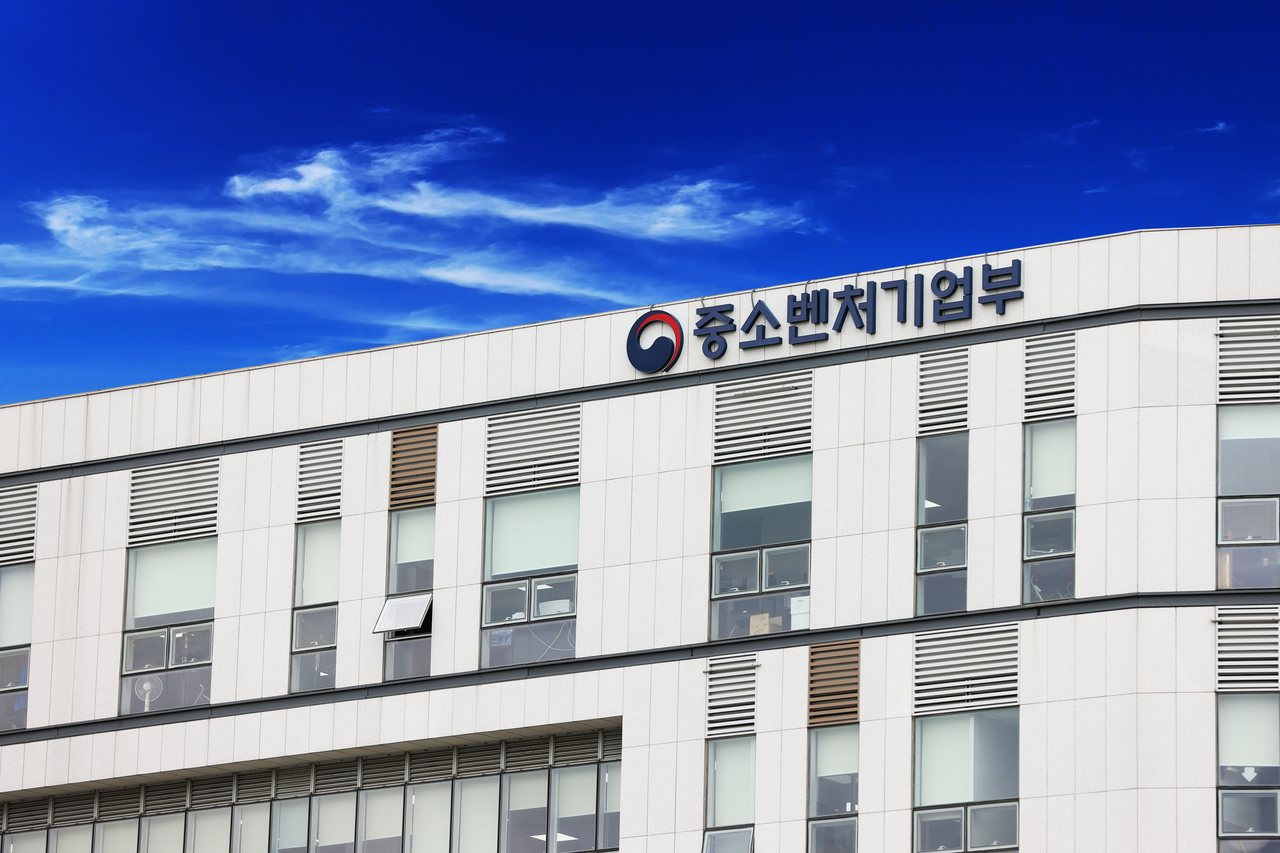
The Ministry of SMEs and Startups held the third meeting of its working-level consultative body for fostering new-security innovation firms Wednesday in Seoul, alongside relevant ministries and agencies.
Chaired by Park Yong-soon, director general of SME policy at the ministry, the meeting drew about 25 participants from related government bodies and institutions. Attendees shared updates on the identification of companies in new-security sectors and discussed plans for designating strategic fields, criteria for evaluating innovation firms, and measures to support technology development and investment.
The ministry compiled the initial pool of new-security companies based on recommendations from related ministries, including the Defense Acquisition Program Administration, as well as industry groups such as the Korea Venture Business Association and the Korea Defense Industry Association.
By sector, AI firms accounted for the largest share at 145, followed by aerospace at 115, drones at 68, cybersecurity at 65, robotics at 58, sensors at 46, semiconductors at 40, advanced materials at 30 and quantum technology at 18. After excluding 47 companies that appeared in more than one category, the total stands at 538.
The government plans to select new-security innovation firms from this pool through a comprehensive assessment covering technological innovation, growth potential, contribution to national security and security management capabilities.
Strategic fields under consideration for the new-security initiative include AI, advanced robotics, cybersecurity, semiconductors, aerospace, drones, advanced materials, sensors and quantum technology.
The evaluation process will examine factors including the level of R&D investment, intellectual property holdings, alignment with national strategic technologies, contributions to national and economic security, revenue growth, investment attraction track record and the establishment of technology protection infrastructure.
The government said it will gather input from industry and experts before finalizing the specific strategic fields and evaluation criteria.
A large-scale support framework to underpin technology development by new-security firms was also discussed. A key focus is the introduction of an other transaction authority-style R&D model based on public-sector demand. Other transaction authority, or OTA, is a special contracting mechanism used by some US federal agencies that allows them to rapidly contract, demonstrate and procure innovative technologies outside standard federal procurement regulations.
The OTA-style R&D model under government review would link the entire process — from technology development through demonstration to procurement — and provide up to 10 billion won in support over a maximum of five years. Public-sector demand agencies would participate directly from the project-planning stage through development and demonstration, with the flexibility to adjust development targets as requirements evolve.
New-security fields are characterized by long development timelines, high upfront costs and the difficulty of securing buyers even after successful development. The government's effort to pair R&D support with public-sector demonstration and procurement demand is aimed at easing this commercialization burden. However, the specific eligibility criteria, evaluation standards and mechanisms for linking development to actual procurement remain to be worked out.
Investment support tailored to new-security sectors is also under review. At Wednesday's meeting, relevant ministries discussed plans to establish a large-scale fund to help small and medium-sized enterprises and venture companies secure financing for long-term technology development.
The ministry said it plans to work with related ministries to build a policy framework supporting companies throughout their entire growth cycle — from identification as new-security innovation firms through R&D, investment, demonstration and commercialization.
"New-security fields are not only central to strengthening national security capabilities but also critical to determining the competitiveness of future advanced industries," Park said. "We will work closely with related ministries to ensure that companies with strong technological capabilities can establish themselves as key players in new-security sectors, and we will move swiftly to provide systematic and concrete support across the full spectrum — from identification through R&D, investment and commercialization."
boo@heraldcorp.com