Korea Federation of Industries surveys members on AI Framework Act
19 improvement tasks submitted to Ministry of Science and ICT
Legal status of in-house AI tools needs clarification
Responsibilities of AI developers and service providers should be separated
Clearer guidance needed on high-impact AI rules for drug research and toxicity prediction
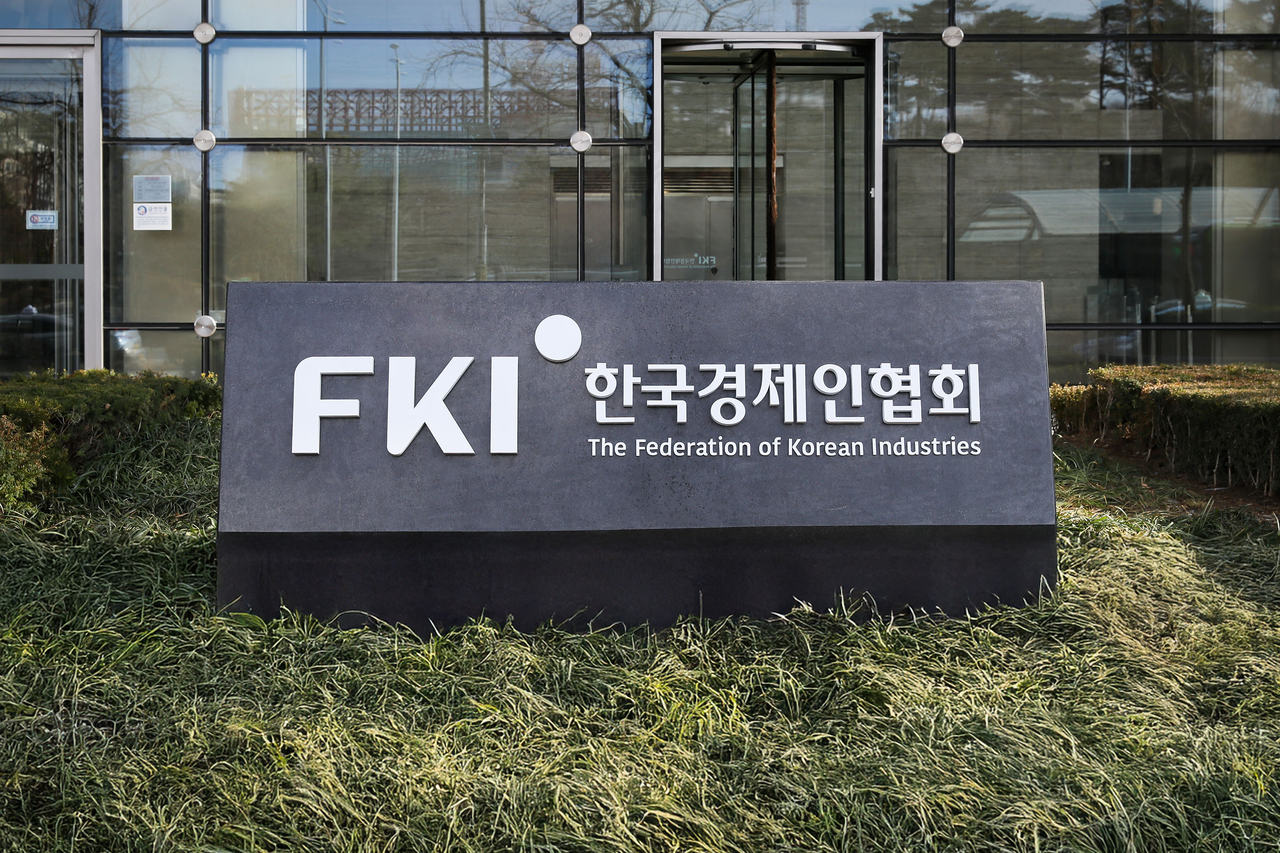
The Korea Federation of Industries said Thursday it had gathered member company opinions on the AI Framework Act — which took effect in January — and submitted 19 improvement proposals to the Ministry of Science and ICT.
While corporate adoption of AI is spreading rapidly, companies say confusion and compliance burdens are mounting because the scope of regulation and the boundaries of liability remain unclear. Industry voices are calling for sharper standards so businesses can develop and deploy AI with confidence.
The proposals cover five areas: clarifying the targets and scope of AI regulation; rationalizing disclosure and labeling obligations; making rules on high-performance and high-impact AI more concrete; refining standards for the use of training data; and ensuring predictability as AI regulation expands.
A central concern is the legal status of AI tools used internally within a company. As more firms deploy AI developed in-house for use by employees or affiliates, it remains unclear whether such internal AI systems are subject to the same obligations imposed on commercial AI service providers. The federation said the ambiguity is even greater when a holding company and its subsidiaries jointly build and use an AI system.
Under the current law, AI businesses — whether they develop AI or use it to deliver products and services — must fulfill obligations including risk management, user protection and safety assurance, depending on the type of AI and applicable legal requirements.
The federation proposed that general in-house AI tools, which do not pose risks to human life, physical safety or fundamental rights and therefore do not qualify as high-impact AI, should be treated differently from externally provided services. It also asked that shared use of AI among affiliates meeting certain security and management requirements be recognized as internal business use.
The federation also said obligations should be differentiated between companies that develop AI and those that use it to deliver services. The current law imposes disclosure, labeling and risk-management duties on both, but the federation argued that responsibilities should be allocated according to each party's role and scope of control.
For instance, if a company takes AI originally developed for general business use and repurposes it as a high-impact AI service, the federation said it is reasonable for that company — the one that changed the application — to bear the corresponding risk-management responsibilities.
The federation said this principle is already reflected in the Ministry of Science and ICT's interpretive guidance, the "High-Impact AI Assessment Guidelines," and called for it to be incorporated into the law itself. The EU, it noted, already has a regulation that treats any party who converts an existing AI system into a high-risk AI as the provider of that system and imposes corresponding obligations.
From the pharmaceutical and biotech sector, companies said they need clearer criteria for determining whether their AI systems qualify as high-impact AI. AI use is spreading across research and development — including candidate compound screening and toxicity prediction for new drug development — but firms say it is difficult to judge whether their systems fall under regulation. Current guidelines state that AI used as a tool during the research and development phase is exempt from high-impact AI obligations, but companies said that explanation alone is insufficient for making specific determinations.
The federation asked that the guidelines explicitly list examples of AI systems that do not qualify as high-impact AI — such as AI supporting toxicity prediction in preclinical research involving cell and animal testing, basic coding support for medical device development, and research data analysis. It also proposed a one-stop inquiry window where companies could quickly obtain consolidated opinions from relevant agencies including the Ministry of Health and Welfare and the Ministry of Food and Drug Safety.
The federation also urged the government to promptly issue a ministerial notice setting out specific standards and implementation methods so companies know what they need to prepare to meet their AI safety management obligations.
Kwon Hyeok-min, head of the federation's growth strategy division, said the success of the AI Framework Act depends on how many companies come to trust and use AI in their operations. "Obligations should be made concrete in line with the actual risks of AI and the roles companies play, so that businesses can focus on safe AI use and innovation," Kwon said.
jeongwan@heraldcorp.com