KIT develops plant-community toxicity assessment technology
New method captures species interactions, sharpens ecological risk predictions
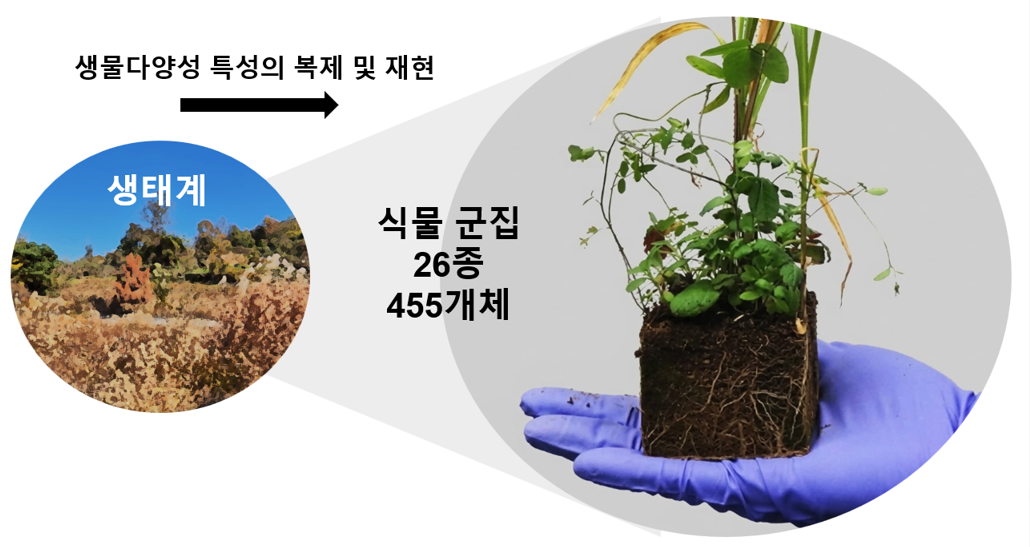
Korean researchers have developed a technology that recreates a "mini ecosystem" of 455 individual plants spanning 26 species inside a laboratory, allowing scientists to analyze in a single experiment how environmental pollution affects biodiversity and the relationships among plants.
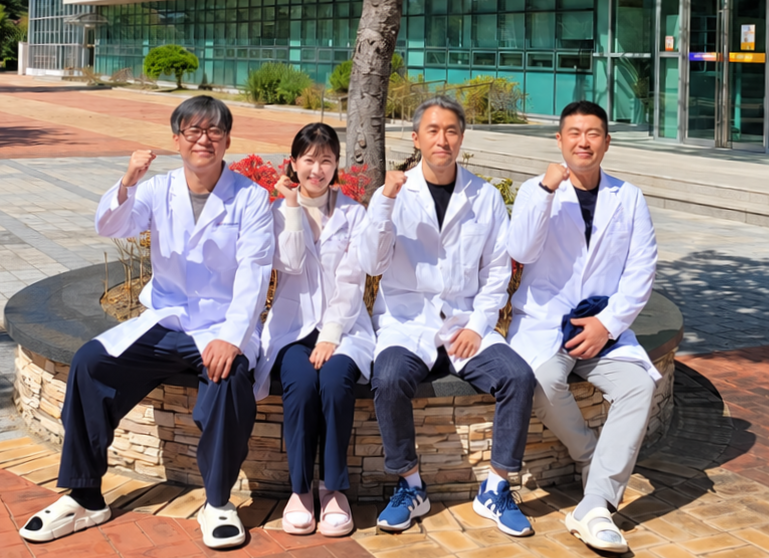
The Korea Institute of Toxicology (KIT) announced Wednesday that a research team led by Kim Rosa and Kim Sin-ung of its Environmental Safety Research Center had reproduced a plant community resembling a real natural environment in the laboratory and developed a method for comprehensively assessing the ecotoxicity of chemical substances.
Conventional ecotoxicity assessments have largely relied on exposing a single species to a chemical to gauge its hazard. In nature, however, multiple plant species coexist and interact with one another, which means that responses observed in individual organisms have limited value for understanding changes across an entire ecosystem.
To address that limitation, the research team turned to dormant seeds collected from soil sampled at a grassland site in Jinju, South Gyeongsang Province. Dormant seeds remain in the soil and germinate once suitable conditions arise.
The team germinated those seeds in the laboratory to reconstruct a plant community of 455 individuals across 26 species. By growing the plants under identical conditions, the researchers also ensured the experiment could be reliably repeated and reproduced.
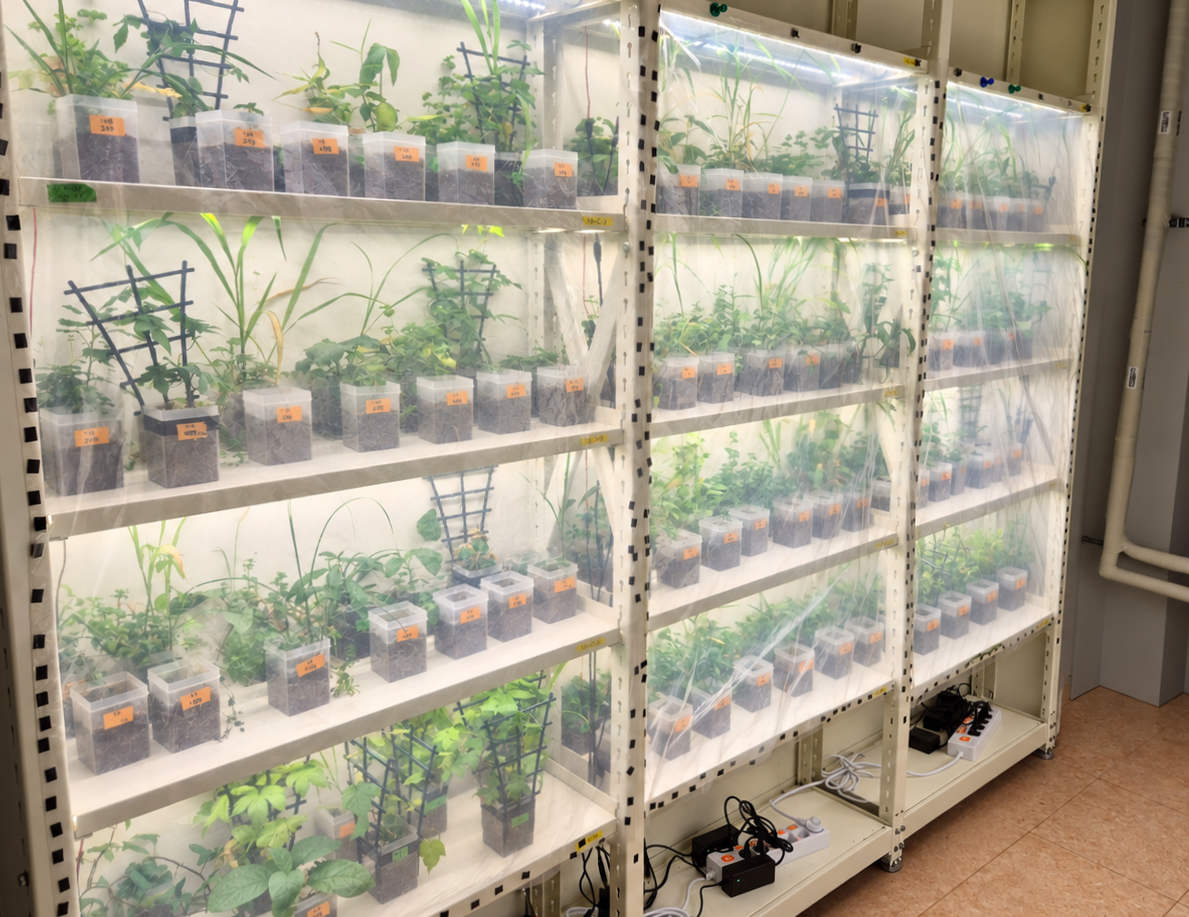
The research team validated the technology using cadmium, a heavy metal. As cadmium concentrations increased, the richness and diversity of plant species declined, and the interconnected network of relationships among plants grew progressively simpler.
Particularly notable was the team's ability to quantify simultaneously — something difficult to capture through conventional single-species toxicity tests — changes in plant community structure, reductions in biodiversity, and shifts in plant-to-plant relationships.
The researchers also found that a community of multiple coexisting plant species showed comparatively greater resistance to external environmental stress than individual plants did.
When the team compared the community experiment results against risk assessment benchmarks derived from conventional single-species tests, the plant community proved less sensitive to the effects of the chemical. The finding suggests that interactions among species within an ecosystem may be linked to resistance against environmental pollution.
The technology is significant because it moves beyond the conventional approach of assessing chemical toxicity only at the level of individual organisms, enabling analysis of how chemicals affect biodiversity under conditions that closely resemble a real ecosystem.
The method is expected to support more precise predictions of the ecological risks posed by heavy metals and other environmental pollutants, and to inform the development of environmental management standards and ecosystem protection measures.
"We have built a system that recreates in the laboratory a situation in which multiple plants coexist — as they do in nature — and allows us to quantitatively assess the changes that occur," Kim Sin-ung said. "We will continue developing this as a research foundation for more realistically predicting and managing the effects of chemical substances on actual ecosystems."
The findings were published in the international journal Environmental Science & Technology on Sept. 19.
nbgkoo@heraldcorp.com