Korea-Turkey excavation results presented
Mosaic uncovered for first time in 78 years
Inland Hellenistic hub confirmed
Precision subsurface geophysical survey applied
3D scanning and geophysical analysis deployed
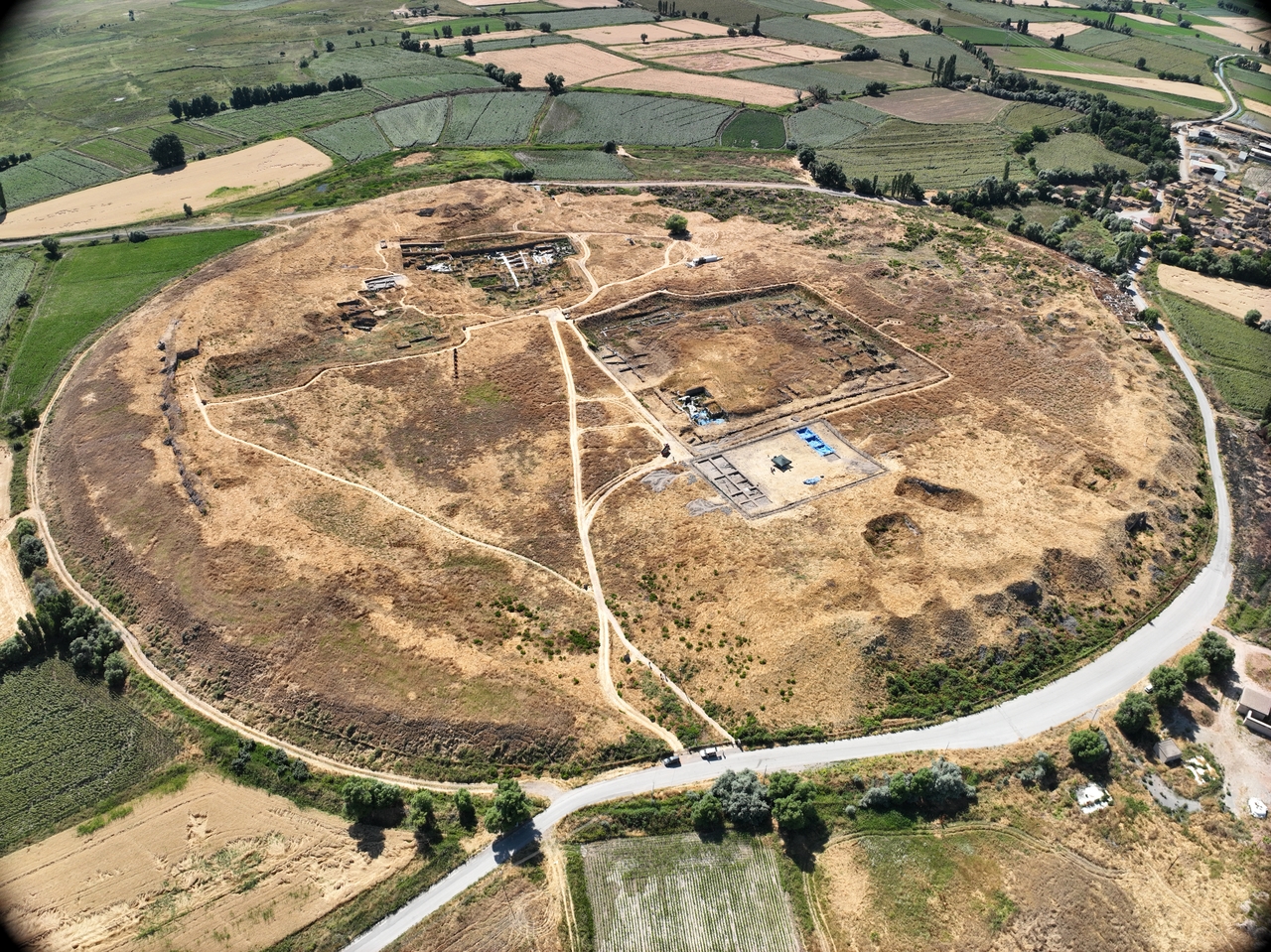
Korean archaeologists are making significant strides at the Kültepe site in central Anatolia, Turkey. South Korea's overseas excavations have traditionally focused on Silk Road-adjacent and northern regions, but this project marks an expansion into ancient civilization sites. Researchers say the results have been underpinned by cutting-edge Korean archaeological technology, including precision subsurface geophysical surveys, 3D digital measurement and integrated conservation science.
The National Research Institute of Cultural Heritage, under the Cultural Heritage Administration, held a briefing Tuesday at Coreana Hotel in Jung-gu, Seoul, to present the findings from the Kültepe excavation and outline the progress of academic cooperation between the two countries.
Kültepe spans roughly 3.6 million square meters — about 1.3 times the area of Yeouido — and encompasses an ancient urban site continuously occupied from the Bronze Age around 3000 B.C. through the Roman period. It served as the capital of the ancient Kanesh kingdom and as a commercial hub where more than 23,500 cuneiform clay tablets, now inscribed on the UNESCO Memory of the World Register, were unearthed. The site was added to UNESCO's World Heritage Tentative List in 2014.
"Until now, the institute's overseas investigations have focused mainly on Silk Road sites and those related to ancient Korean history," said Park Yun-jeong, head of the institute's archaeology research division. "This Turkey project is an opportunity to expand the scope of Korean archaeology to the world's ancient civilizations and to build a global research network."
Inland Hellenistic structure revealed after 78 years
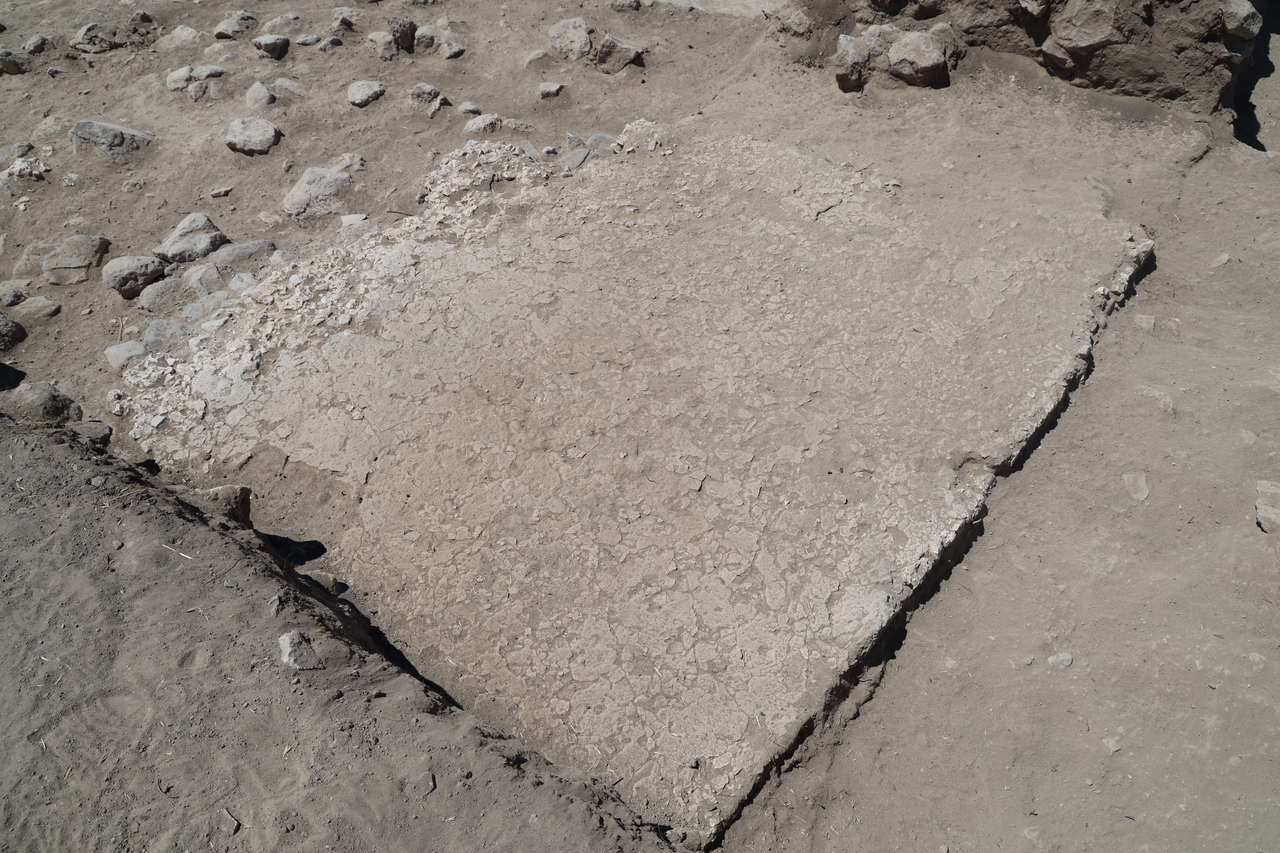
A joint research team from the National Research Institute of Cultural Heritage and Ankara University signed a cooperation agreement in April 2024 and has been excavating the eastern zone of the Bronze Age Warshama Palace since 2025. At a depth of 2 meters below the surface, the team uncovered a Hellenistic-period (323–30 B.C.) mosaic structure along with four overlapping cultural layers. It is the first time a Hellenistic mosaic has been confirmed at Kültepe since the site's initial excavation in 1948 — a gap of 78 years.
"We confirmed that a total of four Hellenistic cultural layers are preserved in superimposed form in the upper stratum," said Kim Dae-young, a researcher at the National Research Institute of Cultural Heritage. "The construction method — leveling the floor, laying crushed stone and sandy clay, filling with river stones and finishing with lime mortar — is similar to building techniques seen at the Ephesus site." The mosaic currently measures 165 centimeters north to south and 163 centimeters east to west. Taking into account surrounding traces, the original dimensions are estimated to have exceeded 250 centimeters.
The findings are regarded as archaeological evidence that Hellenistic civilization, which flourished primarily in coastal trading cities, also maintained inland footholds in the central Anatolian basin. Alongside the mosaic, the team found traces of a complex of at least three large interconnected buildings, as well as imported pottery from Athens and Cyprus.
"For the first time in the site's 78-year excavation history, we have physically confirmed the inland Hellenistic remains at Kültepe that had previously been known only through written records," said Fikri Kulakoğlu, a professor at Ankara University. "The mosaic structure and the imported Greek and Cypriot pottery are tangible evidence that this location was a hub exchanging goods with the Mediterranean mainland around 300 B.C."
Korean researchers deploy subsurface surveys and 3D scanning
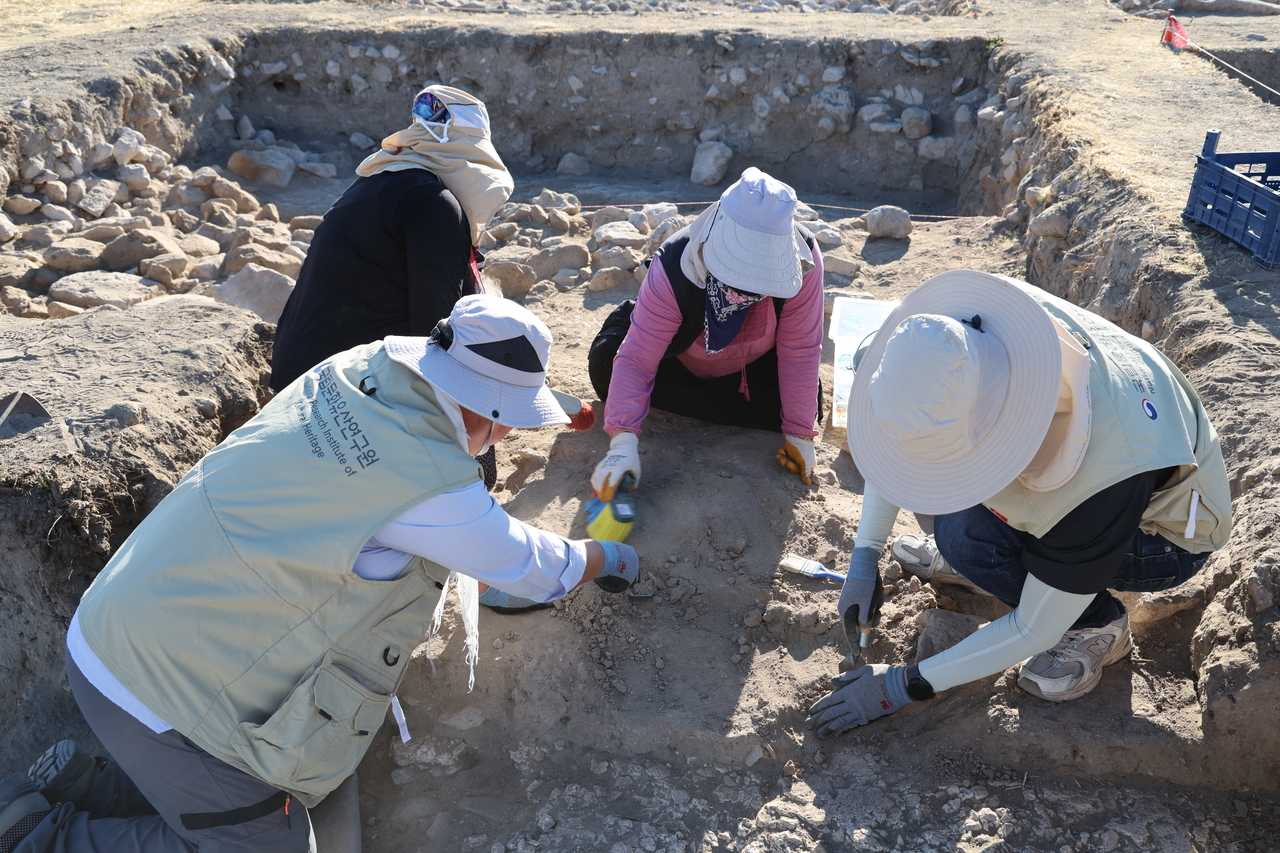
To map the full extent of the Bronze Age Warshama Palace, the joint team from the National Research Institute of Cultural Heritage and Ankara University first conducted subsurface geophysical surveys to identify anomaly concentrations and designate excavation zones. Rather than proceeding directly to the target layer below, the team worked through the upper strata in stages, allowing the Hellenistic cultural layer to be recovered intact.
Behind the rapid results lies the Korean team's advanced technical capabilities — precisely locating buried structures in advance and swiftly and accurately recording and analyzing excavated artifacts.
"Unlike other foreign teams, which are mostly university-based, the Korean side had the National Research Institute of Cultural Heritage conduct precise subsurface geophysical surveys in advance to strategically select excavation locations," said Choi Ji-yeon, a researcher at Ankara University's Kültepe project who handled fieldwork and interpretation. "The tens of thousands of pottery sherds that emerge each excavation season are processed using advanced 3D digital scanning technology, dramatically reducing time and error, and cross-verification between the field and specialist analysis laboratories is generating three to four times the synergy."
According to the briefing, the institute applied its own ground-penetrating radar and electrical resistivity survey technology to pinpoint buried structures before excavation. Artifacts and the mosaic were then documented using the institute's ultra-precise 3D scanning and digital electronic measurement techniques, substantially cutting measurement error and time compared with manual methods and enabling even complex animal-shaped pottery to be fully digitized in its original form. Researchers also deployed an integrated conservation science framework — using tree-ring analysis of recovered wood to establish dates and conducting on-site analysis of the lime composition of the mosaic floor and the composition of metal artifacts.
Bülent Gönenli, deputy director-general of the Directorate General of Cultural Heritage and Museums under Turkey's Ministry of Culture and Tourism, expressed gratitude for the cooperation. South Korea's academic capabilities and digital restoration technology, demonstrated at a site involving researchers from 28 countries, represent a model of collaboration for sharing knowledge and experience between the two nations, Gönenli said.
The National Research Institute of Cultural Heritage and Ankara University plan to conduct a third joint excavation season from May to July 2027. The team intends to integrate and expand existing test trenches to map the Hellenistic building complex and begin full-scale investigation of the Bronze Age Warshama Palace below.
The institute also signed a memorandum of understanding with Turkey's Directorate General of Cultural Heritage and Museums and agreed to discuss co-hosting a special Kültepe exhibition at the National Palace Museum of Korea in Seoul in 2027, which marks the 70th anniversary of diplomatic relations between the two countries. The exhibition is expected to showcase the excavation findings alongside the cuneiform clay tablets inscribed on the UNESCO Memory of the World Register and artifacts held by major museums in Turkey.
terry@heraldcorp.com