Workshop for 300 teachers and education officials set for Monday
Curriculum aims to build critical thinking and problem-solving skills
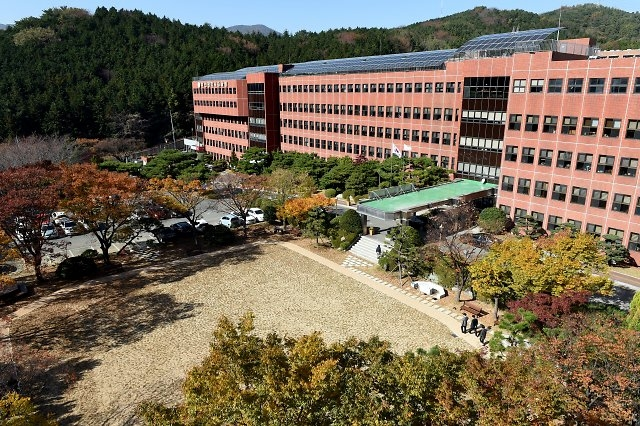
The Busan Metropolitan Office of Education announced Friday it will designate five "physical AI research schools" starting next year — the first such schools in the country. The initiative aims to go beyond basic coding instruction, establishing a future-oriented education model in which students think independently, engage in discussion and solve real-world problems.
The office will hold a physical AI education workshop Monday afternoon at the main auditorium of the Busan Education Research and Information Institute, bringing together about 300 teachers and education officials under the theme "From Screen to Reality."
At the workshop, Busan Metropolitan Office of Education scholarship officer Son Je-deuk will outline the direction and key tasks of the office's physical AI education policy. Pusan National University professor Lee In-ho will then deliver a lecture titled "A Decade of Change in Robot Technology and the Future of Physical AI Education." Teachers Park Jae-hyeon of Naeseong Elementary School, Lim Jae-cheol of Hanbada Middle School and Lim Byeong-ryul of Dongrae High School will follow, sharing classroom practices and insights on physical AI instruction at each school level.
Physical AI refers to technology that combines artificial intelligence with physical devices such as robots and sensors, enabling systems to perceive real-world environments, make independent judgments and act accordingly. As AI advances from processing information on screens to operating in the physical world, the ability to understand and apply physical AI is becoming an increasingly important competency in education.
Physical AI education goes beyond building robots and learning to code — it focuses on developing students' capacity to think independently, debate and solve problems. The workshop is designed to help teachers grasp the concepts and principles of physical AI and build the skills to design and apply future-oriented lessons suited to their students' levels.
"AI that judges and moves on its own — like self-driving cars and care robots — is not a distant future but an everyday reality our students will soon encounter," Superintendent of Education Kim Seok-jun said. "I hope this workshop and the research school program will serve as a starting point for bringing understanding of and attention to physical AI into our classrooms."
kaf2002@heraldcorp.com