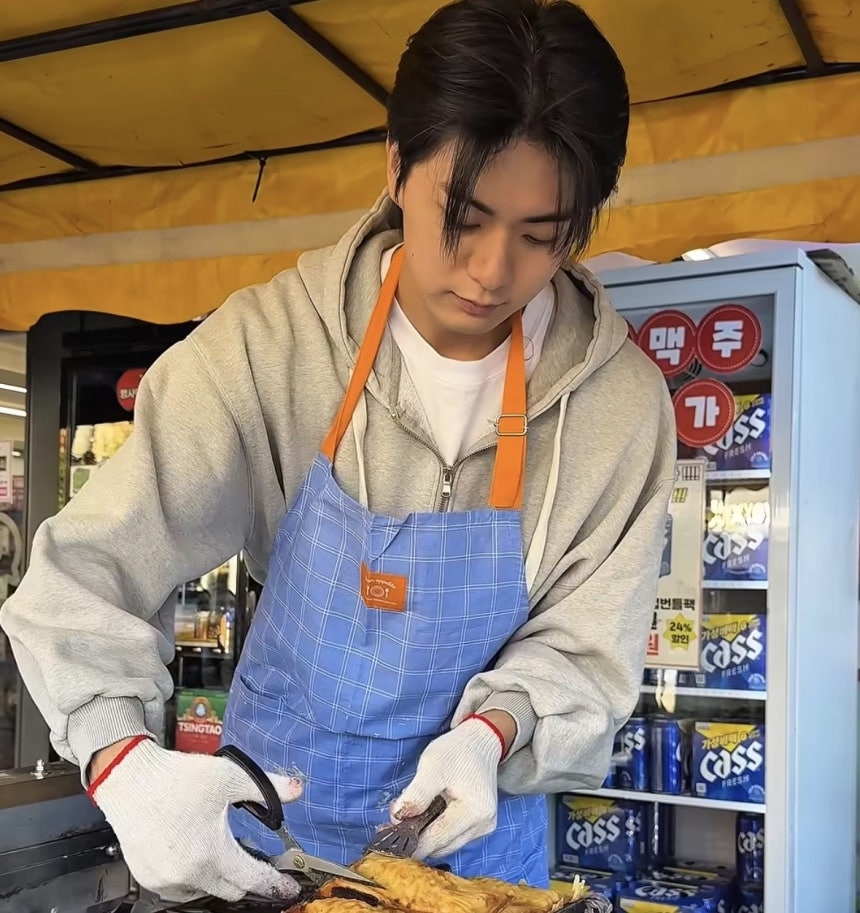
A young street vendor selling bungeoppang — Korea's beloved fish-shaped red bean pastry — recently went viral after people noticed a resemblance to actor Cha Eun-woo, earning the nickname "Bung-eun-woo." When it emerged that the vendor had turned down overtures from the entertainment industry to keep working the stall, public interest only grew. So did curiosity about the trade itself: can bungeoppang really be lucrative enough to pass up a shot at stardom?
A field report by The Herald Business last year found that an elderly couple running a street stall sold 261 bungeoppang over five hours, taking in 174,000 won ($130). The pastries were priced at 2,000 won for three. After deducting gas, flour, red bean paste and other ingredient costs, the couple cleared 90,416 won — and that figure already included revenue from hotteok, egg bread and steamed corn sold alongside the bungeoppang. Labor costs and stall rental fees paid to local authorities were not factored in, meaning actual take-home earnings were even lower, falling short of the minimum wage.
Working through the numbers, roughly half the selling price remains after ingredients on each pastry sold — before labor. Using the figures above, a vendor would need to sell 600 bungeoppang in a day to clear 200,000 won. Since the couple sold 261 in five hours between the two of them, simple arithmetic suggests it would take more than 11 straight hours of selling to hit 600 — at which point each person would earn about 100,000 won.
From 1,000 won for three to 1,000 won each — bungeoppang prices climb, but the winter snack stays beloved
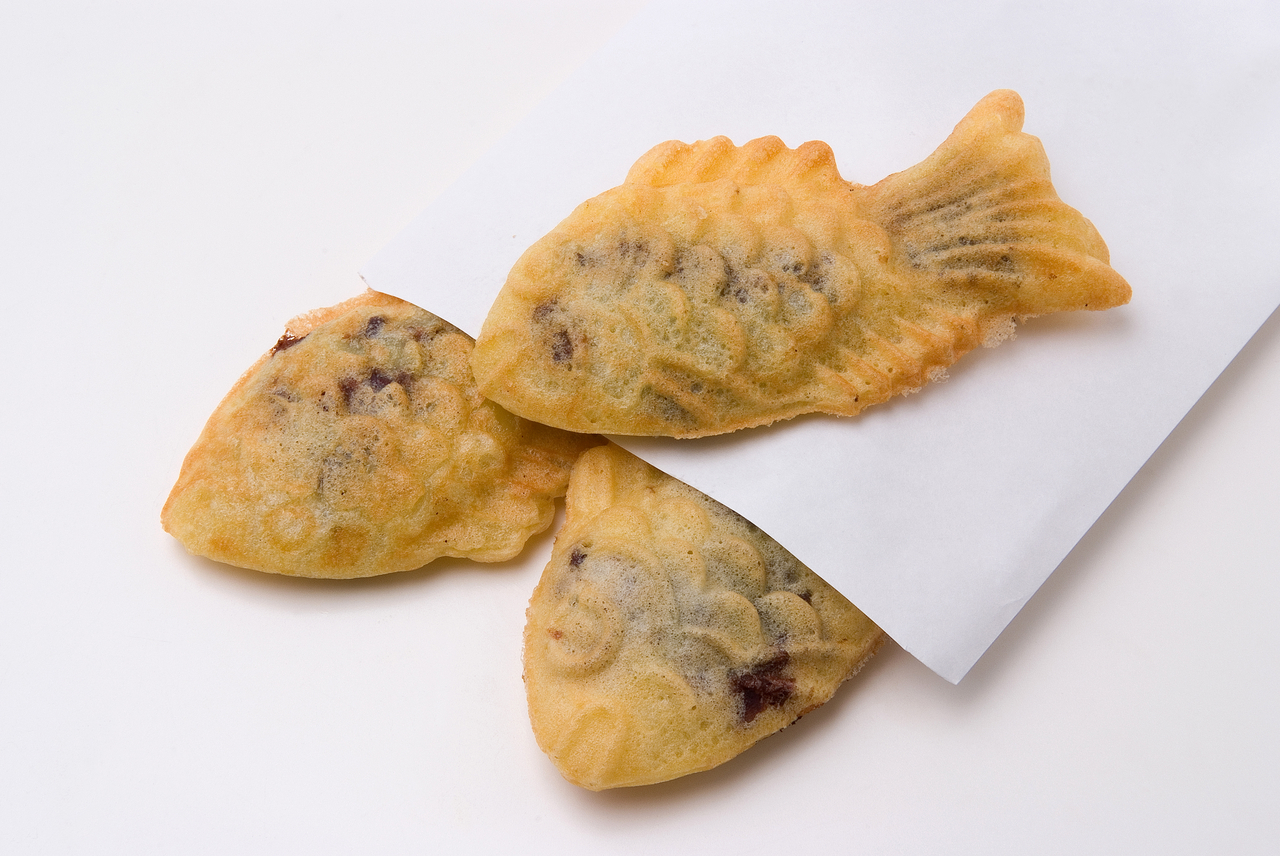
Rising prices, particularly in Seoul, could reshape the economics of the trade. In the early 2000s, three bungeoppang sold for about 1,000 won; today, 2,000 won for three is considered cheap. In parts of central Seoul, individual pastries now fetch 1,000 won apiece, and some vendors charge as much as 1,500 won.
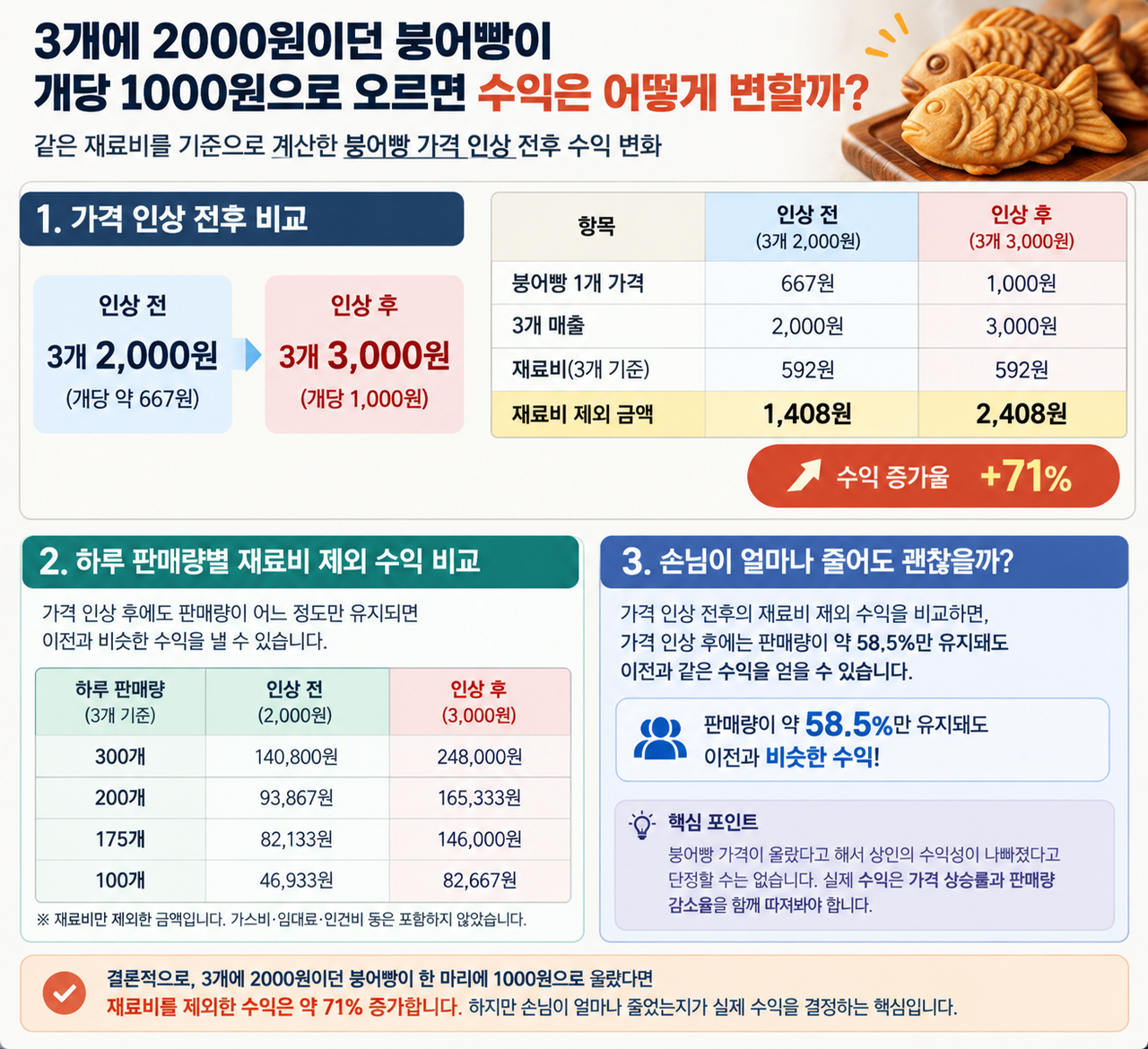
A jump from 2,000 won for three to 1,000 won per piece represents a 50 percent increase in the selling price. Assuming ingredient costs remain unchanged at 592 won per three pastries, the margin after ingredients rises from 1,408 won to 2,408 won — a gain of roughly 71 percent. For a vendor selling 300 pastries a day, that translates to an increase from 140,800 won to 248,000 won. Even if higher prices cause sales to dip, vendors would only need to maintain about 58.5 percent of their previous volume to preserve the same ingredient-adjusted earnings.
Ingredient costs have long driven bungeoppang prices. Global conflicts have pushed up the cost of key inputs — flour, red beans and sugar in particular. According to the Korea Agricultural Marketing Information Service (KAMIS) under the Korea Agro-Fisheries and Food Trade Corporation, the wholesale price of 40 kilograms of domestic red beans reached 726,600 won in November 2025, nearly double the 364,873 won recorded two years earlier. Flour, sugar and other ingredients also rose over the same period, as did operating costs including LPG gas, packaging and stall rental fees.
Prices for red beans, flour and sugar have eased slightly this year but remain well above historical averages. Further increases are possible, which could push bungeoppang prices higher still. The international grain futures price index is forecast to rise 3.8 percent quarter-on-quarter and 24.1 percent year-on-year in the fourth quarter of this year. Maritime freight rates are also climbing: the Capesize freight index is up 81.8 percent year-on-year, while the Panamax index has risen 27.6 percent.
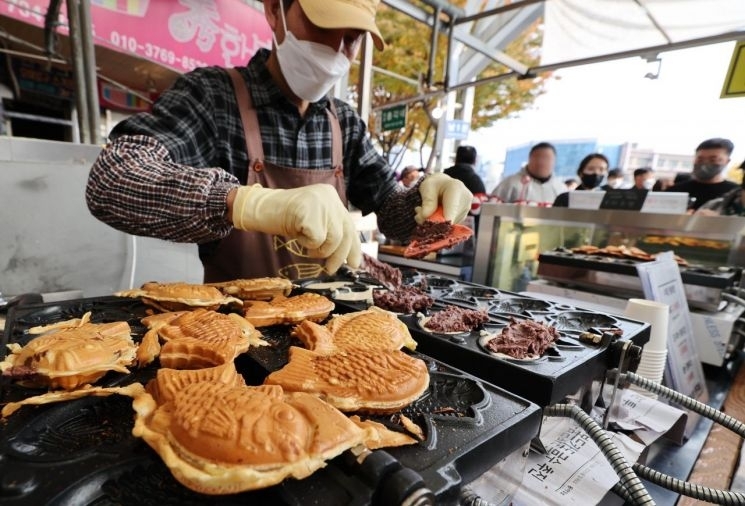
Despite the price increases, demand for bungeoppang shows no sign of cooling. The pastry has become so sought-after that the term "bung-se-gwon" — a riff on the real-estate concept of proximity to subway stations — has entered everyday speech to describe living near a bungeoppang stall. Consumers say the appeal lies in a combination of factors: even at higher prices, a freshly baked, warm pastry remains cheaper than most bakery items, and for many it carries a strong sense of childhood nostalgia.
A "Bungeoppang Map" app launched in 2021 has surpassed 100,000 downloads on the Google Play Store. Users submit the locations of bungeoppang and other winter street-snack vendors themselves, with the map displaying only stalls visited within the past month. The secondhand marketplace app Karrot also rolled out a limited seasonal bungeoppang map last November, letting local residents register and share vendor locations in their neighborhoods.
123@heraldcorp.com