SK recruits former vice ministers Jeong Seung-il and Park Sung-taek; Choi Nam-ho joins Samsung Global Research as senior adviser Monday; Cho Seok named vice minister to resolve blackout crisis before joining HD Hyundai Electric
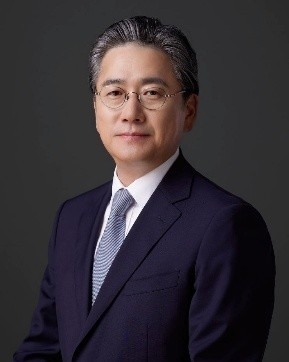
Former vice ministers of the Ministry of Trade, Industry and Energy are taking on major executive roles at leading conglomerates including SK Group, Samsung, Hyundai and Hyosung. Unlike the past practice of placing senior ex-officials in outside director seats, these figures are now heading core business operations.
Senior alumni of the Ministry of Economy and Finance — formerly the Ministry of Finance and Economy and the Ministry of Planning and Budget — such as Woori Financial Group Chairman Lim Jong-ryong have taken the helm of financial holding companies. Their counterparts from the trade ministry, meanwhile, are overseeing strategies to build future growth engines for major conglomerates, including AI transformation in manufacturing, data center development and semiconductor cluster construction.
Jeong Seung-il, a former trade ministry vice minister and Korea Electric Power Corporation president who most recently served as president of SK's future growth division, began work Sunday as president of SK Innovation. Jeong will oversee SK Innovation's transition into the power business and its long-term growth strategy.
A Seoul native, Jeong graduated from Gyeongseong High School and Seoul National University with a degree in business administration before entering public service through the 33rd civil service examination. At 32, in 1997, Jeong served as a commercial attaché at the Korean Embassy in Washington, and the following year served as an administrative official in the presidential chief of staff's office under the Kim Dae-jung administration.
Jeong held a wide range of key posts at the trade ministry, including director of the gas division, director of the semiconductor and electronics division, energy industry policy director, free trade agreement policy director, head of the trade and investment bureau, and head of the energy and resources bureau. Jeong also set a record as the only person to have served as president of both of the country's two major state energy companies — Korea Gas Corporation and Korea Electric Power Corporation. Under the Yoon Suk Yeol administration, however, Jeong resigned voluntarily with about a year left in the term after the People Power Party pressured for departure on the grounds that the appointment had been made under the Moon Jae-in administration.
During the tenure as trade ministry vice minister from September 2018 to November 2020, Jeong is credited with successfully navigating major challenges including the energy transition policy and Japan's export restrictions on South Korea.
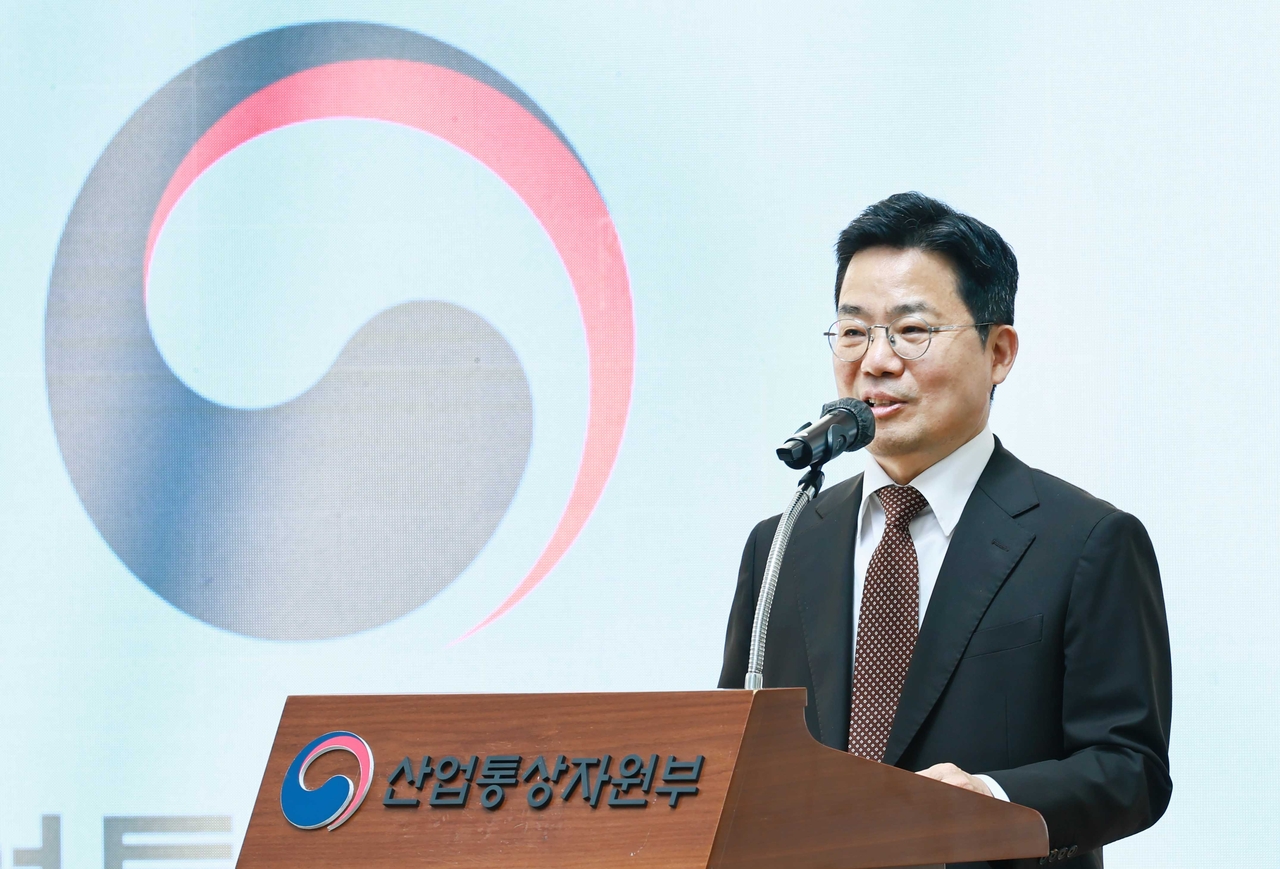
SK Group earlier this year recruited former trade ministry Vice Minister Park Sung-taek as president of SK China, the group's control tower for its China operations. A product of the 39th civil service examination, Park is regarded as an elite among elites, having served as director of the power industry division, energy policy director, industrial policy director, trade security policy director and industrial policy secretary at the presidential office. Park also played a leading role in shaping South Korea's tariff negotiation strategy with the United States after the launch of Donald Trump's second administration.
Park is also credited as the architect of MASGA, a Korea-US shipbuilding cooperation initiative. It is already well known in government circles that the "A game" US Treasury Secretary Scott Bessent cited at an official White House briefing on April 29 (local time) — when Bessent said South Korea had brought its "A game" — was in fact the Korea-US shipbuilding cooperation program MASGA that Park had conceived while serving as vice minister.
During the tenure at the trade ministry, Park was known as a versatile ideas person with command of every policy area. As director of the trade policy division, Park transformed the ministry's approach to export-supporting services from a passive, wait-for-them model to a proactive, go-to-them model, and launched the "Export Caravan" initiative — a zero-stop service concept that went beyond the conventional one-stop model — which played a significant role in reversing the export slump at the time.
A senior official in the Sejong government district said SK's recruitment of the two former vice ministers — Jeong and Park — is widely seen as a sign of a bright future for the group. "Many people are buying more SK shares in anticipation that the stock will rise further," the official added.
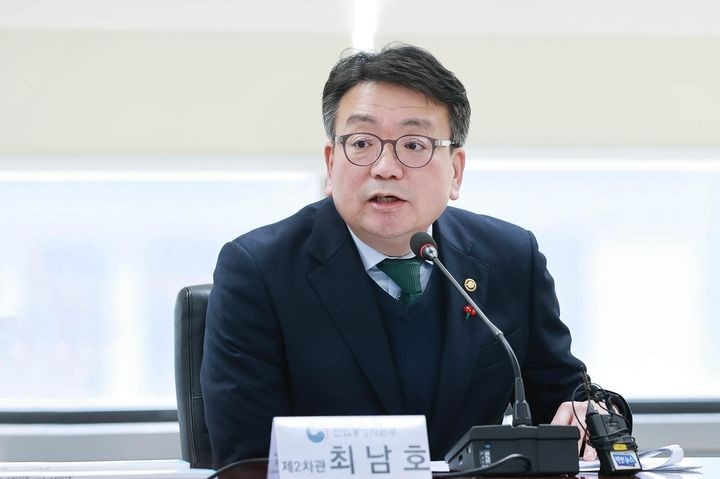
Former trade ministry Vice Minister Choi Nam-ho will begin work Monday as a senior adviser at Samsung Global Research, Samsung's think tank — the first time Samsung has brought in a trade ministry vice minister as a full-time adviser rather than an outside director. Choi graduated from Seoul National University with a degree in international economics and entered public service through the 38th civil service examination, going on to hold key posts at the trade ministry including energy and resources policy director, systems industry policy director, industrial policy director and head of the planning and coordination office. Choi is widely regarded as a strong communicator — a reputation underscored by having served twice as the ministry's spokesperson after being promoted to the senior civil service. Even after stepping down as vice minister last June, Choi has frequently traveled to Sejong at personal expense to treat junior colleagues — section chiefs and desk officers — to dinner, earning a reputation for cultivating strong personal networks.
Choi is expected to apply that expertise to building a stable power supply chain for the national industrial complex Samsung is constructing in Yongin, Gyeonggi Province, and for the Honam semiconductor cluster, for which Samsung has announced an investment of 400 trillion won ($300 billion). Choi is also expected to develop strategies for expanding new energy businesses, including renewable energy, small modular reactors and energy storage systems.
HD Hyundai Electric Vice Chairman Cho Seok is also a former trade ministry vice minister. A product of the 25th civil service examination, Cho spent more than 30 years in public service at the trade ministry, building expertise across industry, trade and energy. Cho moved to HD Hyundai Electric in 2019 and turned the company profitable within a year of taking the helm, earning the distinction of being the first recipient of the HD Hyundai Management Award.
Cho joined HD Hyundai Electric in December 2019 as its first externally recruited CEO. Cho reversed a 156.7 billion won operating loss the company had been carrying at the time of the appointment, returning it to profit within a year, and grew operating profit to 669 billion won in 2024.
Before becoming an HD Hyundai executive, Cho held a succession of key posts at the trade ministry — including desk officer in the Americas trade division, general affairs division chief, head of the nuclear power project support team, resources policy deliberation director, energy policy planning director, industrial economy policy director, head of the growth engine bureau and second vice minister — and was regarded by junior colleagues as a respected sunbae. Cho also delivered notable results as head of public institutions and international bodies, serving as chairman of the Korea Industrial Complex Corporation, president of Korea Hydro & Nuclear Power, and president of the World Association of Nuclear Operators.
Notably, while heading the nuclear power project planning team from 2004 to 2006, Cho introduced a public referendum process for the first time in selecting a site for a low- and intermediate-level radioactive waste disposal facility, building broad public consensus around the decision.
Cho is also credited with being appointed second vice minister as a troubleshooter to resolve the nationwide blackout crisis during the Lee Myung-bak administration, stabilizing a disorganized ministry in the shortest time on record. When Cho took over as president of Korea Hydro & Nuclear Power in 2013, the company was facing its worst crisis since its founding over a parts procurement scandal. During the three-year tenure, Cho delivered landmark results — including concluding what was at the time the first-ever overseas operations and maintenance export contract between a domestic nuclear power operator and the Emirates Nuclear Energy Corporation of the UAE, worth 1 trillion won.
Hyosung Heavy Industries CEO Woo Tae-hee is also a former trade ministry vice minister. Woo entered public service in 1983 as the youngest top scorer on the 27th civil service examination, going on to become the youngest-ever head of the industrial policy division. After serving as minister-counselor for commercial affairs at the Korean Embassy in Washington, Woo held posts including head of the trade cooperation bureau, head of the trade negotiation office, vice minister for trade and second vice minister. Woo subsequently served as a special professor at Yonsei University and as standing vice chairman of the Korea Chamber of Commerce and Industry before joining Hyosung Heavy Industries.
During the public service career, Woo was recognized for developing a deep understanding of industry while serving as head of the key industries policy division and the industrial technology policy division, and for acquiring a broad perspective through roles including trade cooperation policy director and key markets policy director.
It is a well-known anecdote in government circles that Woo published substantive books reflecting deep insight into each role at every major career transition — including "Wall Street People Who Shook the World Economy," written during the tenure as commercial attaché in the United States, and the "Key Industries Competitiveness Report," produced while heading the key industries policy division.
Lee Ho-jun, former head of the trade ministry's planning and coordination office, is also set to be appointed Monday as executive vice president for global trade policy at Posco Holdings. Lee entered public service through the 34th civil service examination and went on to serve as head of the Gumi cooperation team at the Ministry of Commerce, Industry and Energy, energy and resources policy division chief at the Ministry of Knowledge Economy, and minister's secretary, before serving for three years from 2014 as minister-counselor at the Korean Embassy in Beijing under the Ministry of Foreign Affairs.
After returning to the trade ministry in 2017, Lee held key posts including head of the trade cooperation bureau, investment policy director, policy planning director and head of the planning and coordination office. Lee served as the final industrial policy secretary at the presidential office under the Moon Jae-in administration, then as standing vice chairman of the Korea Middle Market Enterprise Federation.
oskymoon@heraldcorp.com